The strategic miscalculation in Western intelligence circles involves a preoccupation with the physical delivery of a fissile payload via an Intercontinental Ballistic Missile (ICBM). This focus ignores the operational reality that Iran has already deployed a functional "nuclear" equivalent: a decentralized, high-yield kinetic network capable of achieving strategic deterrence without a single silo-based launch. By weaponizing the geopolitical friction points of the Levant and the Bab el-Mandeb, Tehran has constructed a biological-technical weapon system that functions through synchronized disruption rather than singular detonation.
The Architecture of Distributed Deterrence
The Iranian "weapon" is not a singular object but a system of systems. Traditional nuclear doctrine relies on the credible threat of mass destruction to prevent aggression. Iran achieves this same end-state through a tripartite framework of asymmetric pressure. Also making headlines in this space: The Cost of a Carry On.
1. The Regional Entrenchment Variable
Tehran utilizes a franchise model for paramilitary operations. Unlike traditional mercenary groups, these entities—Hezbollah in Lebanon, the Houthis in Yemen, and various militias in Iraq—are integrated into the Iranian military command structure through the Quds Force. This creates a "shield" that prevents direct strikes on the Iranian mainland. Any state attempting to neutralize Iran’s nuclear facilities faces a guaranteed, multi-front ground and rocket war that would destabilize the global energy market. This is the functional equivalent of a "Second Strike" capability.
2. The Maritime Chokepoint Multiplier
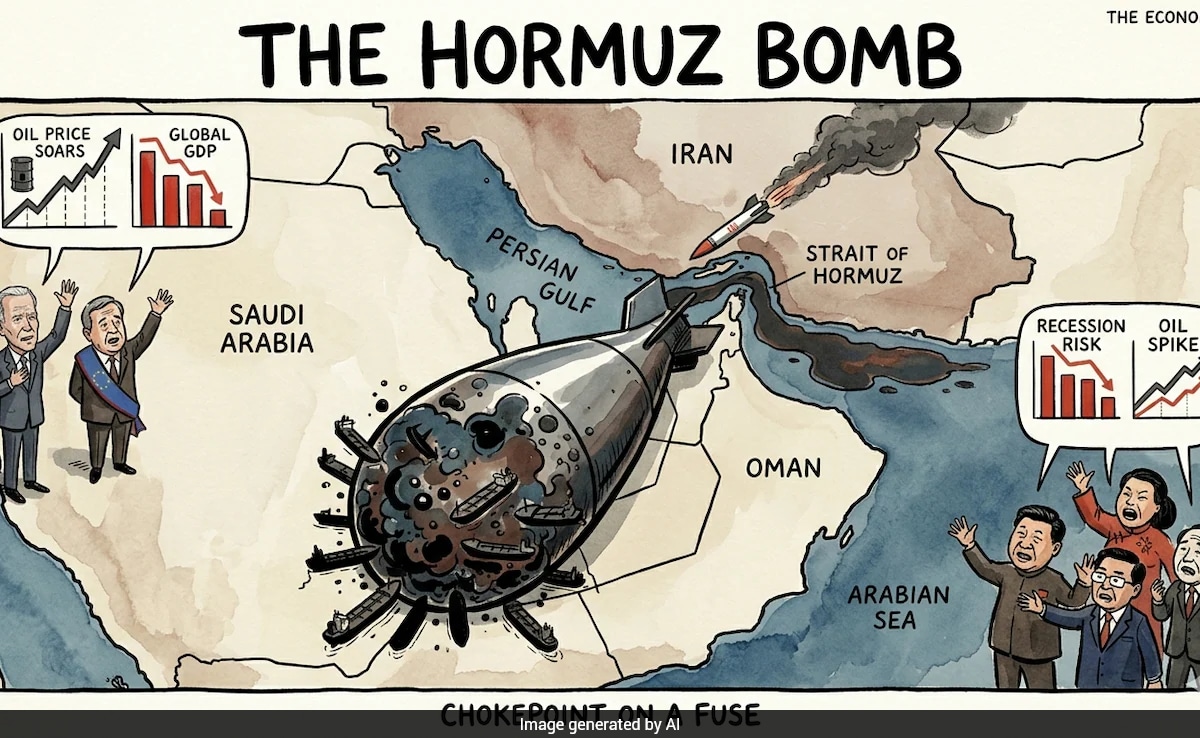
The weaponization of the Strait of Hormuz and the Red Sea functions as a global economic kill-switch. Approximately 20% of the world’s liquid natural gas and oil passes through the Strait of Hormuz. By deploying low-cost drone swarms and anti-ship ballistic missiles (ASBMs), Iran exerts a level of control over global inflation that mirrors the coercive power of a nuclear-armed state. The cost-to-neutralize ratio is heavily skewed in Iran's favor; a $20,000 Shahed-136 drone requires a $2,000,000 interceptor missile to defeat, creating an economic attrition model that favors the disruptor. Further information into this topic are detailed by BBC News.
3. The Threshold State Logic
The "Nuclear Weapon" is often more valuable as a project than as a finished product. By maintaining enrichment levels at 60% U-235—technically a short step from the 90% required for weapons-grade material—Iran maintains "Breakout Capability." This is a diplomatic weapon. It forces world powers to the negotiating table, extracting economic concessions and sanctions relief without Iran ever having to face the international pariah status that follows a successful nuclear test.
Quantifying the Attrition Function
To understand why this network outclasses a traditional missile, one must examine the cost function of regional defense. The United States and its allies operate on a "High-Value Target" (HVT) logic, deploying multi-billion dollar carrier strike groups to counter decentralized threats.
The Iranian strategy utilizes Swarms and Saturation.
- Saturation Cost: A single Aegis-equipped destroyer has a finite number of Vertical Launch System (VLS) cells. If Iran or its proxies launch a saturation attack consisting of 150 low-cost projectiles, the defender's magazine depth is exhausted.
- Economic Displacement: The mere threat of a drone strike in the Red Sea forced the redirection of global shipping around the Cape of Good Hope. This added 10–14 days to transit times and increased fuel costs by approximately 40% for affected vessels.
- The Deterrence Equation: $D = C \times V \times R$ (Deterrence = Capability $\times$ Visibility $\times$ Resolve). Iran has maximized Visibility and Resolve through proxy actions, ensuring that the Capability—even if non-nuclear—is perceived as having nuclear-level consequences for the global economy.
The Technical Leap: Civil-Military Fusion
Iran’s true innovation lies in the rapid weaponization of dual-use technologies. While the West focused on Stuxnet and cyber-sabotage of centrifuges, Iran optimized the supply chain for off-the-shelf components. The propulsion systems for their long-range drones often utilize small, German-designed engines or their Chinese equivalents, which are impossible to track through standard arms-control treaties.
This creates a Tactical Ambiguity. When a drone strikes an oil processing facility in Abqaiq, the attribution is muddied. If a missile is launched from a sovereign nation, the return address is clear. If a drone is launched from a mobile platform by a non-state actor, the legal and kinetic justification for a retaliatory strike on Tehran is weakened. This ambiguity is the "stealth technology" of the 21st century.
Structural Bottlenecks in Western Response
The primary limitation of the current Western strategy is the reliance on "Surgical Strikes." In a distributed network, there is no "brain" to remove.
The second limitation is the Intelligence Lag. Conventional satellite surveillance is optimized for tracking large-scale movements: tank battalions, naval fleets, and missile silos. It is significantly less effective at tracking the movement of fiberglass drone components hidden in civilian shipping containers.
The third limitation is Political Cohesion. A nuclear detonation is a binary event that triggers a unified global response. Asymmetric disruption is granular. It creates friction between allies regarding the level of force required, the legality of pre-emptive strikes, and the tolerance for economic pain. Iran exploits these seams with high precision.
The Logic of the "Proxy Nucleus"
If we define a nuclear weapon as a tool designed to ensure regime survival and project power through the threat of unacceptable loss, then Iran has already achieved its goal. The "missile" is merely a distraction—a traditional symbol that keeps Western analysts focused on the 20th-century definition of power.
The Iranian proxy network functions as a Living Fissile Material. It is unstable, it generates immense heat, and if compressed by external force, it triggers a chain reaction across four countries simultaneously. The "detonation" in this scenario is not a mushroom cloud, but the collapse of the Lebanese, Iraqi, and Syrian states, a global energy crisis, and a refugee wave that would destabilize the European Union.
Strategic Realignment Requirements
Maintaining the current focus on the Joint Comprehensive Plan of Action (JCPOA) frameworks is a category error. While monitoring uranium enrichment is necessary, it is insufficient to address the actual threat vector.
- Magazine Depth Expansion: Naval assets must transition from high-cost interceptors to Directed Energy Weapons (DEWs) and electronic warfare suites to reset the cost-asymmetry.
- Supply Chain Interdiction: Strategy must shift from monitoring "weapons" to monitoring "components." The flow of high-end carbon fiber, micro-controllers, and small-displacement engines is the new frontline of non-proliferation.
- Decoupling the Proxy: The only way to "disarm" this weapon is to break the logistical and financial link between the Quds Force and its regional franchises. This requires a shift from kinetic strikes to financial and cyber-isolation of the middle-management layer within these proxy groups.
The geopolitical landscape has shifted from a "balance of power" to a "balance of disruption." Iran has successfully built a weapon that operates in the gray zone—the space between peace and total war—where traditional nuclear doctrine has no jurisdiction. The failure to recognize the proxy network as a strategic weapon of mass disruption ensures that Western policy will continue to chase a shadow while the real threat is already positioned at every major chokepoint in the Middle East.
Countering this reality requires accepting that the "Nuclear" label is no longer restricted to physics; it now applies to any system capable of producing systemic, global-scale failure. The Iranian network is the first fully operationalized version of this new class of weaponry. Strategies built on 1945 logic will not survive its deployment.