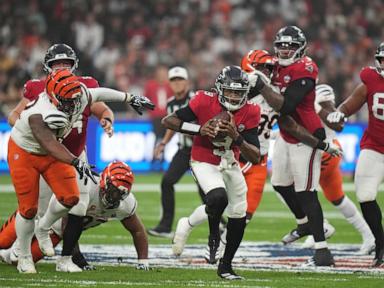
Nine straight losing seasons. Think about how hard it is to fail that consistently in a league built specifically around parity. The NFL salary cap, the draft order, and the scheduling formula exist to pull bad teams up and push good ones down, yet the Atlanta Falcons have somehow defied gravity for nearly a decade.
When a franchise stares down a ninth consecutive sub-.500 finish after coughing up a winnable matchup against the Cincinnati Bengals, the postgame press conferences always sound the same. Coaches talk about cleaning up the little things. Players mutter about execution. Everyone uses the phrase "self-inflicted wounds" like it's a magic spell that excuses getting outcoached and outplayed in the fourth quarter.
Honestly, calling these collapses "self-inflicted" misses the bigger picture. A mistake once or twice is bad luck. Repeating the exact same situational blunders across multiple coaching staffs, different quarterbacks, and revamped rosters is a cultural identity.
The Anatomy of an Atlanta Collapse
If you've watched more than a handful of Falcons games over the last few years, you already know the script before kickoff. Atlanta comes out sharp, moves the ball between the twenties, and builds just enough hope to make the fourth quarter hurt. Then the clock hits the final ten minutes, and the wheels fall off in slow motion.
Against Cincinnati, the blueprint played out right on cue. You don't lose games like that because the opponent is simply too talented to stop. You lose them because you beat yourself before the other team even has to make a play.
Look at the standard checklist of an Atlanta meltdown:
- Red zone stagnation where promising twelve-play drives die at the eight-yard line, forcing the offense to settle for three points instead of seven.
- Pre-snap penalties on third-and-short that turn manageable conversions into obvious passing downs.
- Third-down defensive lapses where the pass rush gets within a breath of the quarterback, only for a coverage bust to leave a receiver wide open across the middle.
- Clock management confusion that burns precious timeouts early in the second half, leaving the offense stranded without options when trailing late.
Every single one of those issues comes down to discipline and preparation. Talent gets you into the fourth quarter with a lead. Coaching and composure close the door.
Why "Self-Inflicted" Is an Excuse, Not an Explanation
When players and coaches step up to the podium and blame self-inflicted mistakes, fans are supposed to feel reassured. The subtext is comforting: We didn't get beaten by a better team, we just got in our own way, so we can fix it next week.
Except they never fix it next week.
The problem with framing chronic losing as a string of isolated errors is that it ignores why those errors happen under pressure. Good football teams play their cleanest snaps when the game tightens up. Bad football teams tighten up themselves. When a roster lacks conviction in its scheme—or when players don't trust the guy next to them to do his job—guys start pressing. A tackle jumps early because he's terrified of getting beat around the edge. A cornerback grabs a jersey because he doesn't trust his safety help over the top. A quarterback forces a throw into double coverage because he feels like he has to score on every single possession to bail out the defense.
Those aren't random accidents. They are symptoms of a team playing scared to lose rather than confident it will win.
The Quarterback Carousel Hasn't Solved the Root Issue
Over the past decade, Atlanta's front office has tried almost every possible shortcut to escape mediocrity. They rode the tail end of Matt Ryan's career while the roster eroded around him. They pivoted to bridge veterans like Marcus Mariota. They took a mid-round gamble on Desmond Ridder. They spent massive money in free agency on Kirk Cousins while simultaneously burning a top-ten draft pick on Michael Penix Jr.
Yet the results in the standings barely budged.
Switching signal-callers changes the flavor of the offense, sure. It doesn't fix a pass rush that vanishes in the fourth quarter, and it doesn't instill situational awareness in a locker room that expects something to go wrong whenever the game is on the line. Until the organization fixes how it builds the trenches and teaches situational football, whoever stands under center is just rearranging deck chairs.
The Math Behind Nine Years of Mediocrity
Nobody sets out to build a nine-year losing streak. It happens one compromised offseason at a time.
Look back at how Atlanta has allocated its premium resources since their last winning campaign. Year after year, the front office fell in love with offensive skill players in the top ten of the NFL Draft—Kyle Pitts, Drake London, Bijan Robinson—while treating the defensive line like an afterthought. On paper, collecting high-end playmakers sounds great for fantasy football. On Sunday afternoons in November and December, it leaves you soft up the middle and incapable of getting off the field when the opponent needs to bleed the clock.
You can't out-scheme a lack of push up front. When an opposing quarterback like Joe Burrow has a clean pocket on third-and-seven, no secondary in football can hold up forever. Eventually, someone gets open, the chains move, and Atlanta's offense watches from the sideline while the clock ticks down toward another single-digit loss.
What Actually Needs to Change in Flowery Branch
If the Falcons want to stop adding chapters to one of the longest playoff droughts in the NFC, they have to stop treating their losses like bad bounces. Here is what real accountability looks like moving forward:
- Simplify the situational playbook. When a team commits repeated pre-snap penalties and alignment errors late in games, the scheme is asking players to think too much instead of reacting. Cut the fat from the call sheet in high-leverage moments and let athletes play fast.
- Bench repeat offenders. Accountability doesn't exist if a veteran commits a drive-killing holding penalty or blows a coverage assignment and trots right back onto the field the next series. Playing time is the only currency that matters in an NFL locker room.
- Invest heavily in the defensive front. Stop drafting luxury skill positions and start pouring first-round capital and top-dollar free-agent money into edge rushers and interior disruptors who can wreck a drive on their own.
- Own the identity. Decide whether this team wants to win with physical, clock-chewing football or an aggressive passing attack, and build every roster decision around that single philosophy instead of trying to do both halfway.
Until the Falcons stop hiding behind press-conference clichés and start fixing the habits that cause these fourth-quarter collapses, the calendar will keep flipping while the record stays stuck in the exact same place.