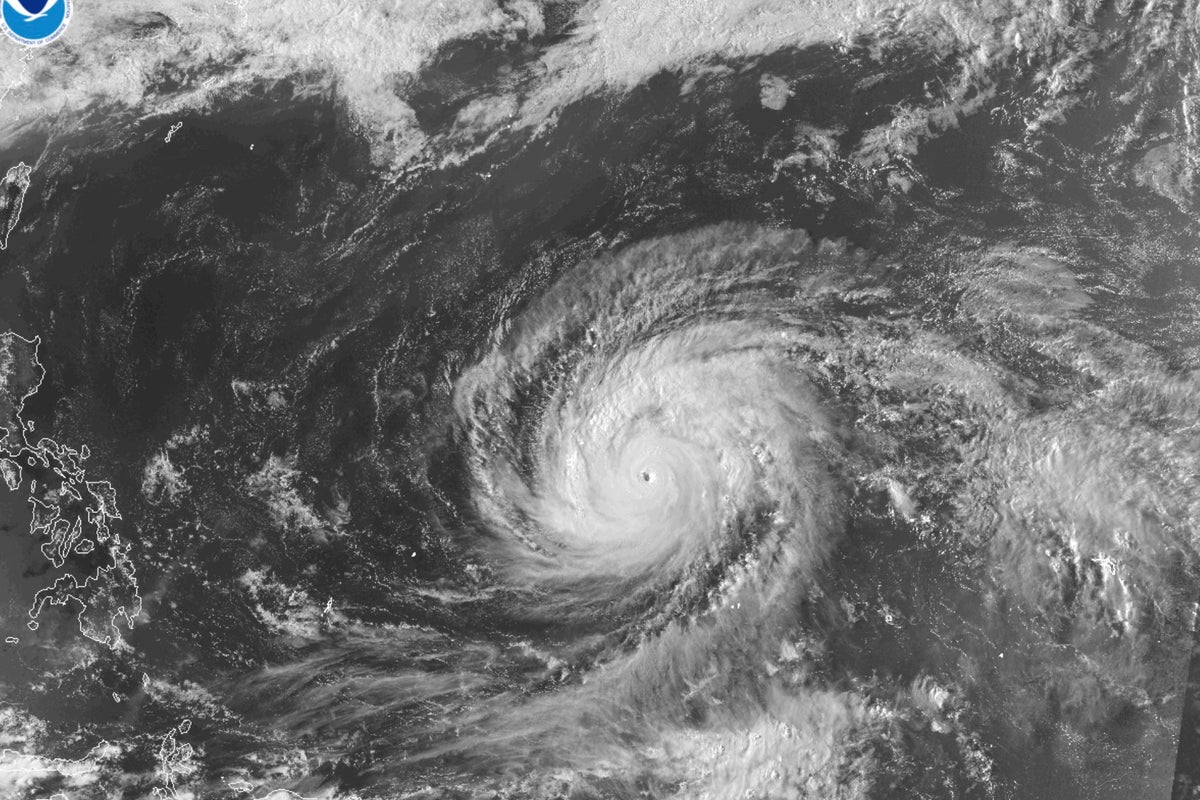
The rapid intensification of tropical cyclones into "super typhoon" status represents a failure of traditional risk modeling when applied to isolated oceanic territories. When a storm system reaches wind speeds exceeding 240 kilometers per hour (150 mph), the relationship between wind velocity and structural damage ceases to be linear; it becomes exponential. This creates a catastrophic decoupling between the preparation capabilities of remote US island territories and the kinetic energy delivered by the atmosphere. The impending impact on these islands is not merely a weather event but a stress test of logistical supply chains and architectural resilience under extreme pressure gradients.
The Mechanics of Rapid Intensification
Super typhoons are driven by a convergence of thermodynamic variables that function as high-octane fuel for the storm’s engine. For a standard tropical storm to escalate into a super typhoon, several environmental thresholds must be met simultaneously:
- Oceanic Heat Content (OHC): Surface temperatures must exceed 26.5°C, but the depth of that warm water is the critical variable. High OHC prevents the storm from churning up colder, deeper water, which would otherwise act as a natural brake on intensification.
- Low Vertical Wind Shear: If wind speeds change significantly with altitude, the storm’s vertical structure is tilted or torn apart. Minimal shear allows the eye wall to remain symmetrical, concentrating latent heat release in the core.
- High Mid-Level Humidity: Dry air entrainment acts as an evaporative cooler, weakening the updrafts. Saturated middle layers ensure the preservation of the storm’s internal heat engine.
The transition from a Category 1 to a Category 5 equivalent—the "Super" designation—often occurs via "Rapid Intensification" (RI), defined as an increase in maximum sustained winds of at least 30 knots within 24 hours. This creates a lead-time deficit for emergency management. When a system undergoes RI just before landfall, the window for evacuation or resource hardening collapses, leaving populations dependent on existing infrastructure rather than active response.
The Friction of Distance in Disaster Logistics
The remote nature of these islands introduces a "logistical lag" that compounds the physical damage of the storm. In the continental United States, mutual aid agreements allow for the rapid movement of linemen, medical supplies, and food across state lines via ground transport. In the Pacific, every gram of relief must be moved by sea or air.
The Port and Pier Bottleneck
Infrastructure on remote islands often relies on a single deep-water port. If storm surges or sunken debris render these ports inoperable, the primary artery for fuel and heavy machinery is severed. Recovery becomes dependent on shallow-draft vessels or specialized military hardware, slowing the restoration of power and water systems by weeks or months.
The Aeromedical Constraint
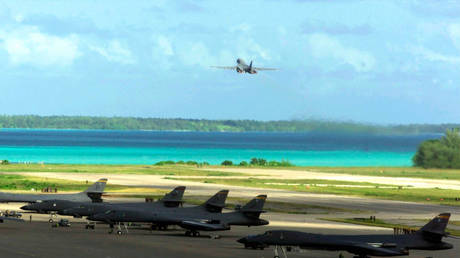
Airfields are equally vulnerable. High winds damage hangars and navigational aids, while debris on runways prevents the landing of C-130 or C-17 transport aircraft. This creates a "blackout period" where the island is effectively isolated from the global supply chain at the moment of highest need.
Structural Vulnerability and the Kinetic Energy Formula
A common misconception in disaster reporting is the focus on wind speed as a direct measure of danger. The true metric of destruction is the dynamic pressure exerted on structures, which is calculated based on the square of the wind velocity ($P = \frac{1}{2} \rho v^2$).
When wind speeds double, the pressure on a building’s facade quadruples. A super typhoon with 150 mph winds exerts roughly nine times the force of a 50 mph tropical storm. This explains why structures that withstand "heavy storms" frequently fail during super typhoons. The failure points are typically:
- Envelope Breach: Once a single window or door fails, internal pressure rises rapidly. Combined with the low external pressure of the storm's eye, this creates an internal-to-external pressure differential that can literally lift roofs off their plates.
- Projectile Dynamics: In a remote island environment, natural vegetation and unanchored residential items become high-velocity projectiles. The density of the air increases during heavy rainfall, turning "wind" into a fluid force that carries significantly more momentum.
- Corrosive Aging: Infrastructure in tropical maritime environments suffers from constant salt spray and humidity. Rebar within concrete expands as it oxidizes, creating internal micro-fractures. When the extreme lateral loads of a super typhoon are applied, this degraded concrete reaches its shear limit far earlier than its design specifications suggest.
The Hydrodynamic Threat: Surge and Inundation
While wind captures headlines, water remains the primary driver of mortality and long-term economic loss. The low atmospheric pressure at the center of a super typhoon causes the ocean surface to rise, while the wind "piles up" water ahead of the storm’s path.
On low-lying islands and atolls, there is no "high ground." The storm surge can wash over the entire landmass, a process known as overwash. This does more than damage buildings; it contaminates the "lens" of freshwater—the thin layer of fresh groundwater that islanders rely on for drinking and agriculture. Saltwater intrusion can render an island's natural water supply unusable for years, forcing a permanent shift toward expensive desalination or imported bottled water.
Cascading Failures in Micro-Grids
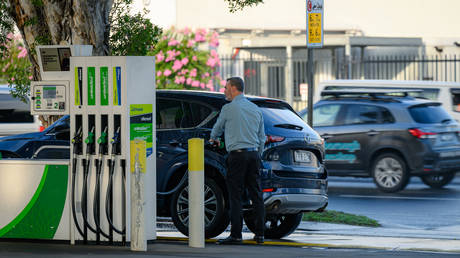
Most remote islands operate on micro-grids, often powered by diesel generators. These systems lack the redundancy of large-scale interconnected grids found on mainlands. The failure of a single substation or the destruction of a fuel storage tank can result in a total grid collapse.
Recovery is hindered by the lack of "spare capacity." Every transformer and utility pole must be shipped in. The strategic weakness here is the lack of standardized modularity. If an island uses a specific, aging electrical architecture, it cannot easily integrate modern equipment sent in a rush from different jurisdictions. This creates a technical debt that is called due during the landfall of a major atmospheric event.
Quantifying the Economic Aftershock
The cost of a super typhoon on a remote territory is not measured in the immediate "billions of dollars" cited in mainland disasters. Instead, it is measured as a percentage of the Gross Territorial Product (GTP). A storm that causes $500 million in damage might be a rounding error in a large state, but for a remote island, it can represent 50% or more of its annual economic output.
- Tourism Paralysis: If the airport and hotels are damaged, the primary source of foreign currency vanishes. The "recovery period" often exceeds the "financial reserves" of local businesses.
- Labor Flight: High-skill workers—doctors, engineers, and technicians—frequently migrate to the mainland following a catastrophic storm if the timeline for restoration is unclear. This "brain drain" reduces the island's capacity to manage its own rebuilding process.
- Insurance Hardening: After a super typhoon, insurance premiums for the region typically spike, or carriers withdraw entirely. Without affordable insurance, new investment stalls, and the island enters a cycle of managed decline.
Hardening the Perimeter: Strategic Requirements
The current model of "respond and rebuild" is no longer viable given the increasing frequency of high-intensity storms. Survival for remote island territories requires a shift toward "Hardened Autonomy."
The first priority is the movement from overhead power lines to undergrounding critical circuits. While the initial capital expenditure is significantly higher, the lifecycle cost—factoring in the avoidance of total grid replacement every decade—favors the underground model. This must be paired with the deployment of decentralized solar plus battery storage at critical nodes like hospitals and water pumps.
The second priority is the implementation of "Sacrificial Architecture." This involves designing buildings where the ground floor is intended to wash out (to protect the structural integrity of the upper floors) or using modular roof systems that can be easily replaced without compromising the primary structure.
Finally, there must be a strategic pre-positioning of "Disaster Kits" on the islands themselves—not just food and water, but heavy equipment, telecommunications arrays, and fuel bladders. Relying on a 1,000-mile supply chain during an active storm season is a tactical error that ensures high casualty rates and prolonged suffering. The goal is to survive the 72 to 96 hours of total isolation that occur before external help can realistically arrive.
Investment must transition from temporary aid to permanent, reinforced infrastructure that treats the super typhoon not as a "once-in-a-lifetime" anomaly, but as a recurring operational reality of the 21st century.