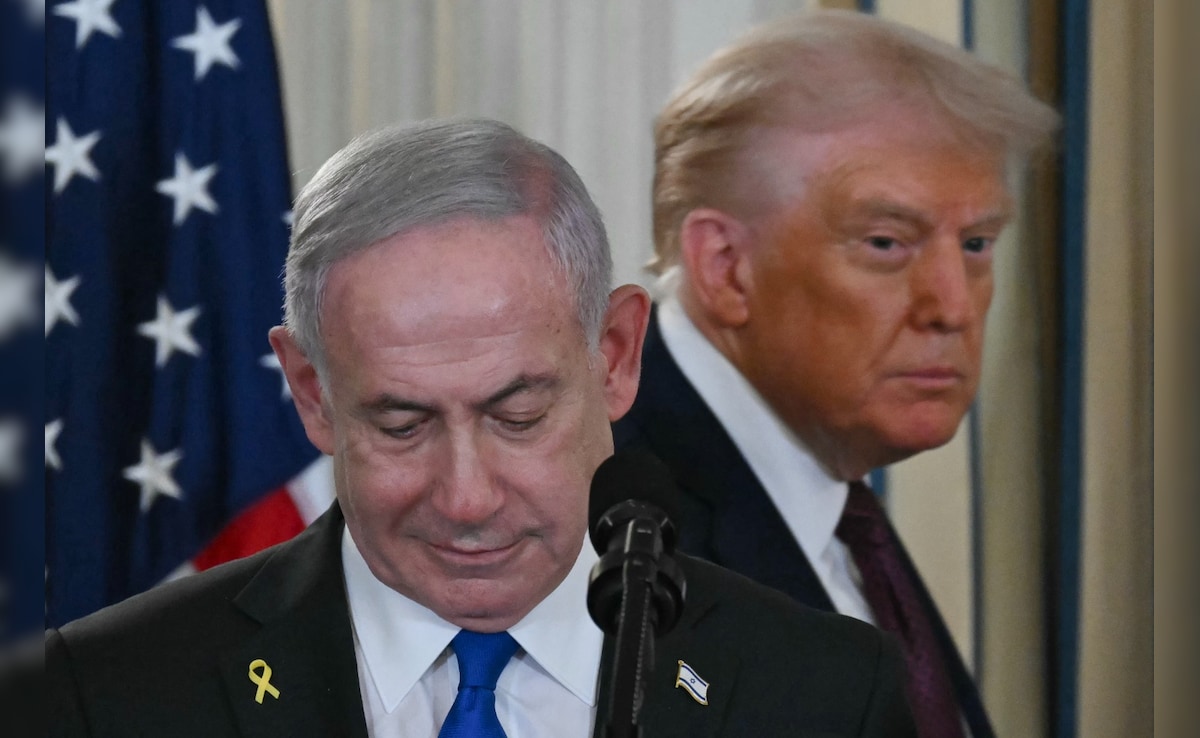
Benjamin Netanyahu’s current political position is defined by the exhaustion of "Calculated Ambiguity," a doctrine that previously allowed the Israeli Prime Minister to balance divergent domestic and international pressures. The transition from a vital war ally to a perceived geopolitical bystander is not an emotional narrative of loneliness but a measurable decay in Strategic Leverage. This decay is driven by a breakdown in three specific operational theaters: the Washington-Tel Aviv security architecture, the internal cohesion of the Israeli emergency cabinet, and the diminishing returns of the "mowing the grass" military doctrine.
The Triad of Diplomatic Depletion
The erosion of Netanyahu’s international standing follows a predictable path of diplomatic diminishing returns. When a state’s military objectives remain undefined or unachievable within a standard political horizon, allies transition from proactive support to risk mitigation.
1. The Washington Friction Point
The United States has historically provided Israel with a "diplomatic iron dome" at the United Nations and other international bodies. This protection is contingent on a shared understanding of the "day after" scenario. Netanyahu’s refusal to define a post-conflict governance structure for Gaza creates a Policy Vacuum. This vacuum forces the U.S. to choose between endorsing indefinite occupation—a violation of long-standing regional stability goals—or distancing itself to preserve its own credibility with Arab partners.
The mechanism of isolation here is functional: the U.S. State Department requires a roadmap to justify continued munitions transfers and political cover. Without that roadmap, the bilateral relationship moves from strategic alignment to transactional friction.
2. The Regional Integration Deadlock
The Abraham Accords were built on the premise that Israel could normalize relations with the Arab world while bypassing the Palestinian issue. The current conflict has reintroduced the Palestinian question as a prerequisite for regional stability. Netanyahu’s inability to pivot toward a regional security framework—largely due to his dependence on far-right coalition partners—has turned potential regional allies into observers. The cost of being seen as an enabler of the status quo is now too high for Riyadh or Abu Dhabi, leading to a tactical freeze in normalization efforts.
3. The International Legal Pincer
The move from political criticism to legal scrutiny in the ICC and ICJ represents a shift in the nature of Israeli isolation. It is no longer a matter of differing opinions on tactics; it is the institutionalization of Israel’s pariah status. For Netanyahu, this is a personal and professional bottleneck. The legal pressure limits his freedom of movement and forces a defensive posture that prevents proactive diplomacy.
The Domestic Fragility Index
Netanyahu’s isolation is equally a product of internal structural failures. His leadership style, which prioritizes coalition survival over strategic clarity, has created a Decision-Making Bottleneck.
The Coalition Constraint Function
Netanyahu operates under a strict mathematical constraint: his government’s survival depends on the 14 seats held by the Otzma Yehudit and Religious Zionist parties. Their policy requirements—unfettered settlement expansion and total military control of Gaza—are diametrically opposed to the requirements for maintaining the U.S. alliance and regional stability.
- Action A: Agree to a ceasefire/hostage deal (U.S. requirement) -> Results in coalition collapse.
- Action B: Maintain total military pressure (Coalition requirement) -> Results in international sanction and internal protest.
This binary choice removes his ability to maneuver, which was historically his greatest political asset. He is no longer the architect of Israeli policy but its prisoner.
The Erosion of Public Trust
Security was the primary value proposition of the Likud brand. The systemic failure of October 7th destroyed the "Mr. Security" persona, leaving Netanyahu to rely on "Total Victory" as a replacement metric. However, "Total Victory" is an ill-defined objective that lacks a measurable end-state. As the gap between military rhetoric and the reality of the hostage situation widens, the public’s willingness to sustain the economic and social costs of war diminishes. The internal protest movement is not merely a social phenomenon; it is a signal that the domestic base of support for the current war strategy has reached a point of exhaustion.
The Military Doctrine Failure
For over a decade, Netanyahu’s strategy relied on "mowing the grass"—periodic military operations intended to degrade Hamas's capabilities without seeking a definitive political resolution. This doctrine was predicated on two assumptions:
- Hamas could be deterred through economic incentives and tactical military strikes.
- The Palestinian issue could be "managed" indefinitely without a two-state or one-state resolution.
The collapse of these assumptions has left the Israeli Defense Forces (IDF) in a state of Strategic Drift. The military can clear territory, but it cannot hold it without a political administration to follow. This creates a cycle of "re-clearing" areas like Northern Gaza, leading to troop fatigue and increased casualties without progressing toward a conclusion.
The Quantification of Isolation
We can measure the extent of Netanyahu’s isolation through three key indicators:
- The Frequency of High-Level Bilateral Engagements: There is a documented decline in direct, unscripted communication between Netanyahu and the Biden administration, replaced by formal statements and public disagreements.
- The Sovereign Credit Rating: Lowered ratings and negative outlooks from agencies like Moody’s and S&P reflect the market's assessment that the current political-military path is unsustainable for Israel’s economy.
- The "Hostage Value" Decay: As time passes, the leverage gained through military pressure decreases as the physical safety of the hostages becomes more precarious, narrowing the window for a negotiated settlement that would satisfy the Israeli public.
The Strategic Path Forward
Netanyahu’s current trajectory suggests a move toward a "Fortress Israel" model—an isolated state that prioritizes internal ideological purity and survival over global integration. However, this model is incompatible with Israel’s high-tech, export-driven economy and its reliance on Western security cooperation.
To break the isolation, a fundamental shift in the Strategic Objective is required. The focus must transition from the destruction of an ideology (Hamas) to the establishment of a regional security architecture. This involves:
- Defining the Civil Administration: Empowering a non-Hamas Palestinian entity to manage Gaza’s daily affairs, thereby providing an "exit ramp" for the IDF and a point of engagement for Arab partners.
- Synchronizing with the U.S. Electoral Cycle: Recognizing that the window for unconditional American support is closing, Israel must secure a long-term defense memorandum before the political climate in Washington shifts further toward conditional aid.
- Restructuring the Coalition: Moving away from a dependency on extremist factions to a broader, more centrist government that can withstand the political shocks of a peace process or a long-term ceasefire.
The isolation of Benjamin Netanyahu is not a temporary dip in popularity; it is a structural misalignment between his survival tactics and the strategic needs of the state. If the Prime Minister remains unable to reconcile these two forces, the state will continue to absorb the costs of his diminishing maneuverability. The final move is not a tactical one on the battlefield, but a structural one in the halls of the Knesset.