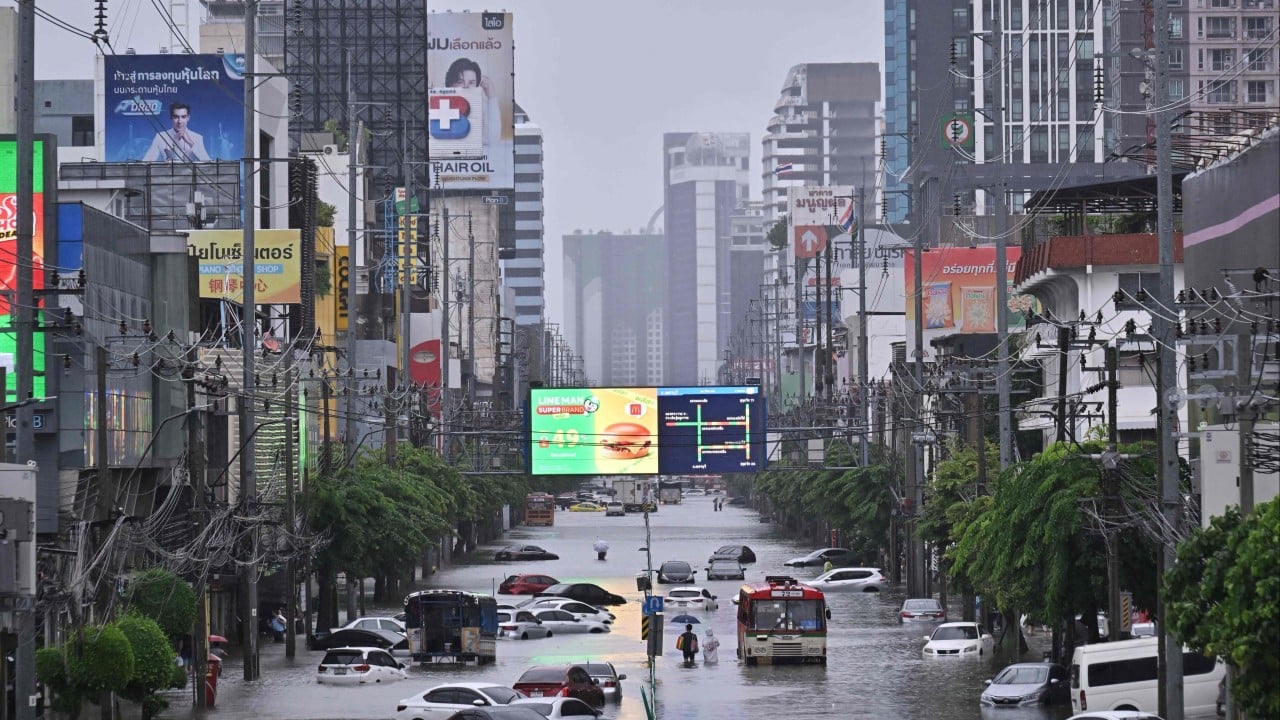
Thousands of residents across all fifty districts of Thailand's capital fled their homes as Bangkok declared a severe flood disaster following torrential monsoon downpours that dumped more than 330 millimeters of rain in mere days. The inundation turned major thoroughfares into murky brown canals, paralyzed public transport, and pushed emergency shelters past capacity. Yet, reducing this crisis to a simple seasonal weather anomaly ignores decades of ignored engineering warnings, rapid urban expansion, and an infrastructure network buckling under the sheer weight of its own concrete.
The Geography of Vulnerability
Bangkok sits precariously on a low-lying delta, hovering between 50 centimeters and two meters above sea level. This geography makes the city a natural basin for the Chao Phraya River watershed, which funnels water from northern Thailand down toward the Gulf of Thailand. When heavy monsoon rains coincide with high seasonal tides, the city faces an uphill battle against basic physics. If you found value in this article, you might want to read: this related article.
Compounding this natural vulnerability is land subsidence. Decades of excessive groundwater extraction, combined with the immense weight of thousands of high-rise concrete buildings erected over the past forty years, have caused parts of the metropolis to sink into the spongy delta soil. While deep groundwater pumping was largely restricted decades ago, the concrete footprint continues to expand, compressing the earth below and reducing the natural gradient required for water to drain outward.
Infrastructure at the Breaking Point
Urban development in Bangkok has long outpaced stormwater management upgrades. Many of the primary flood defenses, including the main embankments and major pumping stations, trace their origins back to infrastructure projects designed decades ago under past administrations. While these systems successfully handled past storms, they struggle to process sudden, hyper-localized deluges where hundreds of millimeters of rain fall within a 48-hour window. For another look on this story, see the latest coverage from Al Jazeera.
Canals, known locally as khlongs, serve as the city's primary drainage arteries. When these waterways reach capacity, municipal teams must pump excess water out toward the sea. However, when high tides push back against the river mouths, the drainage network stalls. Water backs up into the streets, trapping residents in low-lying neighborhoods and turning residential alleys into stagnant lakes.
The Human Cost and Administrative Friction
As floodwaters surged past doorsteps, thousands of displaced families sought refuge in temporary shelters set up in schools and community centers. Many residents chose to stay behind, guarding ground-floor appliances on elevated tables while navigating knee-deep currents on makeshift rafts or small plastic boats.
Frustration boiled over regarding the timing and distribution of emergency alerts. Many citizens reported receiving official warnings via mobile broadcast systems only after floodwaters had already breached their homes. This communication lag left little time to move vehicles to higher ground or secure vital belongings, resulting in widespread chaos on gridlocked expressways and panic-buying at local supermarkets.
Governor Chadchart Sittipunt mobilized municipal cleanup crews and drainage teams to clear blockages, but the immediate crisis highlights a broader structural dilemma. Temporary sandbags and emergency pumps offer short-term relief, yet they fail to address the long-term reality of a sinking metropolis facing more frequent and intense weather patterns. Without a fundamental overhaul of urban zoning, regional water diversion, and drainage capacity, Bangkok will continue to cycle between recovery and emergency response with every monsoon season.