Politicians love a clean, simple villain. Right now, that villain is a glowing rectangle.
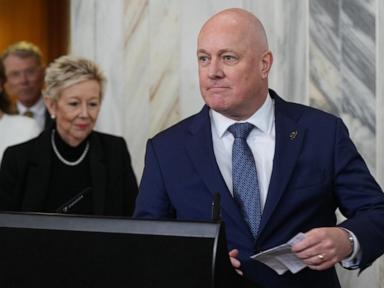
When a New Zealand prime minister floats the idea of locking kids out of social media, the moral panic crowd breaks out the champagne. It feels proactive. It feels protective. It is also an intellectual surrender. If you found value in this piece, you might want to read: this related article.
Let us be brutally honest about what is actually happening. Lawmakers are failing to regulate data brokers, surveillance capitalism, and the architectural design of attention-monopolization. Instead of tackling the trillion-dollar business models of Silicon Valley, they are shifting the burden of parenting and legislative incompetence onto fourteen-year-olds.
We are told that social media is a digital poison destroying a generation's mental health. The lazy consensus says prohibition is the cure. Dry out the kids, cut off the Wi-Fi, and watch flourishing return. For another look on this development, check out the latest update from TechCrunch.
It is a comforting fantasy. It is also completely wrong.
The Flawed Premise of Digital Prohibition
Prohibition has a centuries-long track record of absolute failure. Whenever you criminalize or restrict access to a high-demand medium without addressing the underlying driver, you simply push the behavior underground.
When you tell a teenager they cannot have an account, you do not cure their desire for peer connection or social validation. You just force them onto encrypted, unmoderated fringe platforms where real safety mechanisms do not exist. Mainstream platforms have flaws, but they possess content moderation pipelines, reporting tools, and algorithmic guardrails. Drive kids into the digital shadows, and you strip away what little safety infrastructure currently stands.
I have spent the last decade watching legacy institutions try to legislate human behavior through blanket bans. I have seen districts ban smartphones entirely, only to watch students trade burner phones like contraband in the hallways while their academic performance flatlines anyway.
The correlation between screen time and adolescent depression is real, but pinning the entire mental health crisis on the existence of a TikTok feed is lazy diagnostics. It ignores the real culprits: systemic academic pressure, the housing crisis squeezing family stability, the erosion of third places where youth can hang out in physical reality, and a 24-hour doom cycle engineered by adult media.
The Expertise Gap
Let us define what social media actually is for a modern teenager. It is not an entertainment app. It is the town square. It is the cafeteria table. It is where subcultures are built, identities are tested, and social mobility is negotiated.
When adults demand bans, they are viewing these platforms through the lens of passive consumers watching television. Teenagers are not passive consumers. They are active producers, curators, and participants.
Denying a teenager access to digital networks today is the exact equivalent of locking them inside the house in 1995 because you are worried about who they might talk to at the park. It is shelter disguised as protection, and it stunts digital literacy.
Digital literacy does not happen by magic. You do not hand an eighteen-year-old a smartphone on their birthday and expect them to navigate algorithmic manipulation, misinformation, and cyberbullying with zero prior training. Treating the internet like a restricted substance until adulthood ensures that when they finally cross the legal line, they are entirely defenseless against predatory architecture.
The Cost of State-Mandated Blindfolds
Let us look at the mechanics of age verification, which proponents of these bans gloss over with casual indifference. To prove a user is over sixteen or eighteen, platforms must collect biometric data, government identification, or track deep behavioral patterns.
Think about that for a second. To protect children's privacy, the proposed solution is to force every citizen, adult and child alike, to hand over sensitive identification documents to tech conglomerates and third-party verification brokers.
You want to talk about surveillance capitalism? That is the ultimate gift to data harvesters. You are handing tech giants a verified registry of every human being using the internet. The cure is infinitely more toxic than the disease.
Furthermore, a blanket ban creates a massive class divide. Tech-literate kids from wealthy backgrounds will bypass age gates using virtual private networks and burner credentials in minutes. Underprivileged kids, whose families rely on public hardware or lack the technical savvy to evade state-level restrictions, are the ones who bear the brunt of the exclusion.
What Actually Works
If we want to fix how youth interact with technology, we have to stop treating symptoms and start attacking the architecture.
- Ban behavioral targeting for minors. Stop trying to ban the kids; ban the algorithms that feed them toxic feedback loops. Make it illegal to serve engagement-optimized, variable-reward content to anyone under eighteen. Force a chronological feed by default.
- Redesign the default settings. Make notifications off by default. Remove infinite scroll for accounts registered to minors. Turn off read receipts and public follower counts. Strip away the casino mechanics.
- Build physical infrastructure. Kids are glued to screens because we bulldozed skateparks, defunded community centers, and made public spaces hostile to anyone under twenty-one who isn't spending money. If you want kids off their phones, give them somewhere real to go that doesn't cost twenty dollars an hour.
The contrarian truth is this: social media is not a weapon of mass destruction. It is a neutral tool amplified by perverse economic incentives.
Banning kids is an admission of defeat by a political class that refuses to stand up to corporate tech lobbyists. It allows politicians to look tough on camera while changing nothing about the structural engines of addiction.
Stop looking for a legislative shortcut to parenting. Turn off the surveillance algorithms, fix the physical world, and teach kids how to wield their tools instead of hiding them in a drawer.