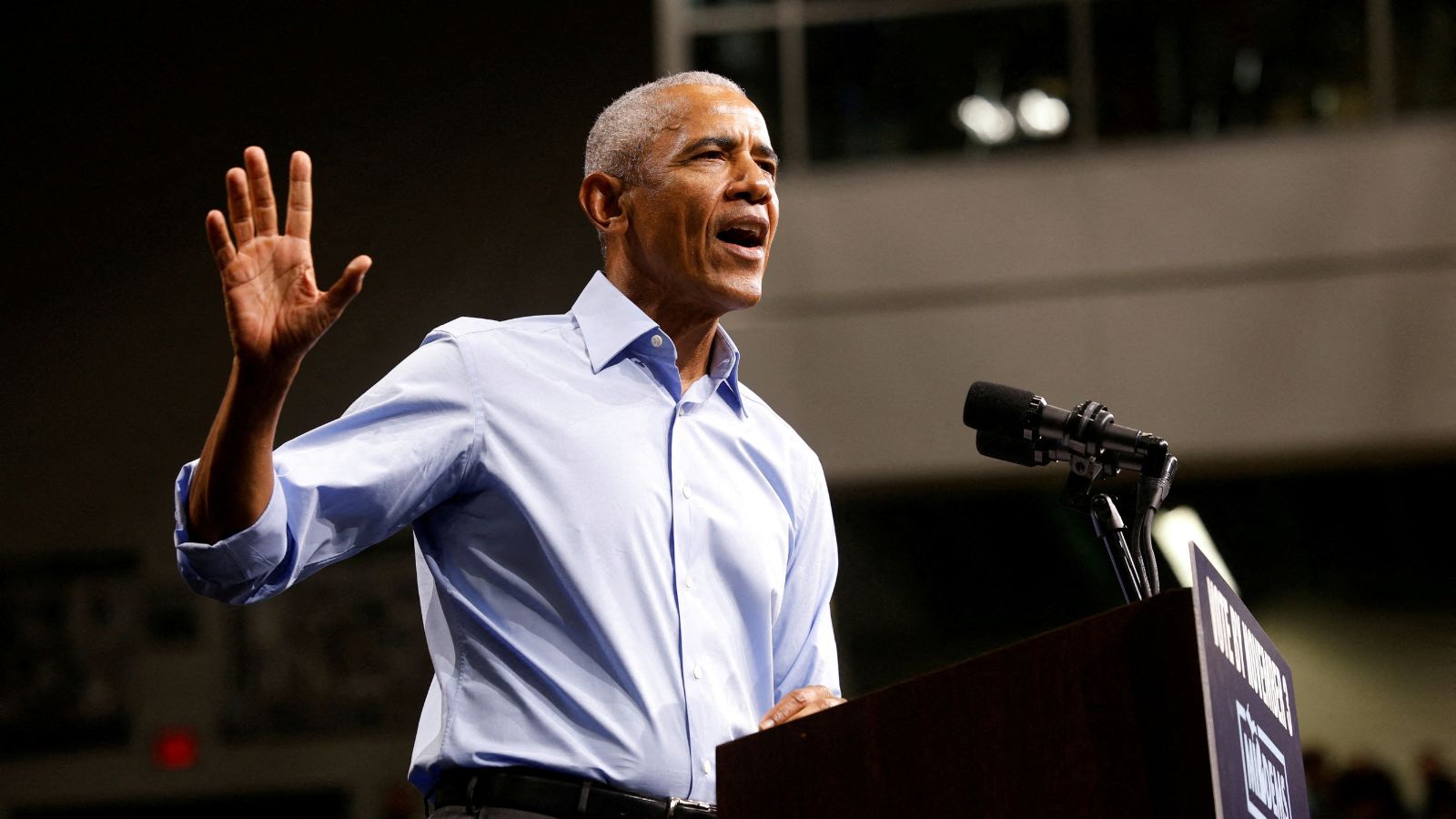
Barack Obama wants you to believe that voters just handed Democrats a midterm victory because America is exhausted by division and starving for unity.
It is a soothing bedtime story. It is also completely detached from how modern elections actually work. You might also find this similar story insightful: When the Ballots Stall and the Clock Starts Ticking.
When the former president steps up to a microphone and frames a midterm win as a mandate for "politics that unites rather than divides," political journalists nod along like bobbleheads. They write the predictable copy. They praise the statesmanlike tone. They treat a victory speech as an objective exit poll.
Stop falling for the press release. As reported in detailed reports by The Washington Post, the effects are widespread.
I have spent years watching political campaigns and corporate communications teams burn tens of millions of dollars chasing the mirage of "unifying messaging." Every single cycle, consultants peddle the same comforting fiction: if you just sand down your edges, speak in soaring platitudes about coming together, and promise to lower the temperature, the mythical moderate voter will reward you with a landslide.
It rarely happens. In fact, the data behind midterm elections proves the exact opposite.
The Myth of the Unity Mandate
To understand why Obama’s framing fails scrutiny, you have to look at the mechanics of midterm turnout.
Presidential elections draw casual, low-information voters who occasionally respond to broad, aspirational vibes. Midterm elections do not. Midterms are low-turnout, high-friction warfare decided almost entirely by base mobilization and negative partisanship.
Political scientists like Alan Abramowitz and Lilliana Mason have spent decades documenting this reality. Modern American voters are not sitting at their kitchen tables wishing the two parties would hold hands and sing around a campfire. They are sorted into rigid ideological and cultural camps, and their primary motivation at the ballot box is stopping the other side from taking power.
- Negative partisanship drives turnout: Voters show up because they fear or dislike the opposing party's agenda far more than they love their own party's platform.
- Thermostatic public opinion rules the midterms: Political scientist Christopher Wlezien coined the "thermostatic model" to explain why the party in the White House almost always loses ground in midterms. When the party in power pushes policy in one direction, the electorate turns the thermostat the other way to check their power.
- Swing voters are mostly an illusion: True undecided voters who carefully weigh policy white papers make up a microscopic fraction of the electorate. Most "independents" are partisan leaners who vote reliably for one side while rejecting the party label.
When Democrats win midterm races, they do not win because they magically healed the national divide. They win because their base was angrier, better organized, and more terrified of the alternative than the Republican base was.
Calling that "unity" is like calling a bar fight a group hug because everybody ended up on the floor together.
Why Politicians Sell the Unity Lie
If the political science is this clear, why does a strategist as sharp as Barack Obama keep pushing the unity narrative?
Because in politics, language is not a mirror; it is a weapon.
Obama is not offering an academic diagnosis of voter behavior. He is executing a classic post-election framing strategy designed to accomplish three very specific goals:
- Claiming the moral high ground: By defining your coalition as the "unifiers," you automatically brand your opponents as the "dividers." It is a rhetorical trap. If the opposition attacks your policy agenda, you accuse them of sowing division.
- Reassuring nervous donors and institutions: Corporate donors, suburban professionals, and institutional gatekeepers hate chaos. They want stability. Framing a partisan victory as a return to normalcy keeps the checks clearing and the editorial boards friendly.
- Manufacturing a mandate: A narrow midterm victory built on localized grievances and anti-incumbent backlash does not sound inspiring. Rebranding it as a sweeping national rejection of division gives incoming lawmakers political cover to govern as if they have broad consensus.
Imagine a scenario where a company narrowly avoids bankruptcy by slashing prices and aggressively poaching its competitor's clients. In the quarterly earnings call, the CEO announces, "Our success proves customers want harmony in the marketplace." Nobody on Wall Street would buy it for a second. Yet in Washington, reporters print that exact spin on the front page without blinking.
The Dangerous Cost of Believing Your Own Spin
There is a massive catch to this strategy, and it is why so many winning parties immediately faceplant in the following election cycle.
When leaders start believing their own unity rhetoric, they misread their own voters.
I have seen this play out in campaign war rooms over and over again. A candidate wins a tough race by hammering sharp, polarizing kitchen-table contrasts—calling out corporate price gouging, defending specific rights, or attacking an opponent's extreme record. The day after the election, the consultants walk in, declare that voters want "bipartisan cooperation," and convince the winner to abandon every sharp edge that got them elected.
Two years later, their base stays home, demoralized and betrayed, while the opposition—who never stopped fighting—steamrolls them.
Let us be brutally honest about the downside of rejecting the unity narrative: governing without consensus is exhausting, ugly, and carries real institutional risk. If both parties treat every election purely as zero-sum trench warfare, legislative gridlock deepens and public trust in democratic institutions continues to erode. Nobody wins when the government shuts down every six months.
Pretending that division does not exist, however, does not fix the problem. You cannot solve a structural conflict by pretending everyone secretly agrees.
What Voters Actually Want From Winners
If Americans are not voting for kumbaya unity, what are they actually asking for when they hand a party control of Congress or statehouses?
They want competence, clarity, and delivery.
Voters have a remarkably high tolerance for partisan friction when they see tangible results in their bank accounts and neighborhoods. They do not care if Washington politicians like each other. They care whether groceries cost less, whether local schools work, whether infrastructure gets built, and whether their basic freedoms are protected.
Look at the most successful political operators of the last half-century. None of them succeeded by pretending ideological differences did not matter. They succeeded by drawing bright lines, building durable coalitions around concrete material interests, and delivering wins that made voters' lives measurably better.
How to Read Political Victory Speeches Like an Insider
Next time a major political figure steps up to declare what "the American people" just voted for, ignore the adjectives and run this three-step filter:
- Look at the turnout math, not the rhetoric: Check which demographic groups surged and which stayed home. Did the winner actually flip opposing voters, or did they simply turn out more of their own loyalists?
- Follow the money in the final 30 days: Look at the closing attack ads that campaigns spent millions running in battleground districts. Campaigns spend their final dollars on the message that actually moves votes—and it is almost never a message about "unity."
- Watch the first 100 days of legislation: See whether the winning party immediately pushes partisan priorities or compromises on core planks. Actions reveal the true mandate; speeches are just theater.
Stop Confusing Polite Rhetoric With Political Reality
Barack Obama is one of the most gifted communicators in modern American history. His superpower has always been his ability to wrap hard-nosed political calculation in the velvet glove of aspirational idealism.
That talent won him two terms in the White House. It also routinely tricks pundits into mistaking his branding for reality.
Democrats did not win their midterm races because America suddenly fell in love with political harmony. They won because in a deeply divided, hyper-polarized country, they fought harder, targeted sharper contrasts, and mobilized their coalition more effectively than the other side.
Until political commentators stop grading speeches on their poetry and start measuring elections by their mechanics, they will keep getting blindsided by the exact voters they claim to understand.


