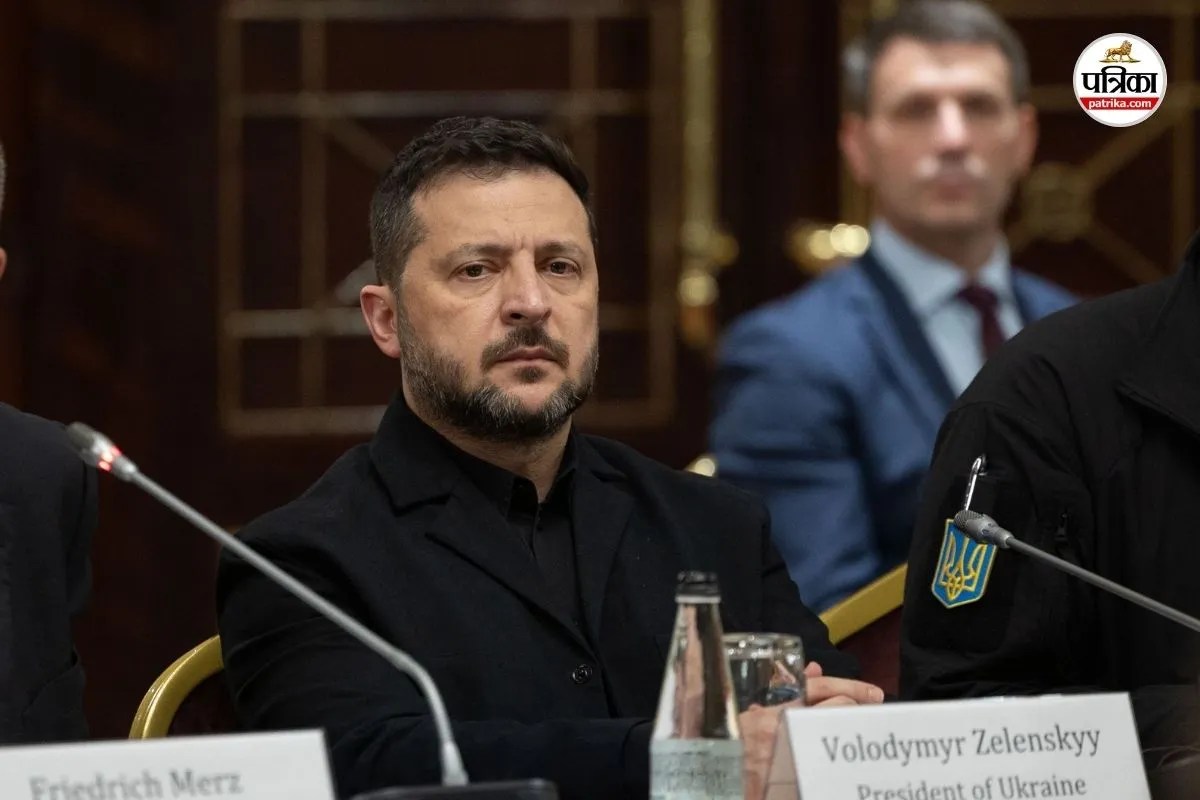
Prematurely lifting sanctions before a leaders' summit strips Kyiv of its remaining negotiation chips while turning contested territory into a permanent concession rather than a bargaining counter. Standard news coverage of Volodymyr Zelenskyy's warning to Washington treats the dispute as a simple clash of quotes over diplomatic etiquette, territory, and Western pressure. A sharper strategic reading looks at three interlocking mechanisms: how sanction sequencing alters reservation prices, why territorial swaps fail as a credible commitment device, and how air-defense bottlenecks change the cost of holding out.
What Standard Coverage Misses About the Negotiation Structure
Routine reporting on diplomatic friction typically lines up three surface claims side by side: Zelenskyy opposes lifting sanctions ahead of three-way talks, Zelenskyy rejects any exchange of Ukrainian land, and Kyiv presses for faster air-defense deliveries alongside interim confidence measures. Treating those points as a list of grievances obscures the sequence that governs leverage. Sanctions function as an instrument of coercive bargaining only while they remain reversible or conditional on verifiable Russian concessions. Once Washington removes sanctions before a leaders' meeting, Moscow captures the economic relief up front while deferring any reciprocal restraint on the battlefield.
In bargaining theory, a party's outside option shapes how much concession it can refuse without triggering a collapse in talks. Zelenskyy's argument rests on a clear asymmetry: if economic pressure on Russia is eased early, Ukraine loses leverage before substantive border or security terms are even on the table. That logic also explains why Kyiv insists that technical teams prepare a framework while decisions on borders remain reserved for top-level leaders. Working-level negotiators can map sequencing, monitoring, and humanitarian mechanics, whereas territorial boundaries carry domestic political and constitutional weight that lower-level drafts cannot settle under pressure.
When economic pressure is traded away before a summit convenes, the party surrendering leverage pays a sunk cost that cannot be recovered if talks stall.
Distinguishing verified diplomatic positions from analytical projections keeps the analysis grounded:
- Established facts: Zelenskyy has publicly opposed lifting sanctions on Russia prior to three-way talks, ruled out territorial exchanges, called for technical-level groundwork while keeping border decisions at the leaders' level, cited slow Patriot air-defense deliveries relative to incoming Russian strikes, and pointed to interim measures such as halting strikes on energy infrastructure, protecting Black Sea grain corridors, and exchanging prisoners.
- Analytical hypotheses: Lifting sanctions early would likely weaken Kyiv's negotiating position more than it would accelerate Moscow's willingness to compromise on core sovereignty claims, and incremental ceasefires on infrastructure or maritime transit are easier to verify than comprehensive border settlements.
The Cost Function of Sanctions Sequencing
Sanctions work through two channels at once: direct fiscal and trade friction on the targeted state, and diplomatic leverage for the coalition imposing them. If relief arrives before a settlement is reached, the coalition gives up future bargaining currency in exchange for uncertain promises. Even if Moscow values sanctions relief, its incentive inside a negotiation is to extract maximum concessions while offering minimal irreversible commitments.
Consider a stylized bargaining trade-off between two states and a mediating power. Suppose sanctions impose a monthly economic drag on Moscow while Kyiv relies on external weapons transfers and diplomatic backing to sustain its defense. If the mediator removes sanctions ahead of a summit, Moscow's cost of prolonging talks falls while Kyiv's relative bargaining weight drops. The second limitation of early relief is signal distortion: lifting pressure before a deal signals that external patience is thinning, which encourages the stronger military actor to wait for even more favorable terms.
A disciplined negotiation sequence therefore treats sanctions relief as a late-stage reward tied to verified compliance rather than an opening bid. Yet sanctions also carry limits that strategy analysts must state plainly:
- Evasion and rerouting: Sanctions rarely freeze an economy overnight when alternative trade routes, energy buyers, or domestic import substitution exist.
- Coalition divergence: Maintaining tight restrictions over years requires continuous political alignment among allies with different trade exposures and domestic priorities.
- Non-linear battlefield effects: Economic strain on Moscow does not translate linearly into immediate tactical retreats on the front line, especially when attrition dynamics remain active.
Why Territorial Swaps Fail as a Credible Commitment
Proposals to end a war through "land swaps" sound symmetrical on paper, yet they break down under commitment and sovereignty problems. Territory is not a fungible commodity like grain tonnage or monetary compensation; losing sovereign land alters defensive geography, population security, and domestic legitimacy permanently. Once a state cedes territory formally or accepts an unfavorable border arrangement under duress, reversing that concession later is far harder than reversing a temporary ceasefire.
The first reason territorial swaps stall is the commitment problem. A promise to halt further advances or respect a new line only holds if both sides expect the post-deal balance of power and enforcement mechanisms to deter future violations. Without ironclad guarantees, concessions made today can become the launchpad for renewed pressure tomorrow. The second bottleneck is domestic consent: imposing border concessions from outside without public legitimacy creates deep political instability inside the country asked to surrender land.
By contrast, bounded operational steps—such as pausing strikes on energy infrastructure, keeping Black Sea grain corridors open, and returning prisoners of war—address immediate human and economic pain without settling sovereignty. Those measures have a clear operational advantage: compliance can be observed directly through power grid stability, shipping flows, and prisoner releases. Still, even partial truces face friction when aerial bombardment continues or when trust between sides is near zero.
Air-Defense Bottlenecks and Interim Truce Mechanics
Diplomatic positions do not operate in a vacuum; they are constrained by physical replenishment rates. When air-defense interceptors arrive more slowly than incoming missiles, every delay translates into infrastructure damage, civilian risk, and tighter operational choices for defenders. A negotiator facing an active missile threat has a narrower margin to trade away pressure instruments than a negotiator operating from a position of air-defense surplus.
That operational reality explains why Kyiv pairs a hard line on sovereignty with pragmatic interest in narrower, verifiable de-escalation steps:
- Protect high-value civilian and economic nodes: Halting strikes on energy systems reduces winter vulnerability and economic disruption without requiring a final political settlement.
- Stabilize commercial transit: Securing Black Sea grain corridors preserves export revenue and global food supply predictability through observable maritime rules.
- Execute humanitarian exchanges: Full prisoner-of-war swaps create immediate, verifiable outcomes that test whether working-level channels can deliver concrete results.
- Separate technical drafting from leaders' decisions: Letting specialists work out verification and sequencing rules avoids gridlock while keeping final border questions at the summit level.
This phased approach has real boundaries. Partial pauses can be selective—a side might stop hitting one category of targets while intensifying pressure elsewhere—and any truce remains vulnerable to disputes over violations. Nor does a ceasefire on energy or shipping resolve underlying disputes over sovereignty and long-term security.
Strategic Play for Kyiv and Allied Negotiators
Kyiv and its diplomatic partners should lock in a strict conditional-sequencing rule: keep sanctions intact until concrete, verifiable de-escalation steps are agreed upon, pair technical-level drafting with narrow humanitarian and infrastructure truces, and refuse any pre-summit territorial trade-offs. Simultaneously, allies supporting Ukraine should treat air-defense replenishment speed as a core component of negotiation leverage rather than a separate logistics afterthought, recognizing that faster interceptor delivery strengthens Kyiv's ability to sustain talks without conceding sovereign territory under duress.