Lead is a thief.
Anyone who has ever sat in a sterile clinic waiting for a blood panel to come back knows the quiet dread that heavy metals inspire in the modern mind, a slow-motion terror of invisible accumulation inside bone and brain tissue. We spend fortunes ripping old pipes out of historic homes and testing vintage ceramic glazes just to keep a fraction of a microgram away from our children's skin.
Yet three thousand years ago along the sun-baked banks of the Nile, the most powerful, medically sophisticated civilization on earth ground lead into a velvety black powder and painted it directly onto their eyelids every single morning.
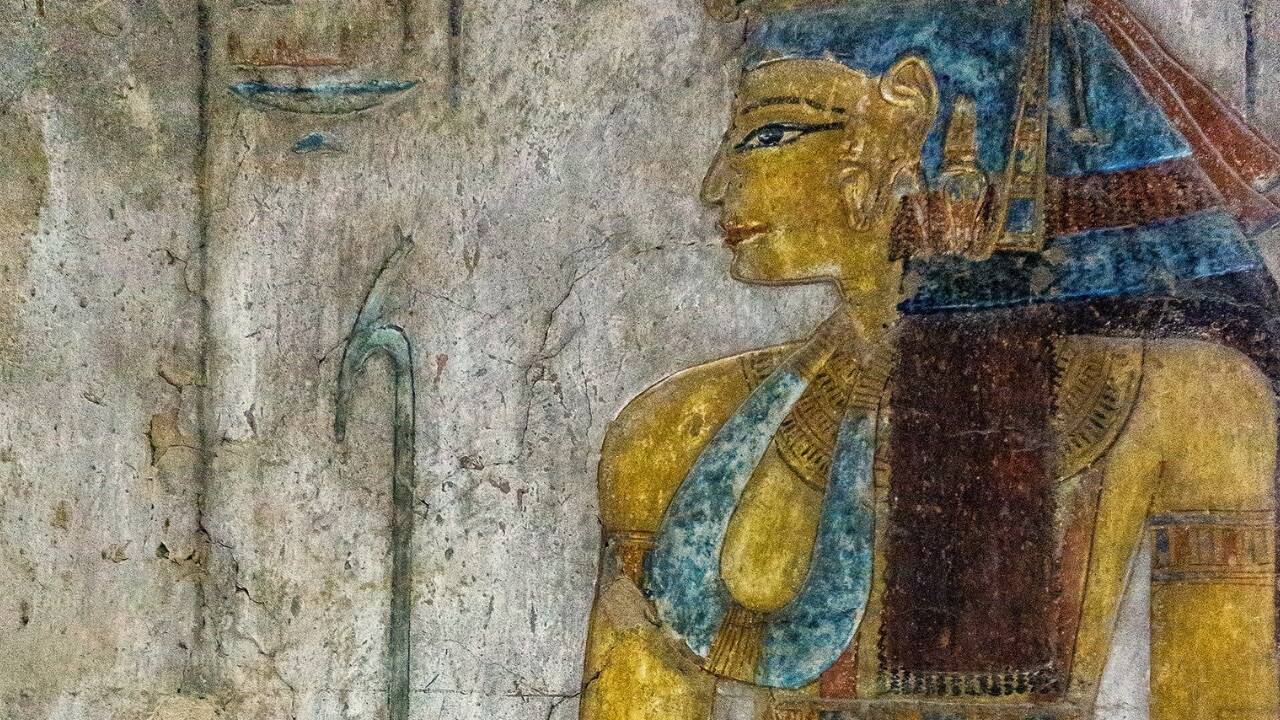
Look at any limestone bust or painted papyrus from the New Kingdom, and the eyes stare back at you first. Thick, dramatic wings of dark pigment stretch toward the temples like the feathers of a falcon. Modern beauty editors love to treat ancient Egyptian kohl as the ultimate vintage glamour flex, a glamorous precursor to the liquid eyeliner sitting in your bathroom drawer right now. We assume Cleopatra lined her eyes in soot and crushed galena purely for vanity, seduction, or the theatrical flair of a queen who knew how to command a room.
We got the story completely backward.
The black line around an ancient Egyptian's eyes was not an accessory. It was armor. And the chemistry hidden inside that tiny alabaster jar turns everything we think we know about ancient medicine, vanity, and poison upside down.
The River That Gave Life and Took Sight
To understand why a mother in ancient Thebes would willingly smear a neurotoxin across her toddler's eyelashes at dawn, you have to step out of an air-conditioned room and stand beside the Nile during the annual inundation.
Imagine—as a hypothetical window into a very real daily reality—a woman named Meritaten waking before sunrise in a mudbrick home near Memphis around 1350 BCE. Outside her door, the river is swollen and brown, receding after months of flooding and leaving behind a thick, fertile silt that will feed the empire. That same receding water also leaves behind millions of stagnant, warm pools buzzing with flies and teeming with bacteria.
The glare off the water and the white desert limestone is blinding. Within an hour of sunrise, the heat radiates upward in shimmering waves, drying out the cornea and inviting fine, abrasive desert sand into every tear duct. Worse still are the river-borne pathogens—bacterial conjunctivitis, trachoma, and parasitic infections that could turn a minor eye irritation into permanent blindness within a matter of weeks. In an agrarian society without antibiotics, losing your sight meant losing your livelihood, your independence, and often your survival.
Meritaten does not reach for a mirror out of narcissism. She reaches for a small, cylindrical vessel carved from translucent calcite, pulls out a slender applicator stick made of bronze or wood, dips the tip into a dark, metallic paste, and draws a heavy, deliberate line around her own eyes before turning to do the exact same thing to her young son.
She believes she is invoking the protection of Horus, the sky god whose eye was torn out and miraculously restored. She believes the dark pigment wards off the evil eye and pleases the deities who guard the threshold between the body and the outside world.
She has no microscope. She has never heard of nitric oxide, macrophages, or gram-negative bacteria. Yet every morning, through a ritual wrapped in myth and beauty, Meritaten is administering one of the most sophisticated preventative ocular treatments of the ancient world.
What Was Actually Inside the Jar
For decades, modern archaeologists and toxicologists shook their heads at the contents of Egyptian cosmetic vessels. When chemical analysis first revealed the composition of ancient kohl preserved in the Louvre and the British Museum, the findings looked like a recipe for slow self-destruction.
Contrary to popular belief, authentic ancient Egyptian eye makeup was rarely made from simple charcoal or burnt almonds. Those ingredients existed, mostly among the poorest laborers who could afford nothing better. The prized, high-grade kohl—known to the Egyptians as mesdemet—was built on a foundation of lead salts.
Specifically, researchers analyzing dozens of intact cosmetic jars dating between 2000 and 1200 BCE identified four distinct lead-based compounds:
- Galena (lead sulfide), a naturally occurring mineral with a brilliant, silvery-black metallic sheen that gave kohl its signature dramatic luster.
- Cerussite (lead carbonate), a white mineral pigment often blended to soften the tone or create subtle variations in shade.
- Laurionite (lead hydroxide chloride), a rare compound that barely exists in nature.
- Phosgenite (lead chlorocarbonate), another compound almost entirely absent from natural Egyptian mineral deposits.
Look closely at those last two names. Laurionite and phosgenite do not just sit waiting in desert quarries to be dug up and crushed. When French chemist Philippe Walter and his team at the Louvre Museum's research center examined these samples using X-ray diffraction and electron microscopy, they stumbled onto a revelation that stunned both Egyptologists and chemists.
Those two lead salts had been synthesized. Deliberately. Through wet chemistry.
To manufacture laurionite and phosgenite from raw galena, ancient Egyptian artisans had to crush the lead ore into a fine powder, mix it with water, rock salt, and natron—the natural soda ash harvested from dry lake beds and used in mummification—and patiently stir and filter the mixture over weeks of repeated decanting. They had to control the pH of the solution carefully enough to prevent the lead from turning into useless white crusts, coaxing out the exact crystalline structures they wanted.
Think about the sheer labor involved in that process. You do not spend a month running multi-stage wet-chemical synthesis in clay vats just to make black face paint when soot from a cooking fire is free and already black.
The Egyptians went through an exhausting, precise chemical manufacturing process because they noticed something happening on the faces of the people who wore the synthesized paste. When people wore cheap soot, their eyes still swelled shut during flood season. When they wore the synthesized lead salts, their eyes stayed clear.
They did not know why the chemistry worked. They only knew that it did.
The Paradox of the Micro-Dose
If you ask any modern physician what happens when lead enters the human body, the answer is grim and unambiguous. Lead mimics calcium, slipping across the blood-brain barrier, disrupting enzyme systems, damaging kidneys, and stunting neurological development. I remember the first time I read the toxicology profile of lead acetate while researching historical medicine; my stomach genuinely knotted at the thought of grinding that metal into an ultrafine powder and rubbing it directly onto the mucous membranes of the eye. How could an entire civilization do this daily for three millennia without triggering a catastrophic epidemic of blindness and dementia?
In 2010, a team of French researchers led by Christian Amatore and Philippe Walter decided to stop guessing and actually measure what happens when synthesized Egyptian lead salts touch living human skin cells.
They used ultra-microelectrodes—sensors thinner than a tenth of a human hair—to observe single human keratinocytes, the cells that make up the outer layer of our skin and eyelid margins, in real time as they came into contact with sub-micromolar concentrations of laurionite.
What they saw on their monitors flipped centuries of medical assumptions on their head.
Because laurionite and phosgenite are only faintly soluble in water, they do not flood the bloodstream with toxic levels of dissolved lead when mixed with human tears. Instead, they release tiny, steady, microscopic trickles of lead ions into the tear film—concentrations so low they hover at the edge of detection.
When those trace lead ions touch the skin cells around the eye, the cells do not die. They panic—in the best possible way.
Sensing a tiny chemical intruder, the skin cells immediately trigger an immune alarm, ramping up production of nitric oxide by up to 240 percent. Nitric oxide is one of the human body's premier biological signaling molecules and frontline antimicrobial weapons. That sudden surge of nitric oxide acts like a biological flare gun, dilating local blood capillaries around the eye and summoning an army of macrophages—the white blood cells that hunt down, engulf, and destroy invading bacteria before an infection can ever take root.
Think of it like a fire drill in a crowded building. A real fire burns the structure down, just as high-dose lead poisoning destroys the nervous system. A controlled, localized alarm pulls everyone to their stations before a single spark can catch.
The Egyptians had inadvertently engineered a topical immunostimulant. By mixing fatty animal oils or vegetable lipids with trace-soluble synthesized lead salts, they created a slow-release pharmaceutical ointment disguised as high fashion. The dark pigment absorbed the blinding glare of the desert sun like modern athletes smearing black grease under their eyes on a bright stadium afternoon, while the invisible chemistry waged constant, silent warfare against the pathogens rising off the Nile.
When Medicine, Magic, and Vanity Were One Word
We love to draw neat, rigid lines between categories in the modern world. Medicine lives in a sterile pharmacy bottle with a childproof cap. Cosmetics live in glossy glass jars on a vanity tray. Religion lives in quiet sanctuaries on weekends.
To an ancient Egyptian, separating those three forces would have seemed bizarre, even dangerous.
In the Ebers Papyrus, one of the oldest and most comprehensive medical texts ever recovered, dating back to roughly 1550 BCE, dozens of prescriptions are dedicated specifically to diseases of the eye. Alongside incantations asking the gods to drive out watery discharge and inflammation, the scribes wrote down precise recipes calling for mesdemet mixed with goose fat, honey, or dried myrrh.
Consider how deeply that worldview diverges from ours. Today, if a dermatologist tells you that a tinted moisturizer contains zinc oxide to block ultraviolet rays, you appreciate the efficiency, even if you bought it mostly because it evens out your skin tone. In ancient Egypt, the aesthetic power of the thick black line and its protective power were indistinguishable. To make the eye look like the Eye of Horus was to become protected by Horus. Beauty was not a superficial mask layered over reality; beauty was the visible proof that order—what the Egyptians called Ma'at—was holding chaos and disease at bay.
Both men and women wore it. Pharaohs wore it into battle and into the afterlife, buried with finely carved kohl tubes tucked right beside their mummified hands so their eyes would remain sharp and protected in the underworld. Farmers wore it in the fields. Children wore it from infancy.
Of course, we have to stay honest about the trade-offs. Nature does not hand out free miracles without sending an invoice somewhere down the line. While the low solubility of synthesized lead salts spared wearers from acute, catastrophic poisoning, chronic daily exposure over decades still carried a silent physiological cost. Bioarchaeological studies of ancient Egyptian skeletal remains do show elevated lead levels compared to pre-industrial populations who did not use heavy-metal cosmetics. Prolonged absorption through tear ducts and accidental ingestion from wiping watery eyes inevitably contributed to low-grade systemic toxicity—subtle joint pain, mild anemia, or diminished fertility that an ancient physician would have blamed on angry spirits or seasonal humors rather than the beloved jar on the dressing table.
They paid a hidden price for their clear vision, just as we pay hidden prices for the synthetic preservatives, microplastics, and endocrine-disrupting fragrances sitting inside our modern skincare routines. Every era strikes its own uneasy bargain between protection, beauty, and risk.
The Dangerous Echo in Modern Cosmetic Aisles
Here is where the story stops being a charming piece of ancient trivia and becomes an urgent warning for anyone shopping online today.
Somewhere along the trade routes of the Mediterranean and the Middle East, the painstaking wet-chemical synthesis of laurionite and phosgenite was lost. As empires rose, fractured, and fell, the secret of those specialized Egyptian workshops vanished into the sand. Yet the cultural love affair with the dark, smoldering eye never faded. Across North Africa, the Levant, South Asia, and the Arabian Peninsula, traditional kohl—also known as surma or kajal—remained an essential staple of beauty, cultural identity, and folk protection.
Without the ancient Egyptian chemical protocols that tightly regulated ion release, however, many traditional producers simply went back to grinding raw, untreated galena ore—or worse, mixing cheap lead oxide and industrial waste pigments—into loose powders sold in unmarked brass pots and plastic vials.
And those pots still cross borders every single day.
Public health agencies from the U.S. Food and Drug Administration to Health Canada and the European Medicines Agency regularly issue urgent recalls for imported traditional kohl and surma products found containing up to 80 percent raw, bioavailable lead. Unlike the carefully synthesized, sparingly soluble compounds of New Kingdom Egypt, modern unregulated lead-based kohl dumps massive, dangerous doses of neurotoxic lead straight onto the eyelids of adults and infants—often applied to newborn babies in well-meaning cultural traditions meant to strengthen their eyes and ward off bad luck, echoing Meritaten's morning ritual across three thousand years without her chemical safety net.
Pediatricians still encounter baffling cases of severe childhood lead poisoning in cities from Montreal to New York to London, only to trace the source not to peeling wall paint or contaminated tap water, but to a tiny, ornate bottle of eye powder brought back in a suitcase from a family trip overseas.
The tragedy is almost poetic in its irony. Modern counterfeit or unrefined kohl carries all of the poison and almost none of the pharmaceutical finesse that the artisans of Memphis perfected before the Trojan War was ever fought.
Stand in front of your mirror tomorrow morning and pick up whatever tube, pencil, or serum sits closest to your hand. Look at the ingredient list printed in microscopic type along the back. Even in an age of clinical trials and regulatory boards, we still smear complex chemical cocktails onto the thinnest, most absorbent skin on our bodies—the delicate tissue framing our eyes—hoping to look a little brighter, a little sharper, a little less vulnerable to the harsh light of the day.
Cleopatra did not line her eyes in crushed lead because she was reckless, or because ancient people were too primitive to know better. She did it because, in a world where blindness waited in every gust of desert wind and every drop of river water, the thin black line around her eyes was the closest thing to a shield human hands had ever learned to build.