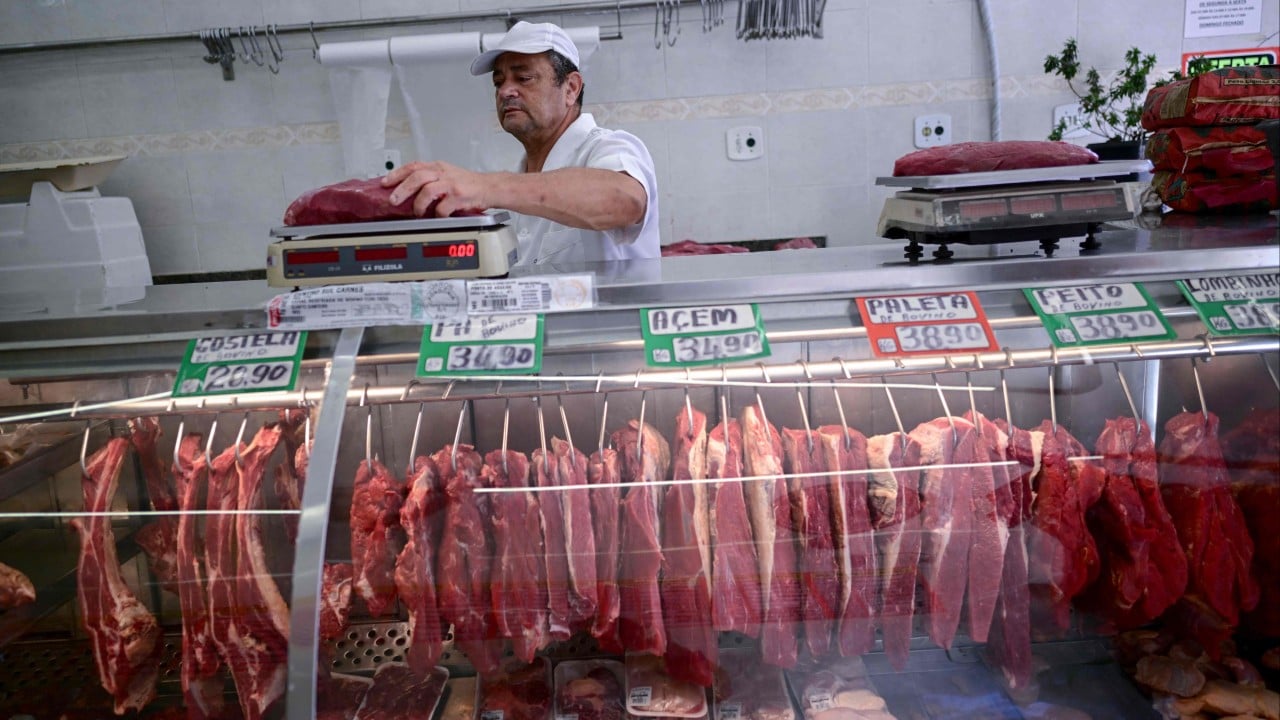
Trade diplomacy is rarely a polite exchange over tea. More often, it resembles a high-stakes poker game played with live ammunition, where sovereign states weaponize tariffs, import quotas, and sanitary inspections to bend trading partners to their collective will. When Beijing announced a staggering 55% tariff on Brazilian beef and swiftly rejected a diplomatic bid by Montevideo to absorb surplus volume through Uruguay's quota system, the global agricultural market did not just flinch—it fractured.
The immediate casualty of this maneuver is the fragile equilibrium of South American protein exports. For months, trade desks in São Paulo and Brasília had anticipated friction, but the severity of the protectionist wall caught commodity traders flat-footed. By slamming a punitive levy on the world's largest beef exporter while simultaneously blocking Uruguay from acting as a backdoor logistics hub, policymakers in China signaled a fundamental shift in their import strategy. This is no longer merely about food security or inflation management. It is a calculated restructuring of global supply chains designed to centralize leverage in Beijing's hands, leaving independent exporters scrambling for answers in a tightening market.
The Anatomy of the 55% Tariff Wall
Tariffs of this magnitude do not materialize in a vacuum. To understand why Beijing targeted Brazilian meat processors with such aggressive fiscal hostility, one must examine the shifting balance of domestic supply and international pricing pressure inside the world's second-largest economy.
For years, Chinese importers absorbed enormous volumes of discounted protein from South America, buffering local markets against domestic hog cycle fluctuations and rising operational costs. However, that reliance created a structural vulnerability. Domestic agricultural lobbies within Asia's largest economy began pushing back against foreign dominance, arguing that unchecked imports were undercutting local producers and destabilizing internal pricing mechanisms.
When meatpackers across South America scaled up production to meet insatiable overseas demand, they assumed the sheer volume of consumption would override regulatory hurdles. That assumption proved fatal. The implementation of the 55% import barrier acts as an artificial ceiling, pricing competitive cuts out of traditional distribution channels and forcing exporters to rethink their entire margin structure.
Operating margins in the processing sector are notoriously thin. A tariff spike of this scale effectively obliterates profitability on standard shipments, leaving agribusiness giants with two unpalatable choices: absorb the cost penalty and operate at a loss, or divert perishable commodities to alternative destinations with lower purchasing power and less infrastructure. Neither option stabilizes long-term revenues.
Closing the Backdoor
The secondary shockwave of this geopolitical maneuver arrived when trade officials in Beijing summarily rebuffed Uruguay's proposal. The logic behind Montevideo's bid appeared sound on paper. If direct access to major Asian ports faced insurmountable fiscal barriers, regional trade networks could reroute shipments through smaller, compliant partner nations operating under preferential bilateral quotas.
Beijing’s refusal to honor that workaround exposed a hard truth about modern trade agreements. Bilateral trade quotas are not fluid administrative instruments that can be stretched to accommodate regional overflow. They are rigid legal frameworks tied directly to strict country-of-origin verifications and sanitary tracking.
By refusing to let neighboring producers piggyback on established concessions, regulatory authorities closed a loophole that major exporting nations had historically relied upon during regional trade disputes. This refusal sent a chilling message across the entire Mercosur bloc. Collective bargaining power breaks down entirely when external buyers can isolate individual member states, playing them against one another while maintaining absolute unilateral control over market access.
Uruguay now finds itself caught in the crossfire. While its own producers maintain relatively stable access terms compared to their northern neighbors, the sudden refusal to expand quota allowances shatters the illusion of regional trade solidarity. Exporters in Montevideo can no longer position themselves as the neutral middlemen of South American agriculture. They must navigate a polarized landscape where every metric of supply is subject to intense political scrutiny.
The Ripple Effect on Global Supply Chains
Commodity markets detest uncertainty, and the current standoff has introduced a volatile premium into every global protein contract. When traditional trade routes are disrupted by sudden regulatory shocks, the immediate consequence is a frantic scramble for cargo reallocation.
Vessels currently on the water, laden with thousands of tons of chilled and frozen beef, face sudden redirection toward secondary markets in the Middle East, Southeast Asia, and North Africa. These regions lack the sheer absorption capacity of the primary consumer base, leading to localized oversupply and plummeting spot prices.
At the same time, domestic consumers in importing nations face a strange paradox. While heavy tariffs penalize foreign suppliers, domestic production costs remain elevated, creating an inflationary environment where buyers pay more for protein even as overseas suppliers suffer from collapsed export realizations.
Logistics operators are already feeling the pinch. Cold-chain storage facilities at major Brazilian ports are operating near maximum capacity as shippers hesitate to dispatch new cargo without guaranteed clearance terms. Every day a container sits idle in a port terminal incurs heavy demurrage fees, eroding the capital reserves of mid-sized producers who lack the financial resilience of multinational conglomerates.
The Geopolitical Subtext
Trade policy is ultimately foreign policy dressed up in statistical data. To view these recent developments strictly through the lens of supply and demand is to miss the broader geopolitical chessboard.
For decades, consumer nations pursued a strategy of supply diversification, encouraging multiple competing nations to supply basic commodities to prevent any single supplier from gaining monopoly leverage. Today, that script has flipped. Major buyers are consolidating control, using regulatory hurdles, phytosanitary demands, and tariff instruments to discipline suppliers and enforce compliance with broader strategic objectives.
Brazil's agricultural sector, accustomed to aggressive expansion and unhindered market penetration, must now confront the reality of managed trade. When an economic superpower decides that a trade relationship has become too asymmetric, it possesses the sovereign tools to recalibrate the terms overnight, regardless of existing supply contracts or historical partnerships.
The refusal to grant quota relief to Uruguay reinforces this dynamic. It demonstrates that regional trade pacts carry little weight when confronted with the unilateral will of a dominant consumer market. Smaller nations are reminded that their economic sovereignty is perpetually constrained by the strategic priorities of the economic giants they depend on for export revenue.
What Comes Next for Exporters
As the dust settles on the initial announcements, agricultural executives are hastily rewriting their operational playbooks. The era of frictionless, high-volume commodity shipping is giving way to an era of geopolitical risk management, where trade compliance officers wield as much influence as sales directors.
Producers are beginning to diversify their geographic footprint, investing heavily in processing infrastructure closer to alternative consumer bases in developing economies. Yet, replicating the scale and efficiency of established supply chains takes years of capital expenditure and regulatory negotiation.
In the interim, margins will remain compressed, smaller producers will face severe consolidation pressure, and the global price of meat will reflect the heavy cost of political fragmentation. The market has changed permanently. The days of treating trade as a purely commercial transaction are gone, replaced by a ruthless reality where every ton of protein crossing an international border carries the invisible weight of global power politics.