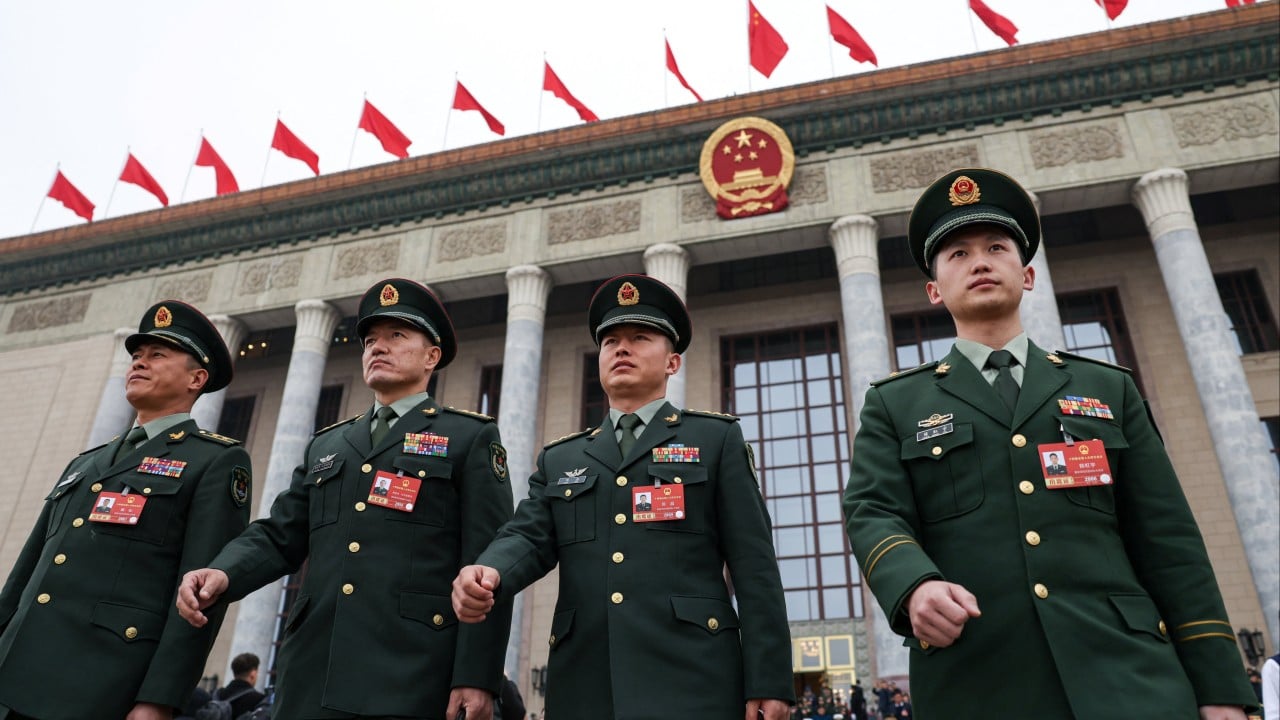
Mainstream foreign policy commentators love a tidy paradox. When the People’s Liberation Army (PLA) sends senior brass to Paris and Berlin right in the middle of a brutal electric vehicle tariff war, the standard media narrative writes itself: "Despite rising trade tensions, China and Europe keep military channels open to stabilize relations."
That framing is completely backwards. In similar updates, take a look at: Inside the Belgrade Crossbow Attack and Serbia's Radicalization Blind Spot.
These military talks are not happening despite the trade war. They are happening because of it. If you view defense diplomacy and economic warfare as two separate tracks, you are reading the chessboard upside down. Beijing is not extending an olive branch to lower the temperature; it is executing a calculated flanking maneuver designed to paralyze Europe’s political will before Brussels can lock in a unified economic defense.
For over a decade, I have watched Western corporate boards and policy advisors misread Beijing’s dual-track diplomacy. I have sat in rooms where European executives convinced themselves that a polite round of track-two security dialogue meant their supply chains were safe from retaliatory tariffs, only to watch their market share evaporate six months later. Treating military dialogue as a goodwill gesture rather than an instrument of statecraft is the single most expensive mistake Western analysts make. Al Jazeera has also covered this critical topic in extensive detail.
The Myth of "Compartmentalized" Diplomacy
Western diplomatic orthodoxy loves neat boxes. Trade negotiators handle tariffs in Brussels; defense ministries handle crisis communication in Paris and Berlin. When a legacy outlet reports that China’s military is holding talks in Europe amid trade friction, the underlying assumption is that sensible adults in uniform are keeping the guardrails up while the politicians bicker over subsidies and green tech.
Beijing does not recognize those boxes.
Under the Chinese Communist Party’s doctrine of Comprehensive National Security—formalized by Xi Jinping in 2014—economic security, military posture, technological dominance, and diplomatic messaging are fused into a single operational organism. There is no wall between the Ministry of Commerce and the Central Military Commission. When PLA officials sit across from their French and German counterparts, they are operating from the exact same strategic playbook as the trade envoys threatening retaliatory duties on European cognac, dairy, and luxury sedans.
By separating these talks from the trade dispute, conventional coverage misses the actual mechanism at work. Beijing uses military-to-military dialogue as a psychological pressure valve. It projects an aura of calm, responsible great-power management to European defense establishments, subtly reinforcing the message that Europe has far more to lose by aligning with Washington’s containment strategy than by cutting bilateral deals with China.
Why Paris and Berlin—And Why Not Brussels?
Notice the itinerary. The PLA delegation did not prioritize a grand summit with NATO leadership or European Union institutional heads in Brussels. They went straight to Paris and Berlin.
That choice of venue is the entire story.
In European geopolitics, the European Commission holds the legal mandate over trade policy. Ursula von der Leyen and the technocrats in Brussels are the ones pushing for "de-risking," investigating Chinese state subsidies, and erecting tariff walls against cheap Chinese EVs and solar panels. You cannot easily intimidate the European Commission through military signaling because the Commission does not command armies.
France and Germany, however, are the twin engines of the EU—and they are deeply divided on how to handle China.
- Berlin is trapped by industrial dependency. German automakers like Volkswagen, BMW, and Mercedes-Benz rely heavily on the Chinese market for both sales and manufacturing joint ventures. Chancellor Olaf Scholz and his successors have consistently dragged their feet on aggressive EU tariffs out of sheer terror of Chinese retaliation against German factories.
- Paris plays a different game. Emmanuel Macron has spent years championing European "strategic autonomy"—a doctrine that frequently translates into distancing Europe from American foreign policy priorities. While France supported EV tariffs to protect its domestic auto sector, Paris remains obsessed with acting as an independent diplomatic power broker capable of talking directly to Moscow and Beijing without Washington’s permission.
By dispatching military officials directly to Paris and Berlin, Beijing bypasses the supranational hawks in Brussels and speaks directly to the national capitals where political hesitation lives. It is classic wedge strategy. You flatter France’s desire to be seen as an indispensable global power, and you soothe Germany’s anxiety about catastrophic escalation. If you can get the French and German defense establishments nodding along to phrases like "mutual respect" and "strategic stability," those ministries will quietly lobby their own prime ministers to tell Brussels to cool it on the trade restrictions.
What Military Talks Actually Accomplish for the PLA
To understand why the PLA invests time in these European roadshows, you have to strip away the diplomatic euphemisms. When official readouts mention "exchanging views on international and regional security issues," what is actually happening behind closed doors?
1. Narrative Laundering on Russia and Ukraine
Europe’s primary security obsession is the war in Ukraine. European leaders have repeatedly warned Beijing that its dual-use exports—machine tools, microelectronics, and drone components—are keeping Russia’s defense industrial base alive. By showing up in person in Paris and Berlin, PLA generals get to look their European counterparts in the eye and perform a choreographed routine of neutrality. They don't have to change a single shipment crossing the Sino-Russian border; they simply need to offer just enough ambiguous reassurance about "promoting peace talks" to keep European governments from slapping secondary sanctions on Chinese banks.
2. Intelligence Gathering on European Defense Friction
There is a massive gap between Europe’s grand rhetoric about rearming and its actual industrial capacity. Europe is struggling to produce enough 155mm artillery shells for Ukraine, let alone project power into the Indo-Pacific. Face-to-face meetings allow PLA strategists to take the real-time temperature of European military readiness, gauge the exact level of fatigue regarding the Ukraine conflict, and assess whether European navies actually have the appetite for regular freedom-of-navigation transits through the Taiwan Strait.
3. Establishing Escalation Dominance Through Familiarity
In military theory, deterrence relies on communication. Yet Beijing routinely refuses to answer hotlines with the Pentagon during crises while eagerly scheduling structured dialogues with European capitals. Why? Because refusing to talk to Washington creates uncertainty and friction for the United States, whereas talking to Paris and Berlin creates an illusion of partnership. Beijing wants European generals to believe they have a special, working relationship with the PLA that Washington lacks—making Europe reluctant to join any US-led coalition in a future Pacific crisis.
Dismantling the "People Also Ask" Fallacies
Whenever headlines about Sino-European defense talks hit the wire, the same predictable questions surface among investors, analysts, and readers. Almost every one of them rests on a flawed premise.
Does this mean China and the EU are close to resolving their trade dispute?
No. It means the exact opposite. You do not deploy military diplomacy to signal an imminent trade compromise; you deploy it to manage the fallout of an intractable trade conflict. Beijing knows the structural overcapacity in its manufacturing sector—spanning EVs, batteries, steel, and green tech—cannot be absorbed domestically. It must export that surplus, and Europe is the most lucrative open market left since the United States effectively closed its doors. Trade friction is now a permanent structural feature of the relationship. The military talks are there to prevent Europe from turning economic self-defense into a full-spectrum geopolitical break.
Is Europe breaking away from the United States on China policy?
Not entirely, and that is the trap analysts fall into. Europe is not suddenly becoming pro-China. Rather, Europe is paralyzed by conflicting imperatives. Washington wants ideological and security alignment; Beijing wants market access; Europe wants to keep its welfare states funded without paying for its own defense. Beijing isn't trying to flip France and Germany into allies. It only needs them to remain hesitant, divided, and slow to act. In geopolitics, inducing paralysis in a rival’s coalition is just as effective as winning an ally.
Are military-to-military talks better than no talks at all?
This is the sacred cow of Western diplomacy, and it deserves to be slaughtered. Unconditional dialogue is not inherently stabilizing. When an authoritarian military uses high-level visits to project legitimacy, extract concessions, and divide an alliance without altering its aggressive behavior—whether supporting Russia’s war machine or militarizing the South China Sea—dialogue becomes a tool of coercion, not conflict resolution. As former US Defense Secretary Robert Gates and numerous NATO strategists have pointed out over the years, adversaries treat talks as a venue for strategic messaging, while Western democracies treat talks as an end in themselves.
A Thought Experiment: Reverse the Roles
Imagine a scenario where the European Union imposed sweeping tariffs on Chinese industrial imports, armed Taiwan with advanced coastal defense missiles, and simultaneously dispatched French and German generals to Beijing to discuss "regional stability" while refusing to halt weapons shipments to China's primary regional adversary.
Would Beijing praise the European delegation for "keeping channels open despite trade tensions"?
Not for a second. Chinese state media would denounce the visit as rank hypocrisy, an attempt to interfere in internal affairs, and a cynical effort to extract security assurances while waging economic warfare. Beijing would freeze the talks until the tariffs were lifted and the weapons shipments stopped.
Yet when the PLA runs that exact playbook in reverse on European soil, Western commentary applauds the maturity of the dialogue. That asymmetry in strategic mindset is why Beijing consistently outmaneuvers European capitals in the gray zone between peace and conflict.
The Uncomfortable Truth About the Contrarian View
To be intellectually honest, there is a legitimate counterargument to writing off these talks entirely as a Beijing psy-op.
Hardline realism has a blind spot: miscalculation. When major nuclear-armed powers stop talking altogether, minor tactical incidents—a collision between naval vessels in the South China Sea, an intercept gone wrong over international waters—can spiral out of control because neither side has a verified channel to de-escalate. Furthermore, European leaders face genuine domestic political constraints. Unlike Beijing, politicians in Paris and Berlin have to answer to voters dealing with inflation, sluggish growth, and energy costs. Provoking an immediate, all-out economic decoupling with China would trigger a severe European recession overnight. From a purely pragmatic standpoint, buying time through diplomatic engagement isn't weakness; it's triage.
The flaw in European strategy isn't that Paris and Berlin are answering the phone. The flaw is that they are entering the room without leverage, confusing procedural politeness with substantive progress.
How Strategists and Investors Should Actually Read This
If you are managing capital, running a multinational supply chain, or analyzing geopolitical risk, stop reading diplomatic press releases as weather reports. Read them as counter-intelligence.
- Ignore the adjectives, track the sequences. Whenever Beijing announces high-level military or diplomatic talks with a specific European country, look at what happened in Brussels 72 hours prior. You will almost always find a pending regulatory probe, an anti-subsidy vote, or a sanctions package that Beijing is trying to soften before it reaches a final vote.
- Watch corporate announcements, not defense readouts. The real outcome of PLA talks in Berlin will not appear in a Ministry of Defense communiqué. It will show up three weeks later when a German chemical giant announces a new multi-billion-euro plant in Guangdong, or when Berlin quietly abstains from a crucial EU trade enforcement vote.
- Price in permanent friction. Do not mistake diplomatic cordiality for a return to the pre-2020 era of frictionless globalization. Europe’s industrial base is fighting for survival against state-subsidized Chinese manufacturing. No amount of polite conversation between generals in Paris will stop Brussels from eventually protecting its core industries—it will only make the process messier, slower, and more unpredictable.
Beijing didn't send its top brass to Europe to make peace over trade. It sent them to remind Paris and Berlin how fragile their prosperity really is—and to make sure that when the economic pain hits, Europe blames Brussels and Washington instead of Beijing.


