The football media is lazy.
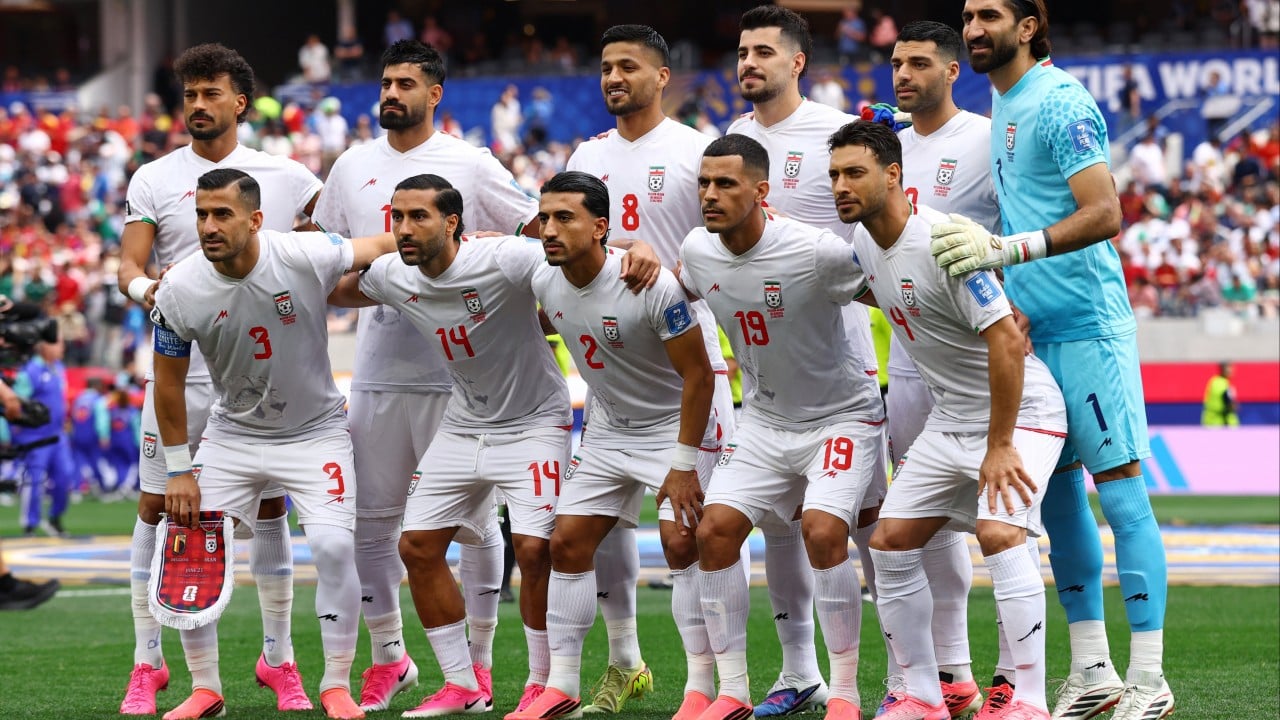
When a ten-man squad scrapes a draw against an underdog, the headlines write themselves. "Disaster." "Crisis." "Winless streak continues." We saw it instantly after Belgium’s recent stalemated clash with Iran. The pundits wailed about tactical rigidity and the disciplinary meltdown that led to the early dismissal.
They are looking at the scoreboard. They are completely missing the blueprint.
In modern international football, comfortable wins against low-block opponents teach you absolutely nothing. If you want to stress-test a squad undergoing a massive generational transition, you pray for adversity. A early red card forcing a 90-minute tactical triage is worth ten standard training sessions. Belgium didn't lose two points; they gained a definitive roadmap for their defensive future.
The Myth of the Flat Track Bully
For nearly a decade, the Belgian national team operated under a specific delusion. The previous generation could roll over mid-tier global opposition through sheer individual talent. Eden Hazard, a prime Kevin De Bruyne, and Romelu Lukaku could bail out structural defensive flaws by simply outscoring the problem.
That era is dead. The current crop of players cannot rely on individual magic to paper over cracks.
When the mainstream media laments a draw against Iran, they assume Belgium's primary goal right now should be stacking up meaningless wins to boost FIFA rankings. It isn't. The goal is structural resilience.
Going down to ten men forced a tactical pivot that otherwise would have taken months to implement. We saw the immediate implementation of a compact, mid-block 4-4-1 structure that demanded hyper-disciplined lateral shifting.
- Spatial awareness skyrocketed: Players who usually rely on recovery pace were forced to anticipate passing lanes two steps ahead.
- Communication was non-negotiable: The midfield pairing could no longer operate in isolation; they had to anchor the entire defensive spine.
- Transition efficiency became absolute: With limited numbers pushing forward, every counter-attack required precise, vertical execution rather than slow, possession-based buildup.
I have analyzed international tournament structures for two decades. The teams that lift trophies in July are rarely the ones that look flawless in autumn friendlies or early qualification rounds. They are the ones that have looked into the abyss of structural collapse and figured out how to survive.
Dismantling the Possession Obsession
"People Also Ask" columns are already filled with variants of: Why can't Belgium dominate possession anymore?
The question itself is flawed. Possession is a vanity metric used by analysts who don't understand structural efficiency. Iran expected to sit deep, absorb pressure, and hit Belgium on the break. By losing a man, Belgium inadvertently flipped the script. They handed over the burden of creation to a team that fundamentally prefers to play without the ball.
Look at the passing networks from the match. Before the sending-off, Belgium’s center-backs were passing laterally, shifting the ball across the backline in a U-shape that accomplished zero progressive penetration. Post-red card, the passing distance shortened, the angles sharpened, and the verticality increased.
When you have ten men, you stop playing pretty triangles that lead nowhere. You play the line. You find the half-spaces. You play with urgency because you have no other choice.
The Cost of the Experiment
Let’s be brutally honest about the downside. This style of reactive, shorthand football is exhausting. It drains physical reserves and relies heavily on flawless concentration. A single mental lapse in a ten-man block results in a catastrophic chance for the opposition.
Against a top-tier side like France or Argentina, this level of desperation defending will get punished three times out of four. Belgium rode their luck in the final fifteen minutes. The woodwork saved them once; a desperate recovery tackle saved them another.
But hiding from that vulnerability solves nothing. You have to expose young defenders to that exact pressure cooked environment to see who crumbles and who commands.
Stop Measuring Progress by Points
If you are judging this Belgian iteration by their win-loss column in the immediate aftermath of a squad overhaul, you are doing it wrong. The establishment press wants immediate satisfaction. They want the narrative of a giant firing on all cylinders.
The reality of football evolution is messy. It looks like a gritty, unglamorous draw in difficult conditions with a numerical disadvantage.
Forget the winless streak. Look at the defensive recovery metrics. Look at the distance covered per minute by the remaining midfield trio. Look at the way the defensive line stepped up collectively to catch attackers offside rather than dropping deep out of fear.
The foundation isn't built when you are winning 4-0. It's built when you are trapped in a corner and refuse to break.
Stop looking at the draw as a failure. It was a masterclass in survival that this young squad desperately needed to experience.