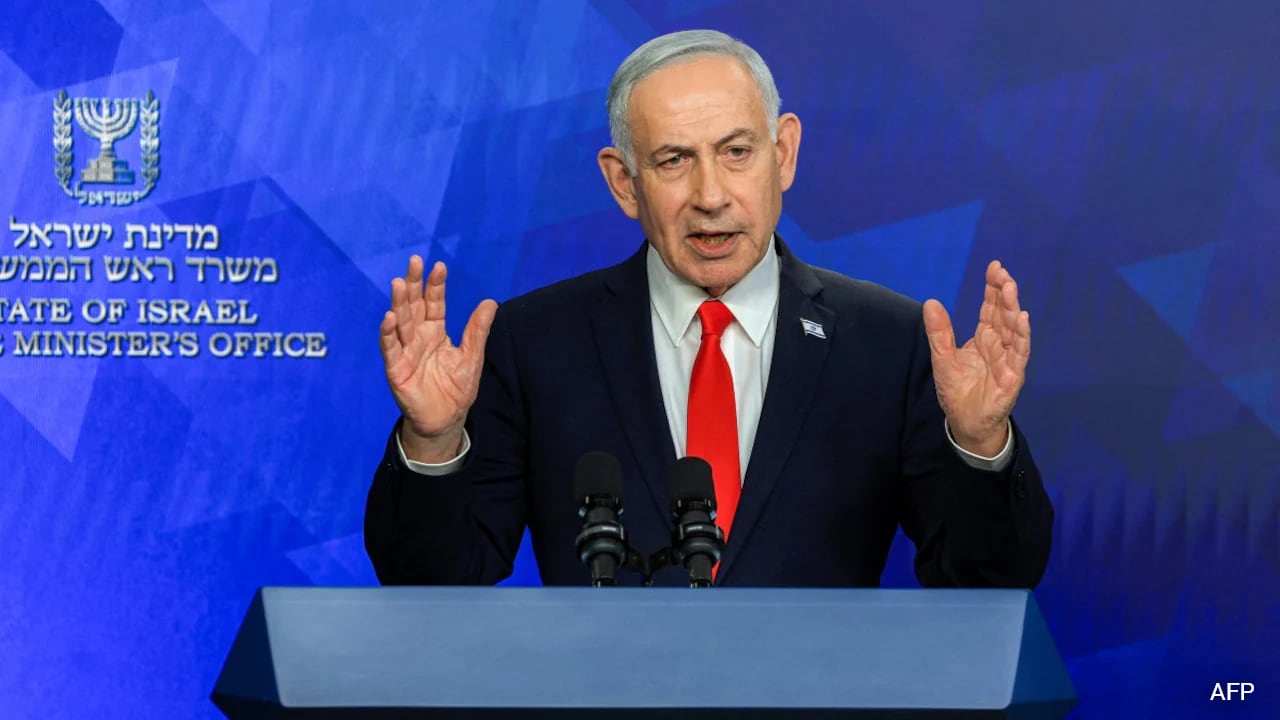
Benjamin Netanyahu wants you to believe he just won a historic victory. In his first press conference in three months, the Israeli Prime Minister took to the podium to claim credit for removing the threat of "nuclear annihilation." He bragged about 14,000 military sorties, crippled Iranian infrastructure, and a crushed enemy economy.
Don't buy the spin.
The reality playing out across Switzerland, Washington, and Tehran tells a completely different story. With the signing of the Islamabad Memorandum of Understanding between US President Donald Trump and Iranian President Masoud Pezeshkian, Israel finds itself in a position its leadership spent decades trying to avoid. Completely sidelined.
The initial deal signed to end the 2026 Iran war is a massive geopolitical shift. It stops the fighting, opens the blocked Strait of Hormuz to rescue global energy markets, and hands Iran immediate sanctions waivers to sell its oil freely.
Worse for Jerusalem, the deal explicitly covers a permanent halt to military operations on all fronts, including Lebanon. For a prime minister who promised the complete destruction of Iran's nuclear program and the total defanging of its proxies, this moment isn't a victory. It's a calculation that went entirely sideways.
The Illusion of Control in Jerusalem
Netanyahu's public posture is a study in political survival. He stood before reporters and openly admitted that Israel doesn't even know the exact terms of the US-Iran nuclear deal. Think about that for a second. The state whose entire defense strategy revolves around the Iranian threat was left out of the room while Washington and Tehran hammered out the details through Pakistani, Qatari, and Omani mediators.
To mask this isolation, Netanyahu is relying on a classic tactic: redefining the war goals after the shooting stops.
He now claims the objective was never to overthrow the Islamic Republic. He says the goal was merely to remove the immediate existential danger. But senior Israeli political and military figures aren't letting him off the hook. Former military chief Gadi Eisenkot blasted the prime minister's performance, calling it an exercise in empty declarations and illusions.
The anger boiling over in Israel stems from what the deal actually does. The Trump administration entered this conflict with maximalist rhetoric, vowing to dismantle Iran's nuclear facilities, stop its ballistic missile program, and force regime change. Instead, the interim pact basically restores the status quo from before the war started, but with a richer, more emboldened Iran.
What Iran Actually Walked Away With
The details trickling out of the negotiations in Switzerland show just how much leverage Washington surrendered to secure a quick exit from the conflict.
- Immediate Oil Wealth: The US Treasury is issuing a 60-day waiver lifting sanctions on Iranian crude, petrochemicals, and banking services. Netanyahu claims Iran's economy took a trillion-dollar hit. Maybe so, but this waiver lets Tehran immediately fill its empty coffers by selling freely to China without steep discounts.
- The Nuclear Stockpile Remains Intact: Iran agreed to allow UN International Atomic Energy Agency (IAEA) inspectors back into the country to oversee the "downblending" of its 60% enriched uranium. But the crucial caveat is that this dilution happens on Iranian soil. Iran completely blocked US demands to ship the nuclear material out of the country.
- A New Security Guard That Excludes Israel: In perhaps the most shocking development, reports revealed a new Lebanon deconfliction mechanism emerging from the talks. The old 2024 framework included Israel, Lebanon, the US, France, and the UN. The new proposed oversight body features the US, Iran, Lebanon, Qatar, and Pakistan.
Netanyahu's team is reportedly panicking over this new mechanism. Forcing Israel out of the regional oversight loop and replacing it with an arrangement involving Iran and Qatar severely restricts the Israel Defense Forces' (IDF) freedom of action in Lebanon.
The Lebanon Problem and the Myth of a Weakened Hezbollah
Netanyahu insists that Israeli forces will remain in the southern Lebanon security buffer zone "for as long as necessary." He explicitly stated that Israel is not a party to the US-Iran deal and isn't bound by its terms.
But can Israel actually afford to fight a solo war in Lebanon right now?
The United States explicitly stated that a total IDF withdrawal from Lebanon wasn't an immediate pre-condition for the broader Washington-Tehran pact. They threw Netanyahu a bone by reaffirming Israel's right to defend itself if attacked. But Trump's patience has a very short fuse. Only days ago, an Israeli strike on Hezbollah targets in Beirut reportedly earned Netanyahu a harsh, expletive-laden warning directly from the US president.
The domestic political landscape inside Israel is fracturing over this exact issue. Far-right coalition partners like Itamar Ben-Gvir and Bezalel Smotrich are publicly demanding that Israel ignore the Swiss negotiations entirely. They want the IDF to press forward, wipe out Hezbollah, and ignore the global consensus.
If Netanyahu listens to his radical cabinet partners, he faces total international isolation. If he listens to Trump and winds down operations in Lebanon, his hardline coalition falls apart, triggering an immediate domestic election that polling analysts like Dahlia Scheindlin suggest he could easily lose. He is caught in a vice of his own making.
The Conditional Alliance Comes Due
For decades, Israeli leadership operated under the assumption that Uncle Sam's checkbook and military umbrella came with zero strings attached. The 2026 war changed that forever. Donald Trump didn't abandon Israel, but his actions proved that the alliance has always been conditional. The moment a Middle Eastern conflict threatens the global economy through closed shipping lanes and soaring oil prices, Washington will protect its own interests first.
Israel's defense budget is set to explode by 350 billion shekels to pursue what Netanyahu calls "weapons independence." It's an admission that Israel can no longer fully rely on the political whims of whoever occupies the White House.
If you want to understand where this leaves Israel, stop looking at the celebratory press conferences in Jerusalem. Look at the balance sheet. Iran's regime is safe, its nuclear infrastructure is still in place, its oil is flowing again, and it now has a seat at the table in determining the security architecture of Lebanon.
Netanyahu says he plans to run in the next election and win. But running a campaign based on a "victory" that your own public labels an abject failure is going to be a brutal uphill climb.
The immediate next step for observers isn't watching the military maneuvers in the north, but tracking the domestic political maneuvering in the Knesset. Netanyahu's survival depends on his ability to delay the dissolution of his government before the public realizes exactly what Trump signed away in Switzerland. Keep your eyes on the coalition defection counts over the next two weeks. That's where the real fallout of the US-Iran peace deal will hit first.


