Yvon Chouinard never wanted to be a billionaire.
He was a blacksmith’s son, a climber who lived out of the back of a beat-up Ford van, eating dented cans of cat food because they were cheap. He built pitons out of scrap metal because commercial gear scarred the granite cracks of Yosemite. He founded Patagonia because he needed clothes that could survive a vertical storm on El Capitan. For decades, he ran his company like an eccentric uncle who cared more about whether the rivers were clean than whether the quarterly earnings report made Wall Street sweat.
Then, arithmetic caught up with him.
Private companies swell. Profits compound. Valuations soar into the stratosphere. If Chouinard had died, his heirs would have faced an estate tax bill high enough to force a sale of the company to private equity, public markets, or some faceless conglomerate whose primary allegiance is to quarterly dividends, not glacial runoff. The corporate machine would have chewed up the ethos and spat out another glossy, hollowed-out brand selling green-washed fleece to suburban commuters.
So, in the autumn of 2022, he did something unprecedented. He gave the company away.
Not to a charity. Not to his kids. He transferred every voting share to a specially designed trust dedicated to protecting the planet, and every non-voting share to a designated nonprofit called the Holdfast Collective. The structure was engineered to ensure that every single dollar of profit not reinvested back into running the business would be funneled directly out into the world as a dividend to fight the climate crisis.
Since that crisp September day in 2022, the financial machinery of that transfer has quietly hummed in the background, pumping monumental sums into the soil.
The numbers are staggering. As reports surfaced detailing the sheer scale of the financial pipeline, the tally crossed a threshold that ordinary corporate philanthropy can only view with quiet envy: one hundred and eighty million dollars. Paid out in environmental dividends since the structural shift.
Stop for a moment and let that number settle. One hundred and eighty million dollars. Not pledged in vague, twenty-year carbon-offset promises whispered at Davos. Not funneled into a corporate foundation designed primarily for tax optimization and public relations sparkle. Hard cash. Deployed into the hands of grassroots activists, land trusts, and policy fighters battling tooth and nail to preserve wild spaces, clean rivers, and fragile ecosystems.
Consider what that actually looks like on the ground.
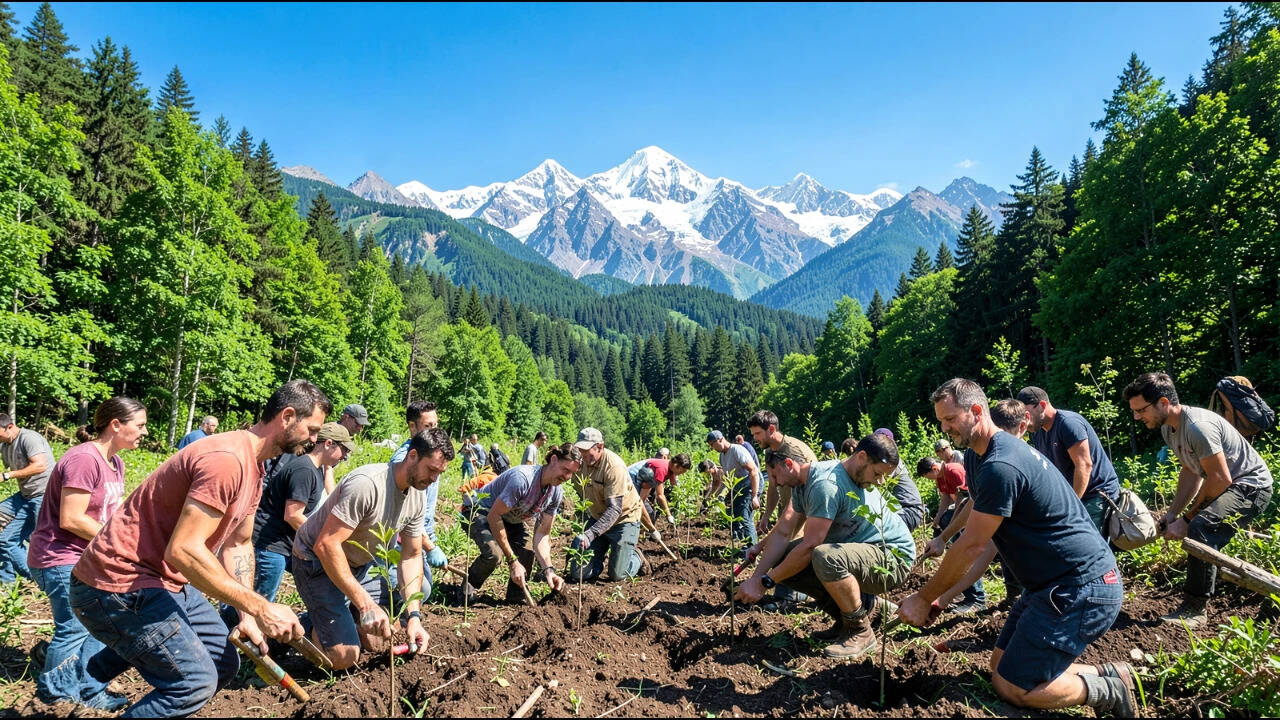
In a forgotten valley in Montana, a local coalition uses those funds to buy up grazing rights along a spawning stream, blocking a subdivision from choking out the native cutthroat trout. In a coastal wetland in the American South, lawyers funded by this capital block an industrial zoning permit that would have paved over acres of natural storm surge protection. In an indigenous community fighting an illegal mining operation, legal defense funds materialize precisely when the bulldozers are cresting the hill.
This is not charity as an afterthought. This is capitalism turned upside down, weaponized against its own worst impulses.
For generations, we have lived under the iron law of shareholder primacy. Milton Friedman preached it from his academic pulpit: the sole social responsibility of a business is to increase its profits for the owners. Corporations became black holes, sucking in natural resources, processing them into consumer goods, converting the surplus into private wealth, and externalizing the messy, toxic costs onto the public commons. The river burned, the atmosphere warmed, but hey, the stock price ticked up three points before the closing bell.
Chouinard looked at that economic consensus and basically told the system to go to hell.
He famously wrote at the time of the transfer that Earth is now their only shareholder. It sounds like marketing copy until you examine the legal architecture underneath it. The Patagonia Purpose Trust holds two percent of the total stock and all the voting stock. It is governed by family members and close advisers whose legal mandate is to ensure the company never drifts from its founding ethos—to use business to save our home planet. The Holdfast Collective holds the remaining ninety-eight percent of the stock. It is a 501c4 political advocacy and environmental grant-making machine.
They cannot cash out. They cannot sell out to a massive retail conglomerate. If a future CEO decides to pivot toward fast fashion or compromise environmental standards for a quick margin bump, the trust holds a veto as heavy as an anvil.
Critics, of course, rolled their eyes. Skeptics pointed out the tax wizardry involved, the clever sidestepping of inheritance taxes that allowed the family to retain control without coughing up a fortune to the Internal Revenue Service. And they are right to note the mechanics; the billionaire class rarely gives up control without an accountant engineering the transition. But look past the tax code and examine the functional reality: most billionaires use legal structures to hoard wealth across generations, buying superyachts, private islands, and space tourism tickets. Chouinard used the exact same legal machinery to disinherit his family and turn a three-billion-dollar enterprise into a perpetual-motion machine for ecological defense.
That is the difference between greenwashing and structural revolution.
Most corporations treat sustainability like an interior design choice. They swap out the plastic bags at the cash register for unbleached paper, post pictures of smiling employees planting saplings on Earth Day, and quietly lobby against environmental regulations behind closed doors. Their sustainability reports are glossy brochures designed to soothe the conscience of urban millennials while their supply chains burn through fossil fuels.
When a company writes a check for one hundred and eighty million dollars drawn directly from its core operating profits—not from a marketing budget, not from a rounding error on a charitable match program, but from the actual spoils of selling high-end outdoor gear—the calculus changes.
It forces us to ask an uncomfortable question of every other enterprise on the Fortune 500. If an apparel company can divert its entire dividend stream to save the biosphere, what excuse does an oil conglomerate have? What excuse does a fast-fashion giant churning out microplastic-laced polyester have?
They have no excuse. They simply have different priorities.
The corporate world loves to talk about legacy. CEOs step down with golden parachutes, their names etched on university business schools and museum wings funded by the extraction of public wealth. Chouinard’s legacy is invisible where it matters most, and hyper-visible where it counts. It is found in the unpolluted headwaters of a remote creek. It is found in the old-growth forests standing tall against the horizon because a legal defense fund bought the logging rights and locked the gate.
We are standing at a strange crossroads in human history. The old ways of doing business are visibly, catastrophically failing the systems that sustain human life. The weather is getting weirder. The ice is retreating. The oceans are acidifying. And yet, the global economy continues to hum along on the autopilot of extraction, treating the planet as an infinite trash can and an inexhaustible mine.
Amidst that deafening inertia, the quiet accumulation and disbursement of these environmental dividends feels like a crack in the concrete.
It proves that another way is possible. It proves that a company does not have to choose between financial viability and planetary survival. Patagonia remains a profitable, highly sought-after brand. People still buy the fleece vests and alpine shells. The business engine purrs. But the exhaust of that engine is no longer carbon and shareholder dividends; it is restoration.
Imagine if a dozen more companies took that plunge. Imagine if the tech titans, the logistics giants, and the financial institutions woke up to the realization that winning the game of capitalism means nothing if the board catches fire.
The path forward is not paved with more corporate sustainability seminars or empty net-zero pledges for the year 2050. It is paved with radical, structural restructuring. It requires billionaires willing to let go of the scoreboard. It requires legal frameworks that prioritize the living world over the accumulation of dead capital.
Out in the rugged backcountry, the wind cuts through the pines with an ancient, indifferent chill. The granite walls of the valley stand tall, weathered by millennia of rain and snow. They do not care about quarterly earnings reports. They do not care about market share or brand valuation.
They only care whether we remember how to protect them.
The check has cleared. The money is in the soil. The work has only just begun.