Traditional silicon hardware faces a thermodynamic ceiling, driven by thermal dissipation limits and the scaling friction of sub-nanometer transistor etching. To bypass the von Neumann bottleneck, systems engineers increasingly evaluate biological substrates. The premise relies on utilizing human brain cell organoids integrated with microelectrode arrays to process information via neural firing patterns rather than binary transistor switching. Evaluating this transition requires stripping away speculative media narratives to examine the structural mechanics, thermodynamic efficiency profiles, and operational failure modes inherent to wetware computing systems.
The Thermodynamic Efficiency of Neural Substrates
Silicon processors consume immense electrical power to execute parallel floating-point operations, translating directly into high thermal output that requires complex cooling infrastructure. Biological neural networks operate on an entirely different thermodynamic principle. A human brain runs on approximately twenty watts of energy, a fraction of the megawatt-scale power requirements of modern hyperscale data centers.
This efficiency stems from asynchronous, event-driven signaling. Neurons do not maintain a continuous clock cycle; they fire action potentials only when membrane potentials cross a specific threshold. In a wetware computing architecture, this translates to sparse coding models where idle pathways consume near-zero dynamic power.
Yet, biological efficiency comes with a strict operational tax. Unlike silicon, which tolerates dry, static environments and wide temperature ranges, biological neural tissue requires a continuous, homeostatic perfusion of oxygen, glucose, and amino acids at strict physiological temperatures. The energy saved at the processing layer is offset by the auxiliary infrastructure required to maintain cell viability. The thermodynamic balance sheet must account for peristaltic pumps, media filtration units, waste removal loops, and incubator-grade climate control systems. When these life-support subsystems are factored into the total cost of operation, the margin of efficiency over advanced silicon narrows significantly.
The Interface Mechanics of Microelectrode Arrays
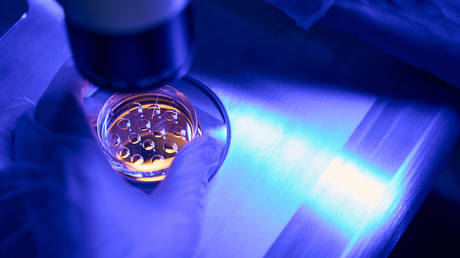
Bridging biological wetware and digital infrastructure requires converting ionic gradients into digital voltage streams and vice versa. This translation occurs at the boundary of high-density microelectrode arrays. Organoids are cultured directly onto multi-electrode substrates, where individual titanium nitride or platinum electrodes record extracellular field potentials or stimulate local neural circuits with precise current injections.
Signal acquisition presents a dual-axis engineering challenge involving spatial and temporal resolution. A standard organoid contains hundreds of thousands to millions of interconnected cells, yet current microelectrode arrays only sample a fraction of this total population at the surface interface. Deep-layer neurons remain electrically opaque, creating an observability gap.
Signal-to-noise ratios dictate system reliability. Biological signals are small, typically measured in microvolts, making them susceptible to electrochemical drift, electrode corrosion, and thermal noise from the recording hardware. Furthermore, unlike copper traces on a printed circuit board, biological tissue exhibits continuous structural plasticity. Neurons form new synapses, prune unused connections, and migrate over time. This means the transfer function between an input stimulus and an output response is non-stationary. A digital algorithm trained to decode a specific neural pattern on Monday will find that the physical routing of that pattern has structurally shifted by Thursday. Managing a non-stationary hardware substrate requires continuous, resource-heavy recalibration loops that consume significant processing overhead on the digital control side.
The Failure Modes of Living Infrastructure
Transitioning from solid-state silicon to biological tissue introduces entirely new failure modes that cannot be mitigated by traditional IT disaster recovery protocols. Hardware redundancy in conventional data centers relies on hot-swappable components, parity checks, and automated failover servers. In a wetware architecture, the primary point of failure is cellular viability.
Cellular senescence and apoptosis represent the primary operational risks. Without precise metabolic regulation, localized hypoxia or glucose deprivation triggers rapid cell death cascades. Because neural networks rely on interconnected feedback loops, the loss of a critical node can induce cascading functional degradation across the entire computational fabric.
Contamination is another structural vulnerability. Silicon servers are immune to biological pathogens. Wetware systems, by contrast, provide an optimal growth medium for bacteria, fungi, and mycoplasma. A single breach in the sterile perfusion loop can compromise an entire array within hours. Consequently, cleanroom protocols must be embedded directly into the data center architecture, transforming server racks into sterile bioreactor pods.
The lifespan of the computing substrate is fundamentally finite. While a silicon processor can operate for decades under nominal conditions, biological organoids degrade over weeks or months. Implementing a wetware data center requires continuous organoid cultivation pipelines to grow, test, and hot-swap biological compute units before cellular senescence degrades processing fidelity. This introduces a supply chain constraint tied to biological growth cycles rather than semiconductor fabrication plants.
Algorithmic Integration and the Computational Ceiling
Deploying wetware as a functional accelerator requires abandoning deterministic programming paradigms. Neural organoids do not execute lines of code; they respond to input distributions by altering their internal connectivity states through spike-timing-dependent plasticity. Programming such a system requires reservoir computing frameworks, where the biological tissue acts as a high-dimensional dynamical reservoir that maps input data into complex spatiotemporal patterns.
The primary limitation of this approach is throughput bandwidth. Translating high-level analytical queries into electrical stimulation patterns, allowing the organoid to process the dynamics, and reading out the resulting spike trains creates a severe input-output bottleneck. The conversion overhead often exceeds the computational gains achieved by the biological substrate itself.
For routine linear algebra or deterministic logic operations, silicon remains superior due to its clock speed and precise memory addressing. Wetware architectures find their functional utility exclusively in domains characterized by high dimensionality, fuzzy pattern recognition, and continuous sensory integration tasks where energy minimization outweighs precision.
Strategic Deployment and Operational Reality
Deploying biological compute units into enterprise or research workflows demands a pragmatic evaluation of cost versus capability. The infrastructure overhead required to maintain living neural tissue limits these systems to specialized, high-value problem spaces rather than general-purpose cloud computing.
Organizations evaluating this architecture must budget for specialized multidisciplinary teams spanning neurobiology, microfluidics, electrochemical engineering, and unconventional computing algorithms. The capital expenditure shifts from silicon wafer procurement to automated micro-bioreactor maintenance and continuous culture generation.
Scaling this technology beyond experimental prototypes requires standardizing organoid morphology to reduce variance between batches. Until biological manufacturing achieves the uniform predictability of semiconductor foundries, wetware data centers will remain boutique research engines rather than commercial alternatives to hyperscale cloud infrastructure.
Implement the biological substrate only when the problem space demands extreme energy efficiency in unstructured pattern recognition, and accept that infrastructure maintenance will mirror biotechnology laboratories rather than server farms.