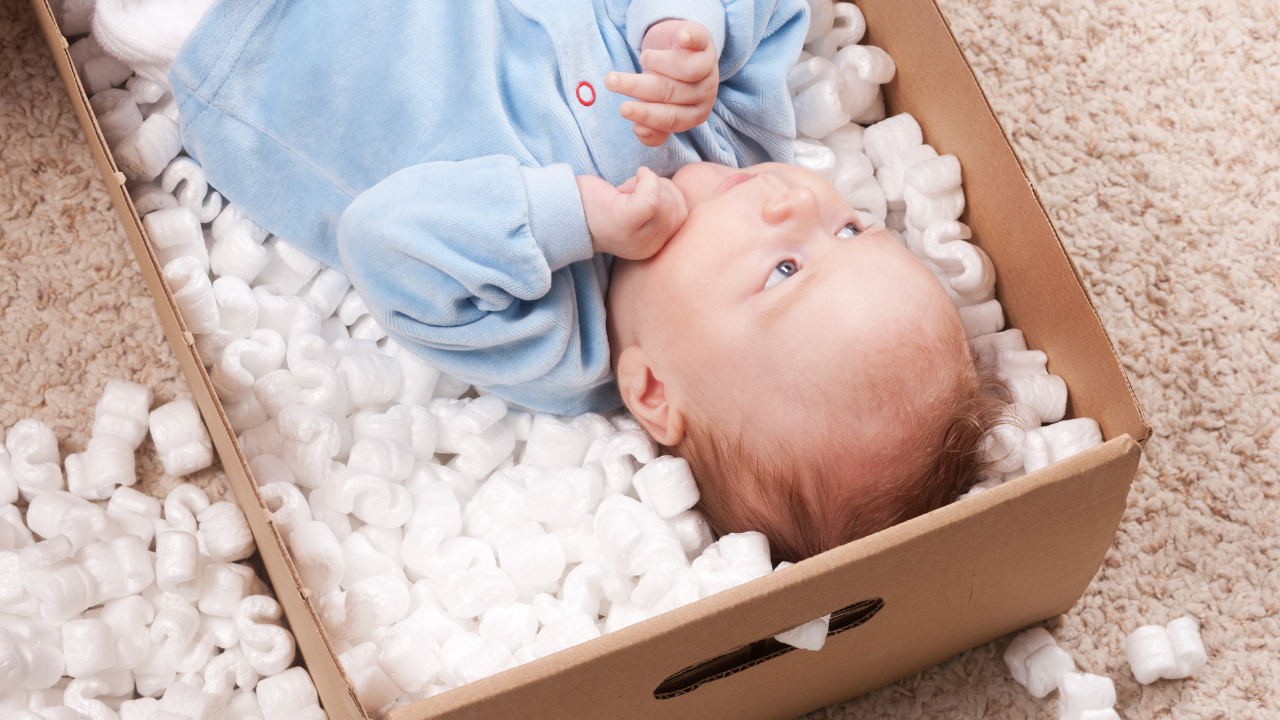
In January 1913, the United States Post Office Department launched Parcel Post, allowing Americans to ship packages weighing over four pounds for the first time. Within weeks, an unintended regulatory loophole emerged. In rural Ohio, Jesse and Mathilda Beagle handed their eight-month-old son, James, to a rural parcel carrier, paying 15 cents in postage and insuring him for $50. The carrier delivered the infant safely to his grandmother’s house a few miles away. This was not a isolated piece of folklore. It marked the start of a brief, legal, and thoroughly documented chapter in American postal history where families used government couriers to transport children.
The phenomenon sounds impossible to modern sensibilities. Yet, understanding how live human beings were handed over to postal workers requires examining the economic reality of early 20th-century rural America, the rapid rollout of government infrastructure, and the immense trust citizens placed in local civil servants.
The Infrastructure Loophole of 1913
Before 1913, private express companies held a monopoly on shipping heavy items. They charged exorbitant rates that isolated farm families from national markets. When Congress established Parcel Post, it triggered a commercial boom. Citizens could suddenly ship everything from brick chimneys to baby chicks directly through the mail.
The original regulations governing Parcel Post were surprisingly sparse. The law specified weight limits—initially 11 pounds, quickly raised to 20, and later 50—and prohibited poisons, explosives, and dangerous animals.
It said nothing about human beings.
Rural mail carriers were already the connective tissue of isolated communities. They did not just deliver letters. They brought medicine, passed along vital news, and provided a daily link to the outside world. When the Beagle family needed to get young James to his grandmother in Glen Este, Ohio, hiring a private carriage was expensive. Paying 15 cents for postage was an obvious bargain.
The story hit national news outlets immediately. It sparked amusement across the country, but it also exposed a glaring oversight in federal policy.
Beyond Ohio, The Spread of Live Transit
The Beagle case was not an isolated incident. Over the next two years, multiple documented cases surfaced across the nation.
In February 1914, a rural carrier in Stratton, Maryland, carried a four-pound baby girl named Charlotte May Pierstorff across state lines to her grandparents in Idaho. Her parents attached 53 cents in stamps to her coat. She rode in the mail car of a train and was delivered directly to her destination by the clerk on duty.
Later that year, a mother in Pennsylvania mailed her toddler to the child's father in Rural Valley for 45 cents. In 1915, a young girl in Florida traveled 720 miles via Parcel Post, crossing nearly the entire state. She weighed just under the 50-pound threshold, costing her family $2.65 in stamps.
These children were not stuffed into mail sacks or tossed onto conveyor belts.
They walked or were carried alongside postal workers who knew the families personally. In many rural routes, the mail carrier was a trusted neighbor or family friend. Sending a child with the carrier was viewed less like shipping a crate of fruit and more like asking a trusted conductor to watch your kid during a short train ride.
+-------------------------------------------------------------------------+
|                  HISTORICAL PARCEL POST CHILD TRANSITS                  |
+---------------------+-------------------+-------------------------------+
| Date                | Location          | Cost & Details                |
+---------------------+-------------------+-------------------------------+
| January 1913        | Batavia, OH       | 15¢ postage ($50 insurance)   |
| February 1914       | Grangeville, ID   | 53¢ coat stamps (May Pierstorff)|
| Mid-1914            | Pennsylvania      | 45¢ toddler delivery          |
| Year 1915           | Florida           | $2.65 for 720-mile transit    |
+---------------------+-------------------+-------------------------------+
The Legal Crackdown and Public Panic
As news of mailed children spread, Postmaster General Albert S. Burleson stepped in. The Department could not run a daycare network, nor could it handle the liability of transporting toddlers alongside farm equipment and trade goods.
Small town postmasters began issuing local bans almost immediately after the Ohio incident, but formal federal enforcement lagged behind public behavior.
In official directives issued throughout 1914 and 1915, the Postmaster General clarified that humans did not fall under the classification of live animals permitted in the mail (a category largely restricted to queen bees and harmless insects).
The practice came to a hard stop in June 1920. Postmaster General Burleson officially declared that children could no longer be classified as Parcel Post under any circumstances. When two applicants tried to mail children in Kentucky later that year, postmasters turned them away at the counter.
The Economic Pragmatism Behind the Myth
It is easy to look back at 1913 as a period of reckless lawlessness. That perspective misses the point.
The trend was driven by sheer economic necessity and rural ingenuity. For farm families living on slim margins, official transit options like passenger train tickets or private stagecoaches were prohibitively expensive. The Post Office had unwittingly created the cheapest passenger transit system in human history.
It also highlighted the absolute authority and social standing of the early 20th-century postal worker. The United States Post Office was the largest federal employer of its era, representing safety, order, and absolute reliability. Parents were not abandoning their children to strangers; they were utilizing the most trusted public institution in the country to move their family members across hard terrain.
The story of the mailed babies of 1913 remains a testament to how fast public adoption outpaces government regulation. When an infrastructure network opens, people will push it to its absolute physical and legal limits until the gates are formally shut.