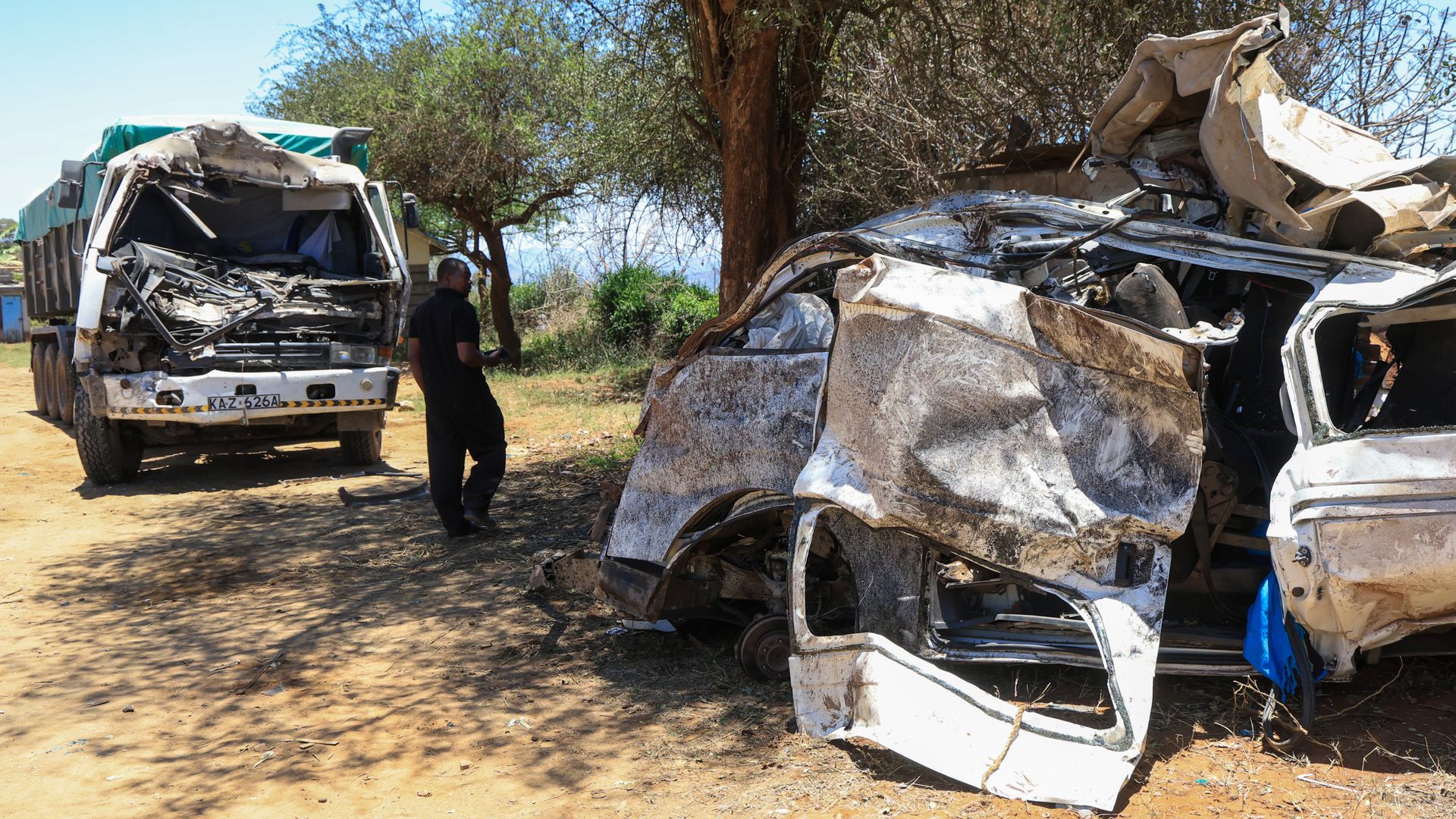
Every time metal crushes metal on a Kenyan highway and bodies line the tarmac, the national monologue follows a predictable, lazy script. The authorities trot out the usual tired grievances. Speeding. Reckless overtaking. Careless matatu drivers. The public shakes its head, mutters about indiscipline, and waits for the next catastrophe. It is a comforting fiction. It allows the transport ministry to wave a regulatory wand, deploy a few extra traffic police to collect bribes, and pretend the system is working.
It is a lie. Don't forget to check out our earlier coverage on this related article.
Blaming individual driver error for Kenya's road death toll is like blaming a passenger for a crashing airplane with missing wings. When 17 people die in a fiery collision, the autopsy rarely targets the structural pathology that set the trap. We do not have a moral failing on our roads. We have a systemic infrastructure and economic catastrophe masquerading as transit policy. Until we stop treating traffic accidents as behavioral flaws and start treating them as engineering failures, the death toll will climb, no matter how many lectures we preach about road safety.
The Myth of the Erring Motorist
Watch any major Kenyan transport corridor, from the Northern Corridor to the Nairobi-Nakuru highway, and you will witness an impossible logistical puzzle. Heavy commercial freight trucks, commuter matatus, handcarts, pedestrians, livestock, and boda bodas are forced to share single-lane, unlit arteries designed half a century ago for a fraction of the current vehicle volume. To read more about the history of this, TIME offers an excellent summary.
When a truck plows into a stationary vehicle at night, the headline screams about driver fatigue. But nobody asks why a driver was twelve hours deep into a grueling shift without a legal rest stop, navigating a highway pitch-black because copper thieves stripped the transformers three years ago. Nobody asks why a major international trade route lacks physical medians, rumble strips, or proper shoulder separation.
We expect precision driving from operators navigating a lunar landscape of unmarked speed bumps, sudden drop-offs, and phantom potholes. When tragedy strikes, we scapegoat the driver because investigating the engineers, the procurement officers, and the politicians who skimmed road maintenance funds requires actual courage. Driver error is not the root cause of these crashes; it is the inevitable symptom of an environment engineered to punish the smallest human lapse with death.
The Economics of Carnage
There is an uncomfortable economic truth powering this carnage: the transit sector runs on dangerous velocity.
In a hyper-competitive market where fuel prices fluctuate wildly and transport margins are razor-thin, speed is currency. A matatu crew cannot turn a profit by obeying a crawling 50 kilometers per hour limit while sitting in perpetual gridlock caused by broken-down lorries left abandoned in travel lanes for days. The economic incentive structure rewards risk. When regulators rely on archaic penalty systems that can be bypassed with a hundred-shilling bribe tucked inside a driving license, safety becomes an optional luxury for the wealthy.
Imagine a logistics supply chain where safety compliance costs money, but cutting corners is subsidized by institutional apathy. That is the reality of East African transport logistics. When enforcement is treated as a rent-seeking extortion racket rather than a public safety measure, laws become worthless ink on paper. The traffic cop stationed every five kilometers is not there to save lives; he is there to collect a tax. Until we dismantle the corrupt micro-economy of road policing, no amount of public sensitization campaigns will save a single soul.
Engineering Out the Human Factor
Real safety does not rely on moral perfection. It relies on forgiving design.
Air travel is safe not because pilots are saints, but because aviation systems assume humans make mistakes and build layers of redundancy to catch them. Highway design must operate on the exact same premise. If a sharp curve invites rollovers, you do not put up a faded sign warning drivers to slow down; you bank the curve, install high-tension cable barriers, and lay down grooved pavement. If pedestrians cross a high-speed bypass, you do not blame them for jaywalking; you build grade-separated footbridges or underpasses that make crossing safe by default.
Kenya does not need more moralizing from officials who travel in heavily guarded, blue-ticked convoys far removed from the asphalt reality. It needs a massive, unglamorous, capital-intensive overhaul of road geometry, freight regulation, and emergency medical response. Every minute an injured crash victim spends bleeding out in the back of an unequipped pickup truck because ambulance networks are non-existent is a policy choice made by successive administrations.
Stop weeping over the statistics while defending the very bureaucratic rot that generates them. The blood on the tarmac is not an accident. It is the cost of our collective refusal to build a serious country.