Every time a violent plot targets a house of worship, cable news hits the same two buttons. Button one: anti-hate rhetoric. Button two: firearm regulation.
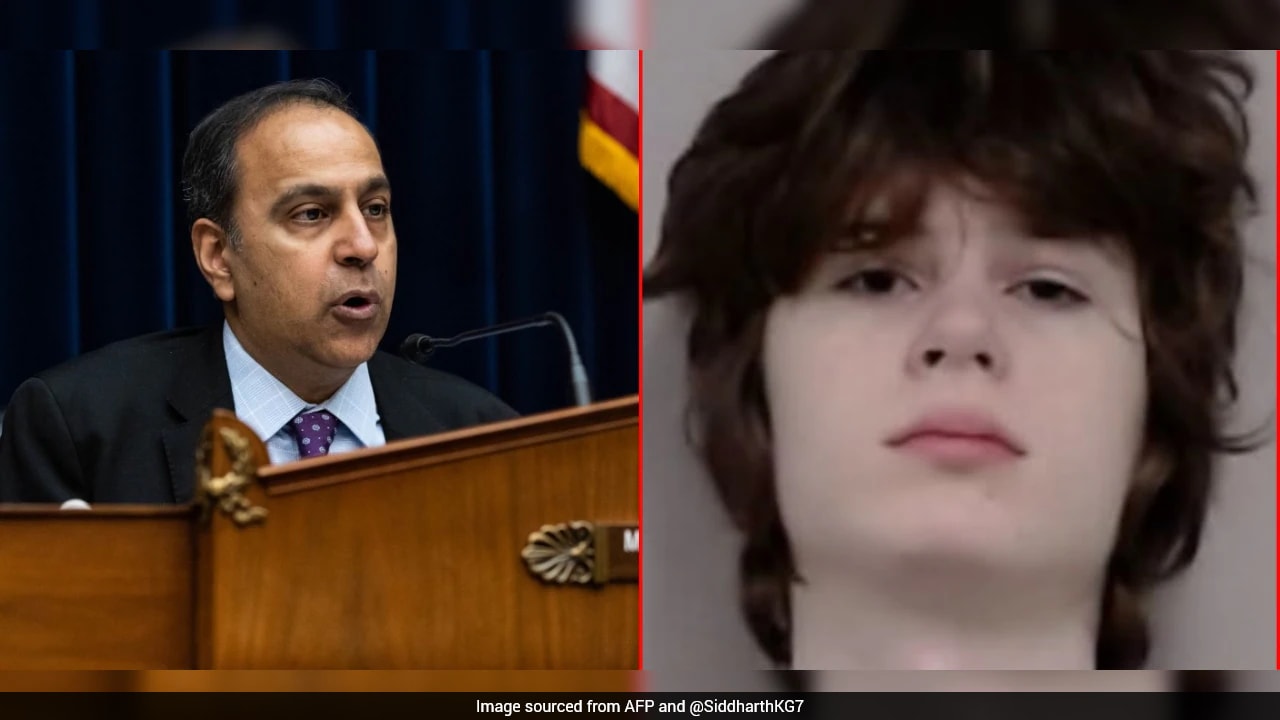
Lawmakers step up to a microphone, decode the threat in neat soundbites, and hand the public a familiar diagnosis. Anti-India hate plus loose gun laws equals danger at the temple. Case closed. Except it isn't. Not even close.
That diagnosis is lazy consensus disguised as insight. It treats a complex security failure like a simple math equation where changing two variables fixes the whole board. When we reduce plots against Hindu temples—or any religious site—to a two-part formula of ethnic hostility and firearm access, we miss how violent extremism actually forms, adapts, and gets stopped in the real world.
I have spent years watching security teams, intelligence analysts, and policy shops burn millions of dollars chasing symptoms while ignoring mechanics. They buy more cameras. They pass sweeping slogans. They hold press briefings that sound great on air and do almost nothing on the ground. Real threat analysis isn't about sounding righteous in front of a camera. It is about understanding motive convergence, operational tradecraft, and why prevention fails long before a weapon ever enters the picture.
The Lazy Consensus Around Temple Threats
Let's be clear about what the standard playbook says. When a plot involving a temple surfaces or gets discussed in Washington, the prevailing framing usually points straight to two things: rising anti-India sentiment or anti-Hindu animus on one side, and the availability of firearms on the other.
Those factors are not imaginary. Hostile online rhetoric exists. Firearms are widely accessible in the United States. Pretending neither matters would be dishonest.
The mistake is assuming that naming those two ingredients explains the makeup of the threat. It doesn't. Motives are messy, layered, and frequently shifting. A plot can involve geopolitical grievances, local disputes, personal instability, transnational propaganda, or opportunistic criminality all tangled together. Calling the whole thing "anti-India hate" flattens distinct dynamics into a single bucket. When analysts lump every grievance into one label, they misread who the actor actually is and what will stop them.
The same goes for treating gun laws as the master lever of security. Firearms are tools. Crucial tools, lethal tools, heavily debated tools—but still tools. Focusing almost exclusively on statutory gun rules skips over the entire chain of behavior that precedes an attack: radicalization pathways, online-to-offline escalation, target selection, reconnaissance, funding, and deterrence.
Imagine a scenario where a city passes strict new firearm restrictions overnight while leaving local threat-reporting channels broken, leaving house-of-worship security volunteers untrained, and treating every online threat as mere political noise. Did the risk drop to zero? Of course not. Determination finds workarounds, and non-firearm hazards or illicit channels remain completely unaddressed.
Why "Anti-India Hate" Is Too Blunt an Instrument
Precision matters in threat assessment. Sloppy labels produce sloppy protection.
In public commentary, "anti-India hate" often gets used as a catch-all phrase for anything touching India, Indian diaspora communities, or Hindu institutions. Yet geopolitical friction, ideological disputes, domestic political spillover, and localized bigotry are not identical phenomena. Confusing them leads security planners to build defenses for the wrong adversary.
Consider how intelligence and security professionals actually separate signals from noise:
- Ideological vs. Opportunistic Actors: Someone driven by a rigid political or extremist narrative behaves differently during planning than a troubled individual looking for notoriety or acting on a personal grievance.
- Foreign vs. Domestic Vectors: Outside influence campaigns and domestic actors may overlap in messaging, yet they rely on very different networks, funding streams, and legal jurisdictions.
- Symbolic vs. Soft Targets: A temple can be chosen because of religious identity, perceived geopolitical symbolism, neighborhood visibility, or simply because perimeter security looks lax.
When lawmakers decode a plot strictly through a partisan or geopolitical lens, they risk turning security into theater. Worse, they can alienate the very communities whose eyes, ears, and local knowledge are essential to early detection. Communities don't need performative outrage after a scare. They need practical risk assessments, clear escalation protocols, and direct lines to investigators who actually understand local context.
Gun Laws Are a Distraction From Operational Failure
Here is the part that makes political commentators uncomfortable. Debating federal or state gun laws takes oxygen away from hard operational questions that local leaders can actually control this week.
Even in states with strict gun laws, determined plotters acquire weapons illegally, borrow them, steal them, or turn to other means altogether. Conversely, in states with permissive gun laws, well-prepared facilities with layered physical security, trained staff, and strong law enforcement coordination routinely deter or disrupt threats before violence occurs.
Criminologists and security practitioners who study mass violence and targeted attacks—researchers like Pete Blair, John Donohue, and institutions such as the RAND Corporation—have spent years showing how complicated the relationship is between gun policy, deterrence, and violent outcomes. There is no single silver-bullet statute that magically neutralizes every motivated attacker. Policy debates over broad legislation move slowly and stall in gridlock. Threats move fast.
I have seen organizations pour huge sums into political advocacy while leaving their front doors unlocked, their access control unmonitored, and their volunteers guessing what to do if someone acts suspiciously during a festival. That is backwards. You cannot outsource physical safety to a legislative fight that won't be resolved for years.
The Questions People Are Actually Asking
When a security story breaks, people immediately search for straightforward answers. Most of those questions start from a shaky premise.
"Is anti-India hate the main driver behind plots targeting temples?"
Sometimes hostility tied to India or Hindu identity plays a role. Sometimes it doesn't. Treating it automatically as the primary driver is a shortcut, not an analysis. Threat actors rarely fit neatly into a single box. Many exhibit mixed grievances, grievance-collecting habits, or personal crises that latch onto whatever headline or symbol is handy. Calling it "the main driver" before looking at behavioral indicators puts narrative ahead of evidence.
"Would stricter gun laws stop these plots?"
Stricter laws might raise friction in some cases or create additional charges after the fact. They will not automatically stop someone who is already operating outside the law, building an improvised device, or exploiting gaps in local awareness. If you treat gun legislation as the primary answer, you leave massive operational blind spots wide open.
"What actually keeps a temple safe?"
Layered prevention, boring discipline, and zero reliance on wishful thinking. A safe facility combines physical hardening, clear visitor management, de-escalation training, emergency drills, and tight coordination with local police—without turning worship spaces into hostile fortresses.
What Actually Works on the Ground
If you want real security instead of talking points, shift your attention from slogans to systems. Most plots fail or get caught because of mistakes in preparation, communication, or visibility—not because someone passed a new speech on Capitol Hill.
- Audit access and sightlines first. Walk the property like an adversary. Check lighting, blind spots, parking areas, entry points, and crowd bottlenecks during peak services and major holidays. Fix the obvious vulnerabilities before buying fancy gadgets.
- Train people for real friction, not Hollywood scenarios. Most incidents start with awkward, tense, or ambiguous behavior—someone lingering with cameras, picking fights, probing doors, or acting erratically. Train staff and volunteers to spot early behavioral cues, communicate calmly, and call the right number immediately.
- Build local relationships before a crisis hits. Introduce leadership to local police commanders, emergency managers, and nearby businesses when skies are clear. When an alert goes out at 8:00 p.m. on a Friday, familiarity saves precious minutes.
- Separate political noise from actionable intelligence. Track credible threats, local escalation, and concrete planning indicators. Don't waste finite attention on every loud internet troll while ignoring someone conducting physical reconnaissance in the neighborhood.
Where This Contrarian Approach Can Go Wrong
Every sharp critique carries its own trap if you take it too far. Pushing back against lazy consensus does not mean swinging blindly the other way.
If I dismiss rhetoric and ideology entirely, I miss how online echo chambers prime people for action and normalize hostility. If I treat gun policy as irrelevant, I ignore real access dynamics and public safety trade-offs that matter in everyday policing. And if security advice turns overly paranoid, communities can end up living in constant fear, viewing every stranger as a suspect and eroding the openness that makes houses of worship vibrant in the first place.
Good judgment lives in that tension. Take threats seriously without turning every headline into panic. Focus on practical prevention without ignoring broader social and legal realities.
Stop confusing soundbites with strategy. Fix the blind spots where plots actually get made.