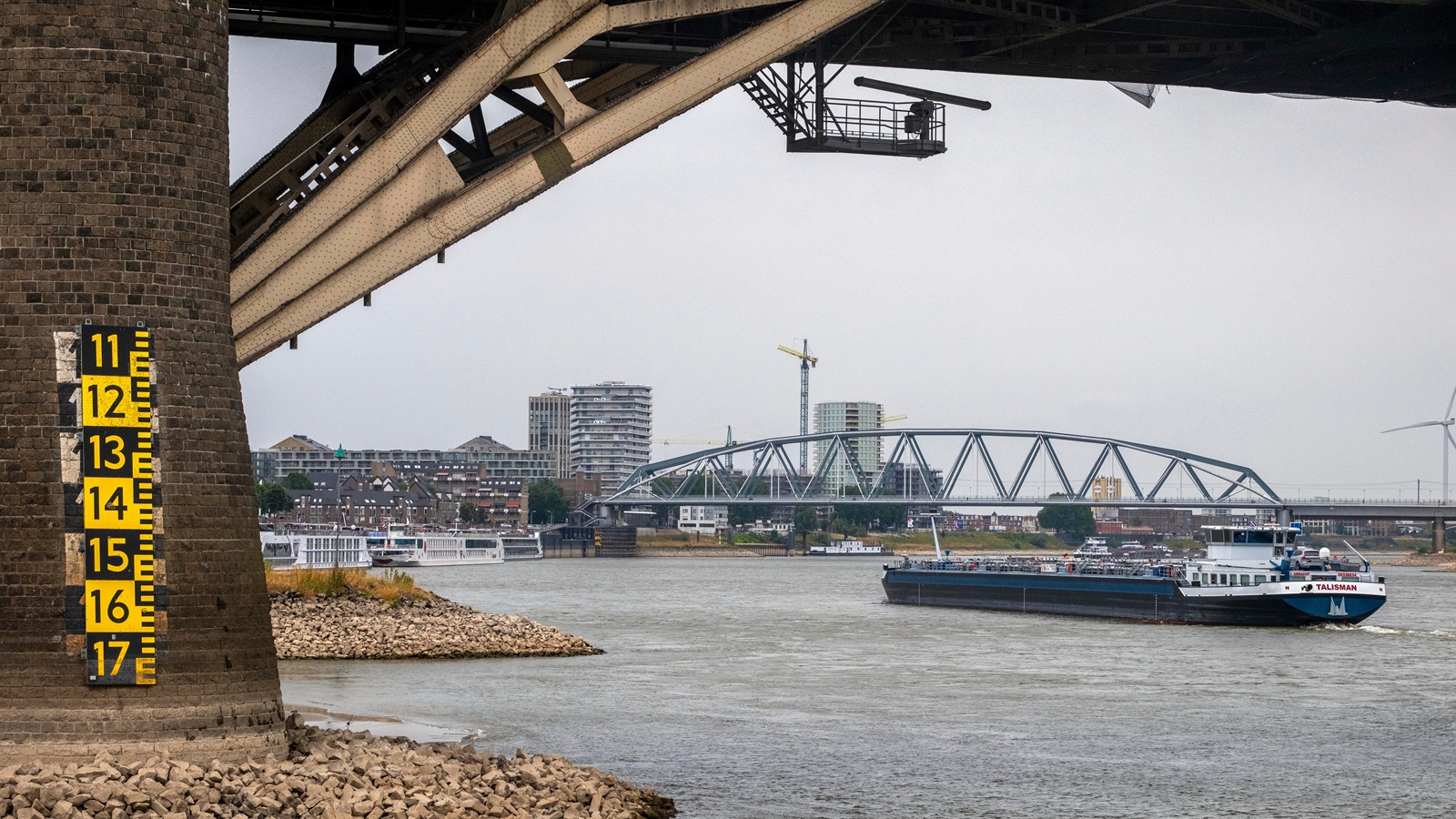
Every August, European trade media breaks out the same tired panic porn. The Rhine is dropping. Barges are grounding at Kaub. German chemical plants are threatening production cuts. Supply chain executives grab their chests and blame the weather gods for turning Central Europe's liquid highway into a trickle.
It is a convenient narrative. It pins multi-million-euro operational failures on a meter stick reading zero.
It is also complete nonsense.
I have watched logistics directors blow corporate budgets trying to engineer their way around seasonal dry spells while ignoring the structural rot inside their own supply chain models. They treat low water as an act of God rather than what it actually is: a predictable, mathematically projectable business cycle that they are simply too undisciplined to manage.
Blaming climate change or low precipitation for European trade friction misses the target entirely. The real problem is an industry addicted to cheap, high-capacity water transport that refuses to accept the math of seasonal variance.
The Myth of the Unpredictable Drought
Let us clear up the core misconception right away. People talk about low Rhine water levels as if they are rogue anomalies, akin to a sudden meteor strike. They are not.
Historical gauge data at Kaub goes back over a century. Low water periods occur with reliable frequency during late summer and autumn. Yet every single year, logistics managers act surprised when the water recede. They load barges to the maximum summer draft on July first and act like victims when August brings standard meteorological evaporation.
That is not a logistics strategy. That is a game of corporate chicken played with Mother Nature, and the house always wins.
When water levels drop, vessel capacity falls. A standard Type C barge carrying two thousand two hundred tons suddenly has to shed six hundred tons of cargo to clear the shallow spots. The lazy consensus says this creates an insurmountable supply chain bottleneck that paralyzes German industry.
The data tells a different story. The cargo still moves. It just requires more hulls, tighter scheduling, and—here is the part executives hate—higher freight rates. The panic is never about a lack of physical transport capacity. It is about a lack of margin protection for companies that refuse to price weather risk into their baseline operations.
The Economics of Fractional Loading
To understand why the standard commentary on Rhine shipping is fundamentally broken, you have to look at how barge operators price risk.
When the river drops by fifty centimeters, freight rates do not just scale linearly; they spike exponentially. Why? Because scarcity pricing kicks in. Shippers who relied entirely on spot-market barge capacity suddenly find themselves bidding against every chemical giant in the Ruhr Valley for a dwindling supply of light-draft vessels.
I have sat in boardrooms where executives throw their hands up because barge spot rates quadrupled over a three-week dry spell. Their immediate reaction is to lament the vulnerability of European inland waterways. Their mistake was relying on the spot market in the first place.
Smart operators do not ride the spot market down the river. They use multi-tiered charter structures that lock in draft-adjusted capacity months in advance. They treat water depth like currency fluctuation or oil price volatility. If you are not hedging your river exposure the same way you hedge foreign exchange risk, you deserve to get crushed by the index.
Why Rail and Road Are Not Your Savior
When the Rhine drops, the immediate knee-jerk reaction from armchair analysts is to suggest shifting cargo to rail or road.
Let us run the basic math on that fantasy.
A single large push convoy on the Rhine can move upwards of ten thousand tons of cargo. That equates to roughly four hundred heavy trucks on the Autobahn or four massive freight trains.
Imagine a scenario where the chemical corridor between Rotterdam and Ludwigshafen tries to migrate fifty percent of its heavy bulk traffic to the German rail network. The system would lock up inside of forty-eight hours. Deutsche Bahn’s freight corridors are already strained to the breaking point by passenger priority schedules and chronic infrastructure maintenance backlogs.
Road transport faces an even more acute bottleneck: a structural shortage of qualified long-haul truck drivers across Western Europe. You cannot simply summon four thousand diesel trucks out of thin air because the water level at Duisburg dropped below a threshold.
Relying on modal shift during a drought is like trying to switch airplanes mid-flight because there is turbulence. The infrastructure does not exist to absorb the displacement.
The Uncomfortable Truth About Barge Design
The entire inland shipping fleet on the Rhine suffers from an architectural legacy problem. For decades, shipyards built massive, deep-draft vessels optimized for maximum tonnage during normal or high water phases. These beasts are phenomenally profitable when the river is flush.
They are floating parking lots when it drops.
Naval architects have known how to build shallow-draft, wide-beam vessels for generations. These river cats distribute weight across a broader surface area, allowing them to carry meaningful payloads even when the gauge reads well below operational norms.
So why aren't German and Dutch shipyards dominated by these designs? Because the operators are hooked on the subsidy of cheap water. As long as the river stays high eighty percent of the year, the economics favor the deep-draft leviathans. Operators pocket the high-water profits and treat low-water disruptions as externalized costs borne by their customers.
When a company builds its entire logistics network around an assumption of perpetual abundance, every minor deviation looks like a crisis.
How to Profit While Your Competitors Panic
If you want to stop bleeding cash every time the Rhine makes front-page news, you need to completely overhaul how you source transport along the European corridor. Stop treating water depth as an act of God and start treating it as a standard variable.
- Audit your draft dependencies: Map every SKU in your supply chain against the specific barge draft required to move it. If you are shipping low-value aggregate in deep-draft vessels during August, you are burning capital for no reason.
- Contract for deadweight tonnage, not hull count: Shift your contracts away from fixed vessel commitments to dynamic payload guarantees. Let the operator worry about whether they use one big barge or three small ones to get your tonnage across the shallow pass at Kaub.
- Build regional buffer stock: The cost of carrying three weeks of extra raw inventory at your plant site is invariably lower than the premium you pay when panic-bidding for light-draft barges during a severe dry spell.
- Diversify discharge points: If your entire operation hinges on a single terminal along a vulnerable river stretch, you do not have a supply chain; you have a single point of failure with a view of the water.
The river is not broken. The models you are using to navigate it are. Stop waiting for the rain and start fixing your contracts.