The air inside the arena tastes like sweat, expensive cologne, and stale popcorn. Under the blinding house lights of the Ultimate Fighting Championship, the canvas of the Octagon is a pristine, waiting canvas. But if you look closely at the canvas itself, painted right there where the blood and sweat will inevitably splatter, you see a logo that feels entirely out of place. It is a simple blue square. Bud Light.
To the casual observer, it is just corporate sponsorship. A massive beer brand paying millions to plaster its name on the premier mixed martial arts promotion in the world. But politics has a way of invading the spaces we use to escape it. For the past few years, that specific blue logo has been a lightning rod, a symbol of a culture war that fractured friendships, emptied cooler boxes across America, and tanked stock prices.
Now, it sits directly beneath the feet of fighters, in a stadium packed to the rafters with a crowd that spent months vowing to never let a drop of that beer touch their lips again.
And sitting cageside, watching the whole thing unfold, is Donald Trump.
The Ghost in the Cooler
To understand how bizarre this image is, you have to go back to the spring of 2023. Think about a standard backyard barbecue. The sun is setting, the grill is smoking, and someone reaches into an icy cooler. For decades, that reach resulted in a familiar blue can. It was the default American lager. It did not ask you what you believed, who you voted for, or how you defined yourself. It was just cold, cheap, and there.
Then, a single social media post changed everything.
When the brand partnered with a transgender influencer for a brief marketing campaign, a massive, organic boycott ignited almost overnight. It was not just a drop in sales; it was a cultural excommunication. For a large segment of the population—particularly the working-class, conservative demographic that forms the bedrock of the MAGA movement—drinking that beer became an act of betrayal. It was a badge of dishonor. Bars pulled the taps. Country music stars filmed themselves dumping cases into the dirt.
The numbers were brutal. Sales plummeted by over twenty percent. The brand lost its decades-long crown as America’s top-selling beer. It became the ultimate cautionary tale in modern business: what happens when a brand forgets who its core audience is.
But corporate memory is short, and the need for survival is absolute. The executives needed a rescue plan, a way to buy their way back into the good graces of the people who had abandoned them. They needed a shield.
They found it in Dana White and the UFC.
The Billion Dollar Handshake
Dana White does not look like a corporate diplomat. He is loud, bald, fiercely protective of his brand, and entirely unapologetic. He also happens to be a longtime friend and vocal supporter of Donald Trump. The UFC crowd mirrors this energy. It is an environment that leans heavily conservative, fiercely patriotic, and deeply skeptical of corporate virtue signaling.
It was the absolute last place anyone expected the boycotted beer brand to show up.
Yet, in late 2023, the UFC announced a record-breaking, multi-year sponsorship deal with Anheuser-Busch, making Bud Light the official beer of the promotion. The price tag was rumored to be well over a hundred million dollars.
When the news broke, the internet erupted. Fans felt betrayed. How could the most anti-woke sports organization in the world partner with the poster child of corporate progressivism?
Dana White did not blink. He went on the offensive, using the exact language of his fan base to justify the move. He did not talk about diversity or corporate social responsibility. He talked about jobs. He talked about American farmers. He pointed out that the company employs thousands of military veterans and hard-working Americans. He reframed the partnership not as a surrender to corporate culture, but as a rescue mission for American workers.
It was a masterclass in rhetorical judo. By the time the first fights under the new deal took place, the anger had begun to lose its edge.
Cageside Contradictions
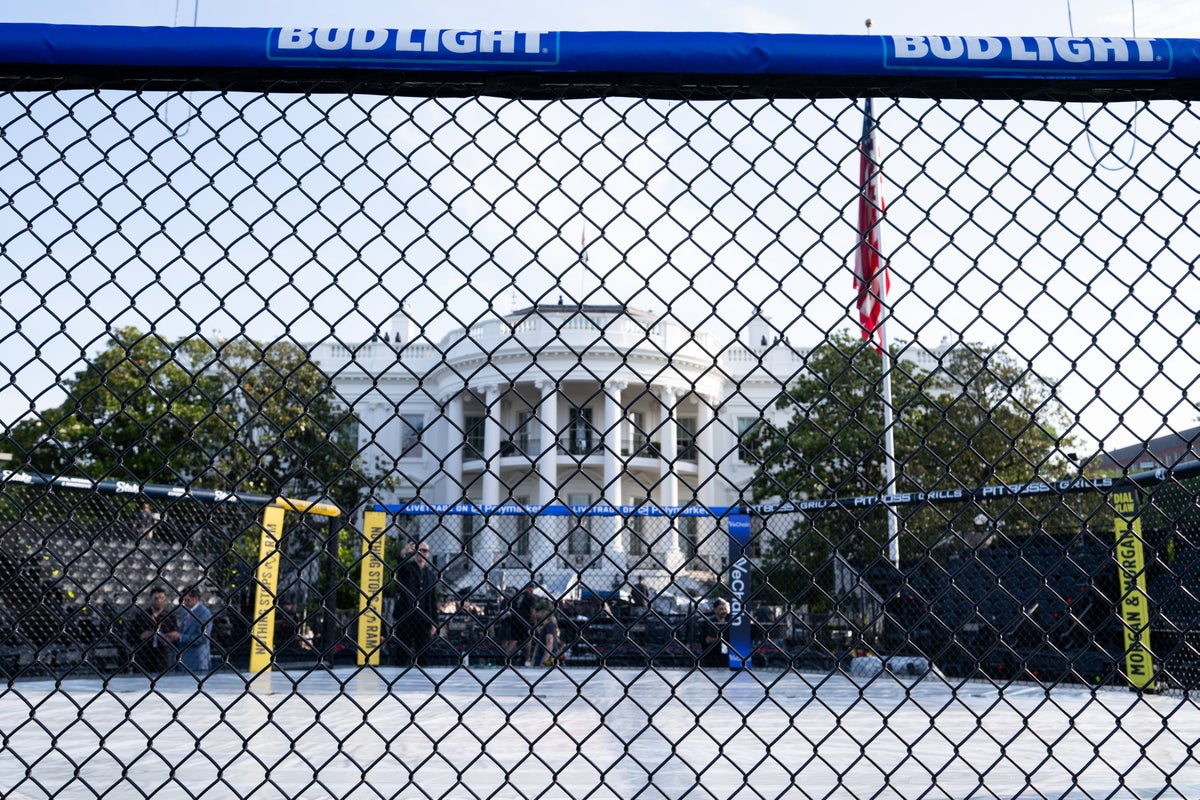
The phenomenon reached its peak at the White House UFC event. The energy in the building is electric, a heady mix of high-stakes sports and high-octane politics. Donald Trump walks out to a roaring ovation, flanked by his inner circle, rock stars, and conservative commentators. The crowd is a sea of red hats and chanting voices.
Yet, as the camera pans down to the Octagon to capture the action, there it is. The blue logo. It is painted on the mat. It is flashing on the digital bumpers. It is held in the hands of the ring card girls.
The very crowd that chanted for the demise of the brand is now cheering for athletes whose paychecks are directly funded by that brand's marketing budget.
It reveals a fascinating truth about modern political consumerism: proximity to power changes the rules. When a brand is cast out, it is easy to avoid it at the local grocery store. But when that same brand aligns itself with the icons of the movement—when it stands shoulder-to-shoulder with Dana White and receives a tacit nod of approval by virtue of occupying the same space as Trump—the outrage begins to feel exhausting.
The human brain is not wired to maintain high levels of anger indefinitely. Eventually, the desire to watch a great fight overrides the desire to maintain a beverage boycott.
The Invisible Peace Treaty
Consider what happens next as the main event begins. Two men are locked in a cage, trading blows in a display of raw human will. The crowd is unified, screaming for a knockout. In that moment of shared adrenaline, the political identity of the beer sponsor ceases to matter.
The brand did not change its values to win back its audience. It did not issue a groveling apology. Instead, it bought a ticket to the one place its detractors could not ignore. It embedded itself in the fabric of their favorite pastime.
It is a strange, unspoken peace treaty. The fighters get paid. The UFC grows its empire. The politicians get their massive platform. And the beer company gets to slowly, quietly scrub the stigma from its name, one pay-per-view event at a time.
The blue logo on the canvas will get stepped on, bled on, and sweat on throughout the night. For the executives in the corporate suites, that is a beautiful sight. It means they are back in the game. They are no longer a talking point on a cable news show; they are just part of the background noise of American entertainment.
As the final horn blows and the arena lights begin to dim, the crowd streams out into the night. Some of them will head to the nearest bar. They might still hesitate when they see the blue tap handle. They might choose something else. But the fierce, burning anger of the past year has been replaced by something far more dangerous to a boycott: indifference.
The cage cleared out, the canvas packed away, but the reality remains. Money and sports have a unique ability to wash away political sins, leaving behind nothing but the next fight.