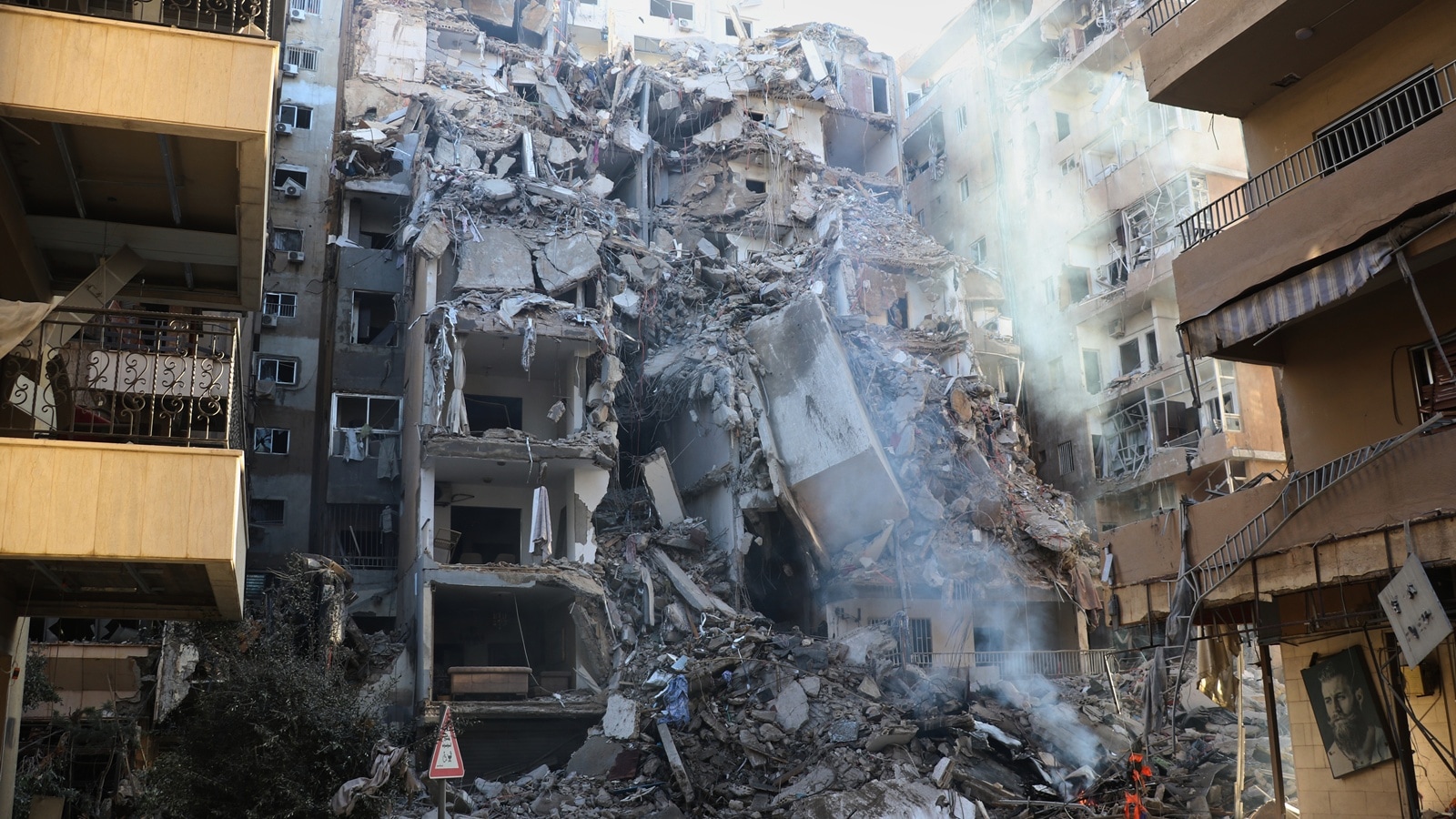
The silence is the loudest part. For months, the borderlands between Israel and Lebanon tasted like ash and iron. If you sat on a concrete porch in Marjayoun or a reinforced safe room in Kiryat Shmona, your ears became finely tuned instruments. You learned to parse the difference between the deep thud of outgoing artillery and the sharp, terrifying crack of an incoming drone.
Then, the static took over.
Israel and Lebanon have renewed their fragile ceasefire. On paper, it looks like a triumph of diplomacy—a structured, methodical agreement centered on the creation of "pilot" security zones in southern Lebanon. These are designated experimental pockets explicitly engineered to be entirely free of Hezbollah militants and infrastructure. It sounds clean. It sounds like a corporate rollout, a beta test for peace.
But geopolitical architecture is never clean when it is laid over soil soaked in decades of blood.
To understand what this agreement actually means, you have to look past the press releases issued in Tel Aviv and Beirut. You have to look at the people caught in the machinery of the experiment.
The Geography of the Experiment
Imagine a map pinned to a wall in a secure briefing room. A black marker draws a circle around a cluster of villages in southern Lebanon. Inside that circle, the rules of reality are supposed to change overnight.
Under the terms of the renewed deal, these pilot zones act as a proof of concept. The Lebanese Armed Forces—the official, state-sanctioned military—are tasked with moving into these areas to assert total sovereignty. They are the designated custodians. Their mission is to ensure that no weapons, no tunnels, and no fighters from Hezbollah remain. If the pilot succeeds, the circles on the map expand. If it fails, the map burns again.
Consider the baseline reality for a hypothetical resident of one of these pilot zones. Let's call him Bilal.
Bilal is a farmer whose family has tended olive groves near the Litani River for three generations. For the past year, his life was reduced to a survival equation. When the ceasefire first flickered to life, he returned to a home with a collapsed roof and shrapnel embedded in his ancient trees. Now, he is told his village is a "safe zone."
But safety is a psychological state, not a legal definition. Bilal looks out his window and sees Lebanese army checkpoints. He knows the soldiers are young, underpaid, and exhausted by Lebanon’s compounding economic collapse. He also knows that the men from Hezbollah who used to operate in the shadows of his village haven't vanished into the ether. They have simply stepped across the invisible line of the pilot zone, waiting to see if the state's grip slips.
For Bilal, the ceasefire is not a victory. It is a breath held underwater.
The Mechanics of Distrust
Across the border, less than ten miles away, the view is different but the anxiety is identical. Let’s look through the eyes of another hypothetical observer, an Israeli mother named Maya living in a northern kibbutz.
Maya’s children spent the better part of a year sleeping in bomb shelters or living out of suitcases in a subsidized hotel in Tel Aviv. She wants to go home. The government tells her the renewed ceasefire and the pilot zones are a historic shift. They promise that the northern border will no longer be shadowed by the threat of a cross-border raid.
But Maya remembers 2006. She remembers UN Resolution 1701, which was supposed to keep Hezbollah north of the Litani River twenty years ago. It didn't.
From her perspective, the new agreement is a high-stakes gamble using her family as collateral. The international community promises oversight. The United States and France are acting as guarantors, monitoring the enforcement mechanisms. Yet, an electronic sensor or a satellite image cannot stop a mortar fire in the middle of the night.
The real problem lies elsewhere. It is not a lack of tech or a lack of words on a page. It is a profound, structural deficit of trust.
Israel views the pilot zones with intense skepticism, reserving the right to strike if they detect Hezbollah violating the boundary. Lebanon views Israeli surveillance overflights as a constant violation of its sovereignty. The two positions are fundamentally irreconcilable, yet they are forced to coexist within the same square mileage of the experimental zones.
The Invisible Stakes
Why attempt a pilot program instead of a sweeping, comprehensive peace? Because a total solution is currently impossible.
The political landscapes in both nations are fractured. The Israeli government faces immense internal pressure from displaced northern residents who demand absolute security before returning. In Beirut, the government is a fragile coalition trying to manage a bankrupt state while avoiding a civil war with a heavily armed non-state actor that holds massive sway over the population.
The pilot zones are a compromise born of exhaustion.
Think of it as a tourniquet. It stops the immediate bleeding, but it does nothing to heal the underlying wound. The strategy relies on a slow, incremental build-up of confidence. The theory is that if the Lebanese army can successfully secure three villages today, they can secure six tomorrow, and twelve next month.
But military analysts know that geopolitics rarely follows a linear trajectory. A single rogue actor, an errant rocket, or a misidentified patrol could shatter the glass house of the pilot program in seconds.
The stakes are invisible because they are measured in the choices made by individual commanders on the ground. A Lebanese captain at a checkpoint who spots a hidden weapons cache faces a choice: report it and risk an internal clash, or look the other way to maintain local peace. An Israeli drone operator watching a suspicious vehicle near the border faces a choice: fire and protect his citizens, or hold back to preserve the diplomatic process.
The Burden of the Watchmen
The ultimate success of this renewed arrangement doesn’t rest on the politicians who signed it in distant capitals. It rests on the shoulders of the Lebanese soldiers deployed into the south.
For years, the Lebanese Armed Forces have been caught in a tragic paradox. They are respected by the populace as a symbol of national unity, but they are chronically under-equipped and underfunded. Soldiers have taken second jobs driving taxis just to feed their families. Now, they are being asked to act as a buffer between the region’s most advanced military and its most powerful paramilitary force.
To expect them to flawlessly enforce a weapon-free zone is to ask for a miracle on a shoestring budget.
The international community has promised financial and logistical support to bolster these troops. Vehicles, communication gear, and salary supplements are supposed to flow into Beirut. But bureaucracy moves at a glacial pace, while the realities on the ground move at the speed of a bullet.
If the support arrives too late, or if the political will in Beirut falters, the pilot zones will collapse inward. Hezbollah has spent decades embedding itself into the social fabric of southern Lebanon. They are not an occupying army that can simply pack up and retreat; they are the sons, brothers, and neighbors of the people living in those very villages. Separating them from the terrain is like trying to untangle a spider's web without breaking the threads.
The Fragile Normal
For now, the schools in northern Israel are tentatively preparing to reopen. In southern Lebanon, contractors are clearing rubble from the main roads. Traffic flows along the coastal highway again.
It looks like normalcy. It smells like progress.
But if you walk through the markets of Tyre or the streets of Kiryat Shmona, you realize that everyone is playing a part in a grand theater of hope. No one is buying permanent furniture. No one is investing in long-term projects. They are living in the margins of a trial period.
The renewed ceasefire has bought time, and time is the most precious commodity in the Middle East. It gives diplomats a chance to talk, civilians a chance to breathe, and children a chance to sleep without the accompaniment of sirens.
As dusk falls over the hills of Galilee and the ridges of South Lebanon, the lights flicker on in the villages that comprise the pilot zones. The searchlights from military outposts sweep across the valleys, cutting through the darkness, looking for movement, looking for anomalies, looking for any sign that the experiment has failed.
A lone farmer stands at the edge of his property, watching the shadow of a patrol vehicle pass by on the dirt road. He doesn't look at the sky anymore. He looks at the ground beneath his feet, wondering how long it will remain steady.