The scent of stale beer and cheap goulash hits you long before you actually see the Keleti train station. It is a humid, heavy afternoon in Budapest. The air feels thick, almost electric, vibrating with a nervous energy that has been building for months across two entirely different European capitals.
They are arriving by the thousands now. They pour out of budget flights from Luton and Beauvais, cramming into the historic, crumbling carriages of the Hungarian railway, and spilling into the grand, neo-Renaissance squares of a city that suddenly feels far too small to hold them all. For another perspective, see: this related article.
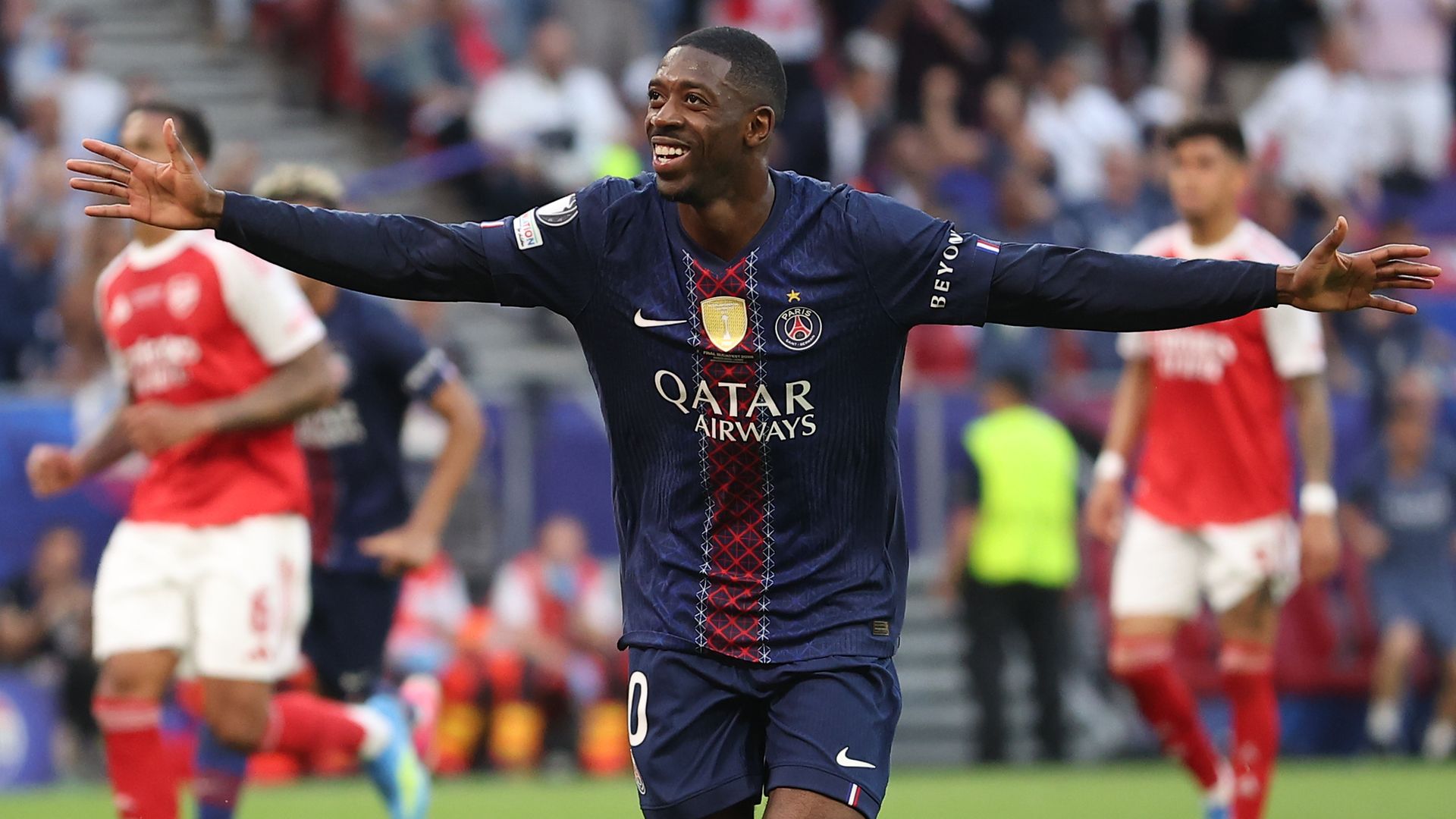
On one side of the Danube, the Londoners. Arsenal fans who have spent decades swallowing bitter disappointment, waiting for a night exactly like this. On the other side, the Parisians. Paris Saint-Germain supporters whose club has spent billions of Qatari riyals to buy an identity, chasing a European crown that always seems to slip through their fingers at the exact moment they try to grasp it.
This is the Champions League final. Related analysis on the subject has been provided by The Athletic.
The official UEFA brochures will tell you about the economic impact, the television broadcast rights spanning hundreds of countries, and the pristine turf of the Puskás Aréna. They will give you the dry, sterilized facts of a massive corporate sporting event. But they miss the point entirely. They ignore the human collateral. They ignore the absolute madness of what it takes to actually get here.
The Economics of a Ninety-Minute Obsession
Consider Thomas. He is forty-two, a lifelong Arsenal season-ticket holder from Islington. He is not a wealthy man. He works as a site manager for a mid-sized construction firm, a job defined by spreadsheets, tight margins, and early mornings.
When Arsenal secured their place in the Budapest final, Thomas faced a brutal mathematical reality.
Direct flights from London to Budapest, usually a modest double-digit sum, skyrocketed to over £800 within twenty minutes of the final whistle of the semi-final. Hotels in the Jewish Quarter quadrupled their prices overnight. The match ticket itself, acquired through a chaotic club ballot, cost him another £150.
To afford this weekend, Thomas did not tap into a surplus luxury fund. He reallocated his family’s summer holiday budget. He took out a short-term loan that he will be paying off well into the winter. His wife is furious, though she pretends to understand. His teenage daughter is disappointed that their trip to Spain has been downgraded to a weekend in a damp cottage in Wales.
"You don't understand," Thomas says, his eyes bloodshot as he stands outside a bar on Király utca, gripping a lukewarm plastic cup of local lager. His voice is already raspy, a low growl worn down by chants on the train from Vienna. "My dad took me to Highbury when I was six. He died five years ago. He never saw us lift this trophy. If I am not in that stadium when it happens, I am abandoning him. It sounds crazy. I know it sounds crazy. But I’d sleep on the pavement for a month if it meant seeing us win it."
This is the invisible tax of modern football. The sport relies on this exact brand of irrational devotion. The clubs and the governing bodies know that for men like Thomas, the cost is secondary to the fear of regret. The market maximizes profit because it knows the consumer has no choice but to pay. It is a hostage situation disguised as a sporting pilgrimage.
The Synthetic Kingdom and the Weight of Gold
A mile away, across the flowing brown waters of the Danube, the mood in the French camp is entirely different, yet anchored by the exact same desperation.
The PSG supporters have gathered in the shadow of the Liberty Statue on Gellért Hill. They look sleek. They look like a fan base curated by a marketing agency, draped in pristine Jordan-branded kit, their banners sharp and professionally printed. But if you look closely at their faces, the swagger is a thin veneer. Underneath lies an acute, agonizing anxiety.
For over a decade, Paris Saint-Germain has been an experiment in footballing hyper-capitalism. They have broken transfer records, hired and fired world-class managers like disposable staff, and turned the French league into a predictable, one-team procession.
Yet, the ultimate prize has eluded them.
To be a PSG fan in Budapest today is to carry the weight of an existential crisis. If they win, it is merely the logical conclusion of a ledger sheet. It is what they were supposed to do. If they lose, it is a catastrophic, humiliating failure that exposes the emptiness of their project.
Chloe, a twenty-six-year-old student from the Parisian suburbs, sits on the steps overlooking the city. She did not fly. She drove for seventeen hours with three friends in a battered Renault Clio, surviving on energy drinks and stale baguettes to save money.
"Everyone hates us," Chloe says, lighting a cigarette with trembling fingers. "They think we are just plastic. They think we don't have a soul because our owners have oil money. But I was born three blocks from the Parc des Princes. I remember when we were fighting relegation. This club is my childhood, my identity. If we lose tonight, the whole world will laugh at us. They will say money can’t buy history. I don't know if my heart can take that mockery again."
The stakes for Chloe are not financial; they are reputational. Her club’s massive wealth has alienated the rest of the footballing world, leaving its supporters isolated in their passion. They are here to validate their existence, to prove that their joy is just as real, just as earned, as the traditional giants of the game.
Two Paths, One Capital
The city of Budapest itself watches this invasion with a mixture of capitalist glee and civic exhaustion.
Local police forces line the avenues in full riot gear, their expressions neutral, almost bored, though their eyes constantly track the movement of the crowd. The Hungarian capital has become the default neutral ground for European football's high-stakes dramas over the last few years, a geographical compromise where East meets West.
The local residents, however, are largely locked out of the spectacle.
A ticket to the match costs more than the average monthly disposable income for a young professional in Budapest. The restaurants along the river have printed special, inflated menus exclusively in English and French. The city has been temporarily colonized, transformed into a theme park for Western European disposable income and emotional catharsis.
But the real problem lies elsewhere, far beneath the surface of the tactical analysis and the punditry that will dominate the television screens tonight.
The tragedy of the Champions League final is its cruel, binary nature. Only one group of fans will leave this city justified.
Tomorrow morning, the Keleti station will look very different. The winners will board their trains wrapped in a warm, alcohol-fueled euphoria that will dull the financial pain of the trip. The debt won't matter. The missed family holidays won't matter. The exhaustion will feel like a badge of honor.
But for the losers, the journey home will be an unbearable post-mortem.
Thomas will sit on a delayed flight back to Luton, staring out the window at the gray clouds, calculating exactly how many hours of overtime he needs to work to balance his bank account, realizing he sacrificed his family's comfort for a memory tainted by defeat. Chloe will face the seventeen-hour drive back to Paris in total, suffocating silence, the laughter of the internet ringing in her ears, wondering if a club built on gold can ever truly offer her shelter.
The sun begins to dip below the horizon, casting long, bloody shadows across the Parliament building. The noise from the fan zones is reaching a crescendo, a roaring mix of cockney chants and French ultrawave choruses echoing off the stone walls of the old city.
They are marching toward the stadium now, a massive, human tide of red, white, and blue, moving down the long boulevards toward a date with their own self-worth. They have crossed a continent, emptied their bank accounts, and strained their relationships for ninety minutes of a game that promises them absolutely nothing in return.
But they keep walking.
Because in the modern world, where everything is calculated, monetized, and predictable, this beautiful, terrifying uncertainty is the only thing that makes them feel alive.