The train from Lviv does not hiss when it stops at the Polish border station of Przemyśl; it groans. It is a sound of metal tired from carrying too much weight, too many miles, too much history.
In the quiet, muggy air of July 2026, a man named Vadym steps down onto the concrete platform. He is thirty-four years old. He carries a single canvas duffel bag, his eyes hollowed out by days of sleeplessness and the low-frequency hum of anxiety that has lived in his chest for over four years. Behind him lies a country running out of electricity, running out of ammunition, and, most critically, running out of men. Ahead of him lies the European Union, a place that, until very recently, promised an automatic blanket of safety to anyone fleeing the Ukrainian catastrophe.
But when Vadym reaches the border agent, the paperwork does not go the way it did for his sister in 2022, or his cousin in 2024. The rules of the sky have changed.
Brussels has decided that some refugees are no longer eligible for refuge.
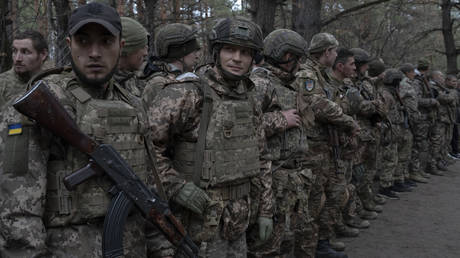
In a quiet legislative shift that represents one of the most profound moral compromises in the history of modern humanitarian law, the European Union agreed to extend the temporary protection framework for Ukrainian refugees until March 2028. It is a massive bureaucratic relief for the 4.4 million Ukrainians already living within the bloc. But the extension came with a dark, sharp asterisk: newly arriving men of military age—specifically those between twenty-three and sixty who are subject to Ukraine's wartime draft—will no longer receive automatic protection.
The message is subtle but devastating. If you are a man of draft age and you cross the border now, Europe will not open its arms. It will ask for your papers, look you in the eye, and quietly point you back toward the front line.
The Request from Kyiv
To understand how we arrived at this border crossing, we have to look past the sterile press rooms of Brussels and into the cold mud of the Donbas.
The war is grinding through its fifth brutal year. The initial volunteer lines that wrapped around recruitment offices in Kyiv in the freezing spring of 2022 are a distant, tragic memory. The men who stood in those lines are either dead, wounded, or profoundly exhausted, having spent years in trenches without rotation. Ukraine’s military planners are facing an existential mathematics problem: they cannot hold a thousand-mile front line without bodies.
For years, the Ukrainian government has watched with growing frustration as millions of its citizens found safety, careers, and new lives in Germany, Poland, and the Czech Republic. Among them are hundreds of thousands of men who, under Ukrainian martial law, should never have left the country in the first place.
The pressure built slowly. Then, it broke.
During negotiations to extend the European Union's Temporary Protection Directive—which was set to expire in March 2027—the government in Kyiv made an extraordinary, desperate request. They asked the EU to stop sheltering the very men they needed to conscript.
When Magnus Brunner, the EU’s migration commissioner, stood before reporters to announce the policy, he did not hide the geopolitical hand-wringing. "This is what Ukraine has asked us to do, and this is what we are doing," he said simply.
It is a stunning admission. For the first time, the humanitarian machinery of the European Union is being used as an external enforcement arm for another nation’s conscription office. The legal structures designed to protect the vulnerable are being rewritten to help a sovereign partner wage an existential war.
The Line in the Sand
The bureaucracy of survival is incredibly precise.
Under the new regulations, the EU is drawing a sharp line between those who are already inside the fortress and those who are still trying to climb the walls.
If you are one of the estimated 1.1 million Ukrainian men who managed to secure temporary protection in the EU before this ruling, your status is secure. Your right to work in Berlin, your apartment in Prague, and your children’s schooling in Warsaw are protected through 2028. The EU has explicitly stated that these rules will not apply retroactively.
But consider the fate of those who arrive tomorrow.
A newly arriving thirty-year-old man who crosses into Poland will no longer receive the immediate, collective protection that bypassed the grueling, individual asylum process. If he cannot produce an official mobilization exemption certificate issued directly by the authorities in Kyiv, the automatic safety net vanishes.
He is left with only one option: to apply for traditional asylum.
But the traditional asylum system is a slow-moving, bureaucratic beast. More importantly, European legal experts are already warning that the system is stacked against him. Under international refugee law, evading a military draft in a country facing an armed invasion is almost never recognized as a valid ground for asylum. Unless a draft-age man can prove that he faces a specific, individualized threat of persecution or that the military service would force him to participate in war crimes, his application will be rejected.
He will be deemed an illegal migrant. And illegal migrants are sent back.
The Invisible Stakes
It is easy to look at this policy through the cold lens of state sovereignty and national defense.
Many argue that this is a harsh, necessary reality. If Ukraine is to survive, its citizens must fight. How can European taxpayers support young, able-bodied men in Munich while their peers are dying in the trenches of Kharkiv? It is an argument that carries a heavy, undeniable weight of pragmatism.
But the view from the ground is far more fractured.
Consider the hypothetical story of Oleksandr, a twenty-five-year-old software engineer from Dnipro. He is not a soldier. He has never held a weapon. His hands are built for keyboards, not Soviet-era assault rifles. For four years, he lived under the constant threat of drone strikes, donating half his salary to the military, volunteering at local shelters, and trying to keep his family’s small business alive in a ruined economy.
When a missile strike destroyed his apartment building this spring, killing his neighbors and leaving him with nothing but a ringing in his ears, he finally broke. He spent his life savings on a dangerous, illegal crossing through the Carpathian mountains, hoping to reach his mother in Dresden.
Under the old rules, Oleksandr would have been processed within hours, handed a residence permit, and given the right to build a quiet life. Under the new rules, he is a fugitive.
The EU’s decision creates a profound moral paradox. By aligning its refugee policy with Ukraine's military needs, Europe is essentially declaring that some human beings have a duty to die. It strips away the fundamental, post-World War II assumption that refugee status is an individual human right, independent of the strategic needs of any state.
Michael O’Flaherty, the Council of Europe’s Human Rights Commissioner, did not mince words when he raised alarm bells over the decision. He warned that denying protection based on military obligations touches on core human rights concerns, threatening to undermine the very foundation of international law.
But in the halls of power, those concerns have been quietly pushed aside. The geopolitical calculation has been made: Ukraine's survival is more important than the individual liberties of its draft-age citizens.
The Fractured Continent
The implementation of this policy will not be smooth.
While Brussels has set the framework, the actual enforcement lies in the hands of twenty-seven different member states, each with its own domestic political pressures.
Countries like Germany, Poland, and the Czech Republic—which together host the vast majority of Ukrainian refugees—have been among the loudest voices pushing for tighter restrictions. Their local resources are strained, and their domestic electorates are growing increasingly weary of long-term aid programs. In Germany, where over a million Ukrainians reside, the political rhetoric surrounding draft-age men has grown increasingly sharp.
On the other side of the debate stands France. Diplomatic sources indicate that Paris was the most vocal opponent of the new restrictions during closed-door negotiations, arguing that narrowing the scope of temporary protection violates the spirit of European humanitarianism.
This internal division will likely create a dangerous patchwork of safety. A draft-age man might find himself turned away at the Polish border, yet tolerated if he somehow manages to reach the streets of Paris or Marseille. It is a recipe for exploitation, pushing desperate young men into the shadows of the undocumented black-market economy, where they are vulnerable to human trafficking, wage theft, and constant fear.
The train station at Przemyśl eventually empties.
The women, the children, and the elderly are ushered onto buses, their paths to a temporary, stable life in Europe guaranteed for another two years. They carry the heavy grief of what they left behind, but they hold a piece of paper that says they are allowed to breathe.
Behind them, near the border control kiosks, a few young men stand in a quiet, uncertain huddle. They are looking at their phones, reading the news from Brussels, realizing that the digital maps they used to navigate their escape have just redrawn the borders of their lives.
For four years, Europe was a sanctuary. Today, it is a mirror, reflecting back the harsh, uncompromising reality of a continent that has decided it can no longer afford the luxury of absolute mercy.
The gate is closed. The sky is gray. And on the other side of the wire, the trenches are waiting.