A young scientist in a cramped laboratory in Hyderabad watches a single drop of liquid slide down the side of a glass vial. She is working on a compound that could potentially stabilize a common but devastating respiratory condition. To her, this is a mission of mercy. To a patent attorney sitting in a high-rise in Washington D.C., that same drop represents a potential breach of a multi-billion dollar intellectual property fortress.
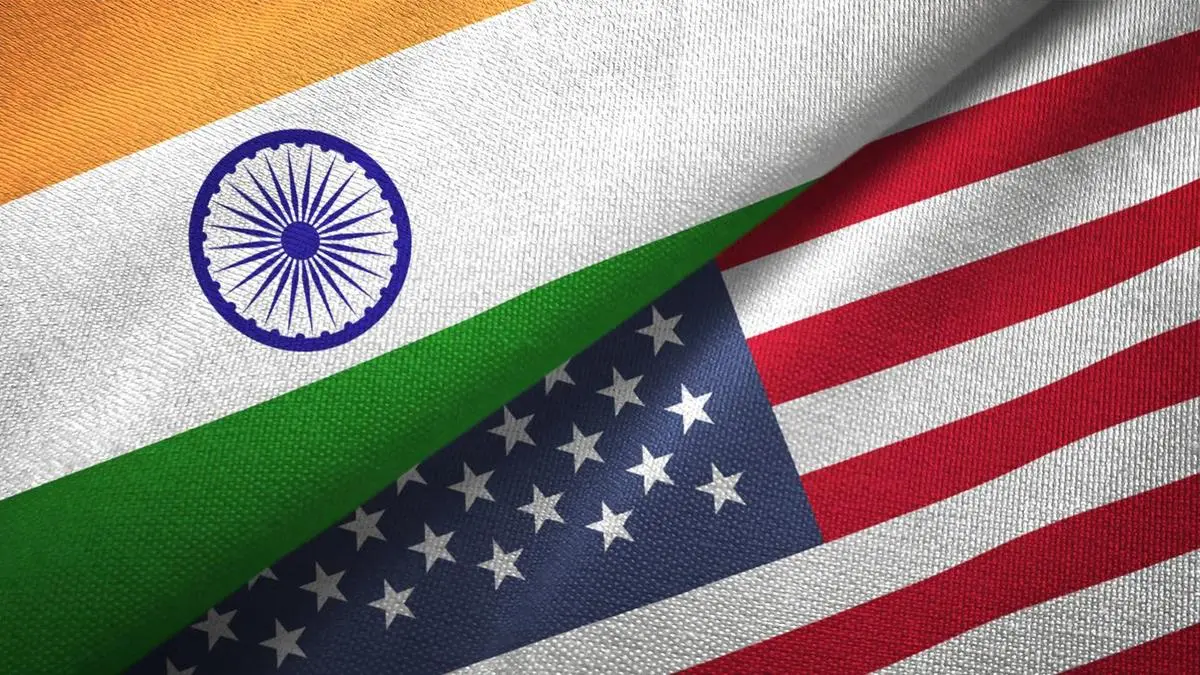
This is the friction point. It is the invisible wall between the world’s largest economy and its most populous democracy.
For yet another year, the United States Trade Representative (USTR) has kept India on its "Priority Watch List." It sounds like bureaucratic jargon, the kind of phrase that gets buried in the back pages of a financial daily. In reality, it is a persistent, low-grade fever in the relationship between two global giants. Being on this list means the U.S. believes India isn't doing enough to protect the ideas, inventions, and creative works of American companies. It is a formal "we don't trust your rules."
The tension isn't about physical borders or military posturing. It’s about the ownership of thoughts.
The Architect of a Different System
Consider the perspective of a local entrepreneur trying to bring affordable medicine to a village that the global supply chain forgot. In the Indian legal framework, there is a specific, controversial hurdle known as Section 3(d) of the Patents Act. It was designed to prevent "evergreening."
Evergreening is a tactic where a company makes a tiny, insignificant change to an existing drug—perhaps changing a coating or a slightly different salt form—just to extend the life of their patent. It’s a way to keep prices high and competitors out long after the original breakthrough should have entered the public domain. India said no to this. The Indian government decided that for a modification to be patentable, it must show a significant increase in efficacy.
To a patient in Mumbai, this is a lifeline. To a pharmaceutical giant in New Jersey, this is a theft of potential revenue and a dismissal of the incremental progress that defines modern chemistry.
The U.S. sees these laws as a barrier to innovation. They argue that if you don't reward every step of the journey, companies will stop walking the path. They look at India's high rates of physical piracy and the slow pace of its courts and see a system that doesn't respect the sweat of the brow.
But the reality on the ground is more nuanced than a simple "theft" narrative.
The Cost of a Label
When a country is placed on the Priority Watch List under Section 301 of the Trade Act, it isn't just a slap on the wrist. It carries a heavy, unspoken weight. It signals to international investors that their intellectual property—the very soul of a tech or pharma company—might be at risk.
Imagine you are a venture capitalist in Silicon Valley. You are looking at two startups. One is based in a country with a "Gold Standard" IP rating. The other is in a country that has been on the U.S. Watch List for decades. Even if the talent in the second country is superior, the risk profile changes the math. The "Priority Watch List" label acts as a persistent shadow, darkening the doorstep of Indian innovation and making capital more expensive and harder to find.
Despite this, India hasn't been standing still. The irony is that the Indian government has made massive strides. They have digitized patent offices. They have sped up the examination process. They have even created specialized IP cells in police departments to crack down on counterfeit goods.
Yet, the USTR report remains unchanged. It notes that while there have been "some steps forward," the "longstanding concerns" remain. It’s the diplomatic equivalent of a teacher telling a student they’ve improved, but they’re still failing the class.
The Invisible Stakes of a Software Patch
It isn't just about pills and powders. The battle lines extend into the digital ether.
Think about a software engineer in Bengaluru. He spends eighteen hours a day writing a piece of code that optimizes cloud storage for small businesses. He wants to protect his work. But he also lives in an environment where enforcement is a labyrinth.
The U.S. report highlights issues with "online piracy" and the lack of a "statutory framework" to address the liability of internet service providers. For the engineer, this means his code could be stripped, rebranded, and sold on a dozen different platforms before he even finishes his morning coffee.
The U.S. wants India to adopt stricter, more Western-aligned digital copyright laws. India, however, is trying to balance the needs of its massive, growing digital population with the demands of global corporations. They are trying to build a digital house while the neighbors are shouting through the windows about where the fence should be.
This creates a paradox. India wants to be a global hub for research and development. It wants the "Make in India" initiative to be a sign of quality and originality. But to get the top-tier investment required for that dream, it has to satisfy a U.S. trade office that operates on a different set of priorities.
The Human Mirror
We often talk about these trade disputes as if they are games played by giants. We see the logos of the companies and the flags of the nations. We forget the people.
There is a small publisher in Delhi who wants to translate educational textbooks for children who can't afford the $200 price tag of a Western medical journal. Under strict IP laws, he is a criminal. Under the lens of social development, he is a hero.
There is a researcher in North Carolina who lost her job because her company's patent was overturned in an Indian court, leading to a massive drop in stock value. To her, the Indian legal system is a lawless frontier that devalues her life’s work.
Both of these people are right. Both are victims of a system that hasn't found a middle ground.
The U.S. retains India on the list because it wants a predictable, profitable environment for its most valuable exports: ideas. India resists some of these changes because it refuses to prioritize the profits of foreign entities over the health and education of its own citizens. It is a clash of two different versions of the "greater good."
Beyond the Spreadsheet
The data shows that India’s patent filings are at an all-time high. The domestic ecosystem is maturing. Young Indians are no longer just the "back office" of the world; they are the creators. This shift is forcing a change in the internal conversation.
Local Indian companies are starting to realize that they, too, need protection. As Indian pharmaceutical firms move from making generics to discovering new molecules, they are beginning to whisper the same things the Americans have been shouting for years. They want their investments protected. They want the courts to move faster.
This internal pressure may eventually do what the USTR reports couldn't. It will change the system from the inside out, not because Washington demanded it, but because Mumbai required it.
But for now, the stalemate continues. The report is published, the headlines flash for twenty-four hours, and the officials on both sides exchange sternly worded memos.
The scientist in Hyderabad continues her work. The attorney in D.C. continues his filing. The drop of liquid still slides down the glass, and the question of who owns the rights to that motion remains unanswered.
The list is more than a document. It is a mirror reflecting a world where we haven't yet decided if an idea belongs to the person who thought of it, or the person who needs it to survive. We are still waiting for a language that can satisfy both the ledger and the heartbeat.
The vial stays on the shelf, the report stays in the folder, and the invisible wall remains exactly where it was last year, tall and unyielding.