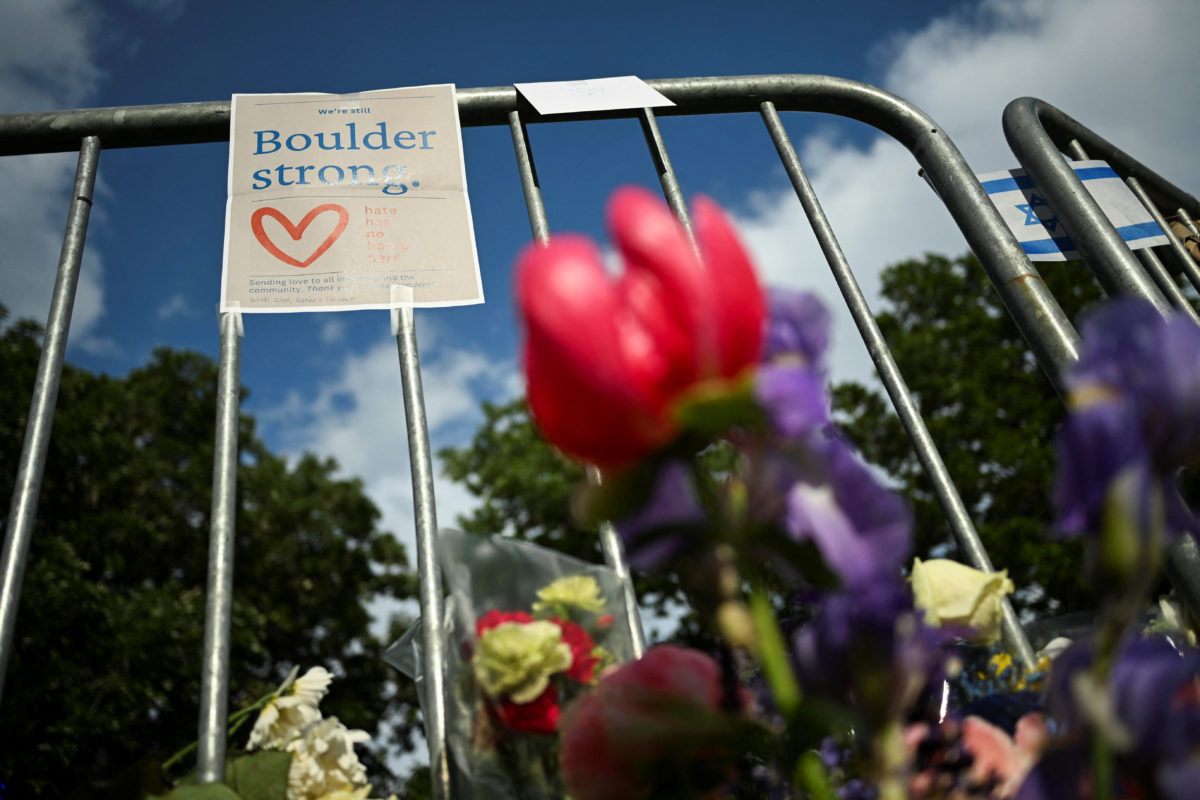
Mohamed Sabry Soliman stood in a Boulder County courtroom this morning and admitted to a campaign of violence that was as meticulous in its planning as it was chaotic in its execution. By pleading guilty to first-degree murder and a staggering list of state charges, the 46-year-old Egyptian national has guaranteed he will die in a Colorado prison. The plea, entered May 7, 2026, marks the end of the state’s criminal pursuit but leaves behind a trail of institutional failures and a family caught in a relentless legal meat grinder.
The facts of the June 1, 2025, attack are no longer in dispute. Soliman arrived at the Pearl Street Mall with more than two dozen Molotov cocktails and a makeshift flamethrower. His target was a small, weekly gathering of demonstrators walking in solidarity with Israeli hostages. When the glass broke and the gasoline ignited, the result was a scene of horror in one of America’s most liberal enclaves. 82-year-old Karen Diamond, a woman who had survived decades of history only to be met by a firebomb in a pedestrian mall, succumbed to her injuries. Twelve others were burned or maimed.
Soliman told investigators his goal was to "kill all Zionist people." Yet, after throwing just two of his twenty-four devices, he stopped. He later claimed he "got scared" because he had never hurt anyone before. This juxtaposition—a year of radicalized planning met with a sudden, momentary crisis of conscience—does little to soothe a community that saw its sense of safety incinerated in a matter of seconds.
The Asylum Loophole and the Invisible Resident
This was not a "lone wolf" who slipped through the cracks; he lived in the cracks. Soliman entered the United States in 2022 on a B-2 visitor visa and immediately applied for asylum. For nearly three years, he existed in a state of legal limbo that has become the standard for the American immigration system. He was granted work authorization, which expired in March 2025. By the time he walked onto Pearl Street with a backpack full of fire, he was in the country illegally, his asylum claim still unadjudicated and his presence unmonitored.
The investigation into Soliman’s life in Colorado Springs reveals a man who was struggling under the weight of a failing marriage and low-paying jobs. His attorneys describe the attack as "profoundly inconsistent" with his past, but the FBI found evidence of a year-long radicalization process. This suggests a terrifying reality for modern security: the transition from a struggling immigrant to a domestic terrorist can happen entirely within the domestic sphere, fueled by digital echo chambers and personal desperation, without ever triggering a federal red flag.
Collateral Damage and the ICE Tug of War
While Soliman faces a mandatory life sentence plus 400 years, the most complex chapter of this tragedy involves his ex-wife, Hayam El-Gamal, and their five children. Within 48 hours of the firebombing, federal authorities detained the entire family. Despite FBI testimony stating the family had no prior knowledge of the plot, they were shipped to a detention facility in Dilley, Texas, where they remained for nearly 11 months.
What followed was a surreal sequence of events that highlights the aggression of current deportation efforts. In late April 2026, a federal judge ordered the family's release. Two days later, ICE agents rearrested them, put them on a plane, and attempted to deport them via Michigan and New Jersey. It took an emergency stay from two separate federal judges to force that plane to turn around in mid-air.
The Department of Homeland Security remains undeterred. They argue the family overstayed their visas and represent a national security interest by proxy. The family's immigration attorney, Eric Lee, paints a darker picture: a mother denied medical care for a lump in her chest and children traumatized by a year in a residential center. The government is essentially trying to punish the bloodline for the sins of the father, a tactic that raises significant ethical and legal questions about the limits of collective responsibility in immigration law.
The Federal Death Penalty Shadow
The state case is closed, but the federal government is not done. Soliman still faces 12 federal hate crime charges. His defense team has offered a second guilty plea in exchange for a life sentence, mirroring the state deal. However, the Department of Justice is still weighing whether to pursue the death penalty.
This decision is more than a legal technicality. It is a political litmus test. Seeking the death penalty for a non-citizen who committed a politically motivated murder on U.S. soil would signal a return to the most aggressive forms of federal prosecution. Conversely, accepting the plea deal would provide a quiet, if less symbolic, end to a case that has already inflamed tensions across the state.
The Boulder firebombing was a failure of the asylum vetting process, a failure of local surveillance, and a tragedy for those who believe that a sidewalk in Colorado should be a safe place to hold a sign. As Soliman moves from the courtroom to a permanent cell, the debate over how he was allowed to stay in the country—and what should happen to the family he left behind—will continue to haunt the halls of the Department of Justice long after the soot has been scrubbed from Pearl Street.


