The delivery notification pinged on a smartphone screen in a high-rise apartment far from the front lines, a mundane rhythm of modern life. Shoes, winter coats, electronic parts, kitchen gadgets, all sliding down conveyor belts into brown cardboard boxes. In a country wrapped in the long shadow of conflict, clicking to buy had become a quiet rebellion, a way to cling to normalcy.
Then the horizon lit up.
The warehouses did not look like military installations. They were colossal steel-and-concrete monoliths painted in corporate colors, stretching across the flat horizons outside Moscow, St. Petersburg, and Samara. They belonged to Wildberries, the e-commerce giant frequently called Russia's answer to Amazon. To millions of shoppers, these depots were simply the place where everyday consumer goods lived before arriving on a doorstep.
To military strategists in Kyiv, however, those exact same square kilometers of shelving represented something entirely different. They were the invisible arteries of an industrialized war machine.
Consider what happens when a nation mobilizes entirely for conflict. The line between civilian commerce and military logistics dissolves into a grey blur. According to Ukrainian officials and military analysts, long-range drones began slicing through the summer night skies to target these massive fulfillment centers, hitting more than a dozen depots in a matter of weeks.
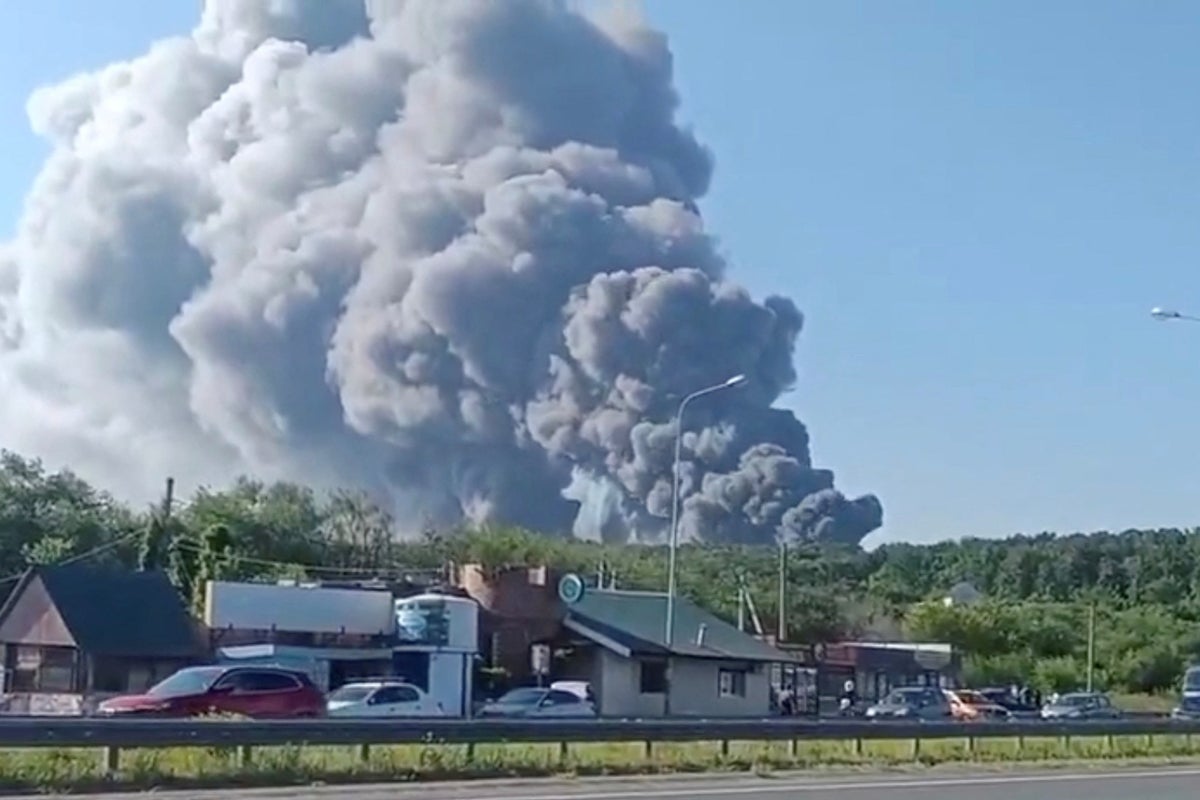
Fire bloomed against the dark. Millions of dollars in inventory, millions of square meters of warehouse space, turned into twisted girders and towering plumes of black smoke.
The rationale behind these strikes is as cold as it is calculated. Kyiv asserts that these massive commercial hubs have been co-opted to store dual-use goods, electronic components, and supplies that ultimately feed the front lines. By taking apart the country's premier digital marketplace hub by hub, the strategy aims to fracture the financial and logistical lifelines supporting the Kremlin's campaign, bringing the physical weight of the war back home to ordinary citizens who might otherwise pretend it is happening infinitely far away.
Yet, war has a terrible habit of expanding to consume everything it touches.
As the aerial campaign intensified, the human cost mounted. Overnight strikes in regions far from the trenches left civilians dead and injured, transforming quiet industrial towns and residential areas into active impact zones. The destruction of fulfillment centers shuttered operations, panicked local sellers, and injected profound uncertainty into an economy that had grown accustomed to digital convenience hiding the realities of geopolitical catastrophe.
We often talk about modern warfare as a sterile exchange of coordinates and remote-controlled hardware. We map trajectories on screens and calculate economic damages in billions of rubles. But behind every burning distribution center is a complex web of human vulnerability. There are workers suddenly fleeing falling debris, local families jolted awake by the concussive roar of air defenses, and consumers watching the infrastructure of their daily lives evaporate into ash.
The boxes keep coming, or they stop abruptly. The smoke rises over the Russian plains, a stark reminder that in an interconnected economy, nothing is truly insulated from the storm.
Wildberries: Ukraine hits 'Russian Amazon' warehouse in latest infrastructure strike
This video provides an on-the-ground look at the targeted Russian e-commerce facilities and the broader logistical impact of the ongoing drone strikes.
http://googleusercontent.com/youtube_content/1