In the autumn of 1967, the Cold War was not an abstract concept debated by academics in wood-paneled rooms; it was a cold, metallic weight sitting in the pit of every American stomach. Duck-and-cover drills were still muscle memory for schoolchildren. The Cuban Missile Crisis was barely five years in the rearview mirror, a raw bruise on the collective psyche of a planet that had stared directly into the nuclear abyss and blinked.
To be Russian in American pop culture during that decade meant wearing a heavy coat, speaking in guttural threats, and inevitably losing to a square-jawed hero before the final commercial break. Enemies did not sit beside you at the helm of a starship. They certainly did not crack jokes about Russian inventions.
Then, a thirty-year-old actor from Chicago walked onto a soundstage in Hollywood wearing a cheap, mop-top wig designed to cash in on Beatlemania, sat down at the navigation console of the USS Enterprise, and quietly rewired the human imagination.
Walter Koenig has died at the age of ninety.
Stop. Let that number sit on the page for a second. Ninety years. A span of time that stretches from the depths of the Great Depression, through the firestorms of World War II, across the paranoid frost of the space race, and all the way into an era where private rockets land themselves on barges in the middle of the ocean. When a fixture of our cultural furniture passes away, the standard obituary machine cranks into motion, spitting out dates, credits, and box-office totals like receipts from a cash register. Born September 14, 1936. Joined Star Trek in its second season. Played Pavel Chekov. Starred in Babylon 5 as Alfred Bester. Survived by his family.
Those facts are true, and they are entirely insufficient. They miss the invisible stakes of what Walter Koenig actually pulled off, and they flatten a rich, complicated, often frustrating life into a single velour tunic.
The Wig and the Geopolitical Gamble
To understand why Koenig’s death feels like the closing of a massive cultural airlock, you have to picture a hypothetical living room in 1967. Let us call the viewer Arthur, a twelve-year-old boy sitting cross-legged on a shag rug in Ohio, bathed in the blue-gray glow of a Zenith television. Arthur’s father worked at a defense contractor. Every evening on the Walter Cronkite broadcast, Arthur heard about Soviet missiles, proxy wars, and the Iron Curtain. To Arthur, the Soviet Union was a monolith of gray concrete and existential dread.
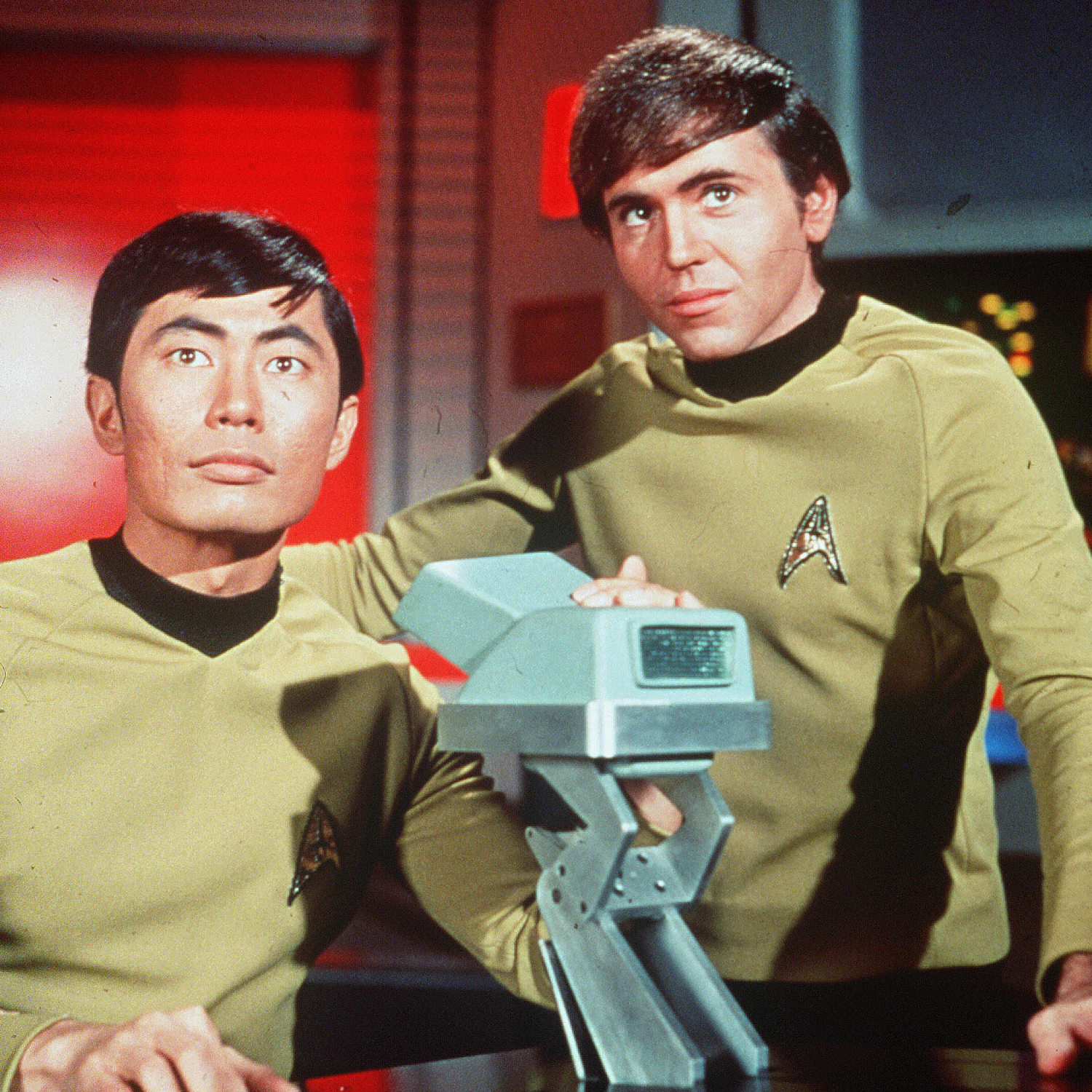
When Star Trek returned for its second season in September 1967, Arthur expected the familiar faces of Kirk, Spock, and McCoy. Instead, he saw a kid. A young Russian ensign with bright eyes, an exaggerated accent that turned every "v" into a "w," and an irrepressible grin.
Gene Roddenberry, the show’s creator, had a specific, calculated reason for putting Pavel Chekov on the bridge. Legend—and Roddenberry’s own public relations spin—held that the Soviet newspaper Pravda had complained that despite the Russians putting the first satellite and the first human into space, there were no Russians aboard the Enterprise. In truth, Roddenberry was looking for a young heartthrob to appeal to teenage viewers, capitalizing on the immense popularity of Davy Jones of The Monkees. Because Koenig’s own hair wasn't quite shaggy enough for the look the producers wanted, they slapped a bowl-cut hairpiece onto his head for his earliest episodes, an indignity the actor endured with a mixture of professional grit and private mortification.
Yet, beneath the hairpiece and the Hollywood cynicism lay a radical act of empathy.
Think about the audacity of that creative choice. At the height of the Vietnam War, while American and Soviet proxies were actively killing one another across the globe, television's most idealistic program decided that the future of humanity included a Russian officer sitting side-by-side with an American captain, a half-Vulcan science officer, a Black communications officer, and a Japanese helmsman. Chekov wasn't a defector who had renounced his homeland. He was fiercely, comically proud of his heritage, constantly claiming that everything from Scotch whisky to the Garden of Eden had actually been invented in Russia.
For a kid like our hypothetical Arthur on that shag rug in Ohio, the cognitive dissonance was electric. The monster under the geopolitical bed had been given a human face, a sense of humor, and a seat at the controls of human destiny. Koenig didn't play Chekov as a caricature of a villain; he played him as an eager, slightly naive younger brother trying desperately to prove he belonged at the grown-ups' table. In doing so, he transformed a Cold War adversary into family.
Living Inside a Gold Tunic
I remember the first time I stood in a convention hall in the late nineties, watching a line of fans snake around concrete pillars just to spend thirty seconds at a folding table with an aging actor. There is a distinct sensory texture to those rooms: the smell of stale carpet, hot pretzel salt, sharpie ink, and a thick, palpable hum of nostalgia that borders on religious devotion.
As a writer who has spent years chronicling the strange alchemy between performers and the audiences who refuse to let them go, I have always been fascinated—and frankly, a little haunted—by what happens to an actor when one role eclipses everything else they ever do.
It is easy to romanticize stardom from the outside, yet the reality of being a supporting player on a cult phenomenon is a uniquely brutal psychological trap. When Star Trek was canceled in 1969 after three seasons, the cast did not step into mansions and prestige film offers. They stepped into unemployment lines and typecasting purgatory.
Koenig was candid, sometimes painfully so, about the bitterness and professional stagnation that followed the cancellation. For a decade, Hollywood looked at a classically trained actor—a man who had studied at Grinnell College and UCLA, who had worked alongside legends at the Neighborhood Playhouse in New York—and saw only a guy yelling about "nuclear wessels."
Imagine pouring your life into a craft, mastering the subtle architecture of human emotion, only to realize that the world wants you to wear the same costume and say the same three catchphrases until you die. That is the hidden cost of pop culture immortality. The very thing that ensures your name will be remembered for centuries is the cage that keeps you from being seen in the present.
Koenig wrestled with that cage publicly. In his memoirs, Warped Factors, he refused to give fans the sanitized, eternally grateful Hollywood script they often expect. He wrote openly about the friction on the set, the frustrating lack of screen time compared to William Shatner and Leonard Nimoy, and the deep, gnawing insecurity of feeling like a third-tier player in a phenomenon that was making other people rich and famous. That honesty was jarring to some, yet it is precisely what makes his story so resonant. He was a real man trying to navigate an unreal legacy, stumbling through resentment, ego, and financial anxiety before finally finding peace with the strange gift he had been given.
The Dark Mirror of Alfred Bester
If Pavel Chekov was the triumph of optimistic innocence, the second act of Walter Koenig’s career was a masterclass in weaponizing that very innocence against the audience.
In the mid-1990s, science fiction television was undergoing a seismic shift, moving away from the bright, episodic morality plays of the 1960s toward sprawling, morally gray epics. When J. Michael Straczynski was casting Babylon 5, he needed a villain for the Psi Corps—a sinister, fascistic organization of government telepaths. He wanted someone the audience would instinctively trust, someone whose presence triggered a warm, nostalgic reflex, only to twist that reflex into pure dread.
He called Walter Koenig.
Alfred Bester—named after the legendary sci-fi author—was the exact inverse of Chekov. Wearing black leather gloves, moving with a quiet, predatory stillness, and smiling a smile that never quite reached his eyes, Koenig delivered what many critics and fans consider the finest acting of his entire life.
Watching him work in Babylon 5 felt like watching a master watchmaker disassemble a timepiece you thought you knew inside and out, only to rebuild it into a bomb. He stripped away the youthful exuberance, the exaggerated accent, and the eager-to-please posture of the Enterprise navigator. In their place, he installed a chilling, bureaucratic cruelty. Bester didn't chew the scenery; he poisoned it slowly. He justified atrocities with the calm, measured cadence of a middle manager reviewing quarterly projections.
To understand the sheer craft required for that pivot, think of it like a concert pianist who spent thirty years playing bright, major-key Mozart concertos suddenly sitting down to perform the bleakest, most dissonant compositions of Shostakovich—and doing it with such terrifying conviction that the audience forgets he ever played anything else.
Koenig proved, decisively and permanently, that the limitations of Pavel Chekov had belonged to the writers of 1967, not to the actor sitting in the chair. Given meat to chew on, he devoured it.
The Architecture of Endurance
Beneath the Greasepaint and the sci-fi conventions, however, lay a man who understood real-world grief in a way that no script could ever replicate.
In 2010, Koenig’s son, Andrew—an actor himself, best known to a generation of nineties kids as "Boner" on the sitcom Growing Pains—went missing in Vancouver during the Winter Olympics. For days, Walter and his wife, Judy Levitt, endured the agonizing limbo that is every parent’s worst nightmare, flying to Canada, pleading with the public for information, holding onto a fraying thread of hope while the cameras watched.
When Andrew’s body was found in Stanley Park, the victim of suicide following a long, silent battle with severe depression, the public persona of Walter Koenig vanished entirely. What remained was a grieving father standing before microphones, his voice steady despite the unimaginable wreckage inside him, using his platform to urge people suffering from mental illness to reach out for help.
It is impossible to look at Koenig’s later years without seeing that tragedy etched into the lines of his face. Fame offers no armor against the sharpest edges of human existence. The man who had spent decades pretending to chart courses through imaginary hazards had to navigate the darkest territory a human being can walk through, and he did it with a quiet, devastating grace. He channeled his pain into advocacy, refusing to let his son’s death be swept under the rug of Hollywood silence.
The Final Coordinates
We are rapidly running out of the original crew. With the deaths of DeForest Kelley, James Doohan, Leonard Nimoy, and Nichelle Nichols, the bridge of the original Enterprise has grown hauntingly quiet. Each departure feels less like a celebrity death and more like the dimming of a beacon that once guided a generation through the dark.
Those actors were never just entertainers; they were ambassadors from a future we desperately wanted to believe we could survive long enough to reach. They sold us a radical premise: that humanity’s petty tribalisms, its nuclear paranoia, and its bitter ideological divides were temporary growing pains rather than terminal illnesses.
Walter Koenig spent nearly six decades carrying water for that idea. He carried it when the scripts were thin, when the paychecks were small, when the wig itched under hot studio lights, and when real-world sorrow threatened to break him entirely. He was born into a world tearing itself apart in the buildup to global war, and he leaves behind a world once again trembling on the brink of fracturing along old, familiar fault lines.
The navigator has left his post. The console is dark, the coordinates are locked in, and for the first time in nearly sixty years, we are entirely on our own to steer the ship.