The honeymoon phase for Chinese electric vehicle giants in Latin America just hit a massive, jagged rock. Brazil’s Ministry of Labor and Employment recently made a move that sent shockwaves through the global supply chain by adding BYD to its "dirty list" of companies linked to slave-like labor conditions. This isn't just a minor regulatory hiccup or a paperwork error. We’re talking about the world’s largest EV producer being called out for human rights violations at its flagship complex in Camaçari, Bahia. It’s a messy, high-stakes confrontation that pits industrial ambition against basic human dignity.
If you’ve been following the green energy transition, you know BYD has been positioned as the "Tesla killer." They’ve won over markets with affordable tech and massive scaling. But the news from Brazil suggests that this growth might have a hidden, ugly cost. The Brazilian government doesn't add names to this list lightly. Being blacklisted means the company faces severe restrictions on accessing credit from state banks and specialized technical support. It's a reputational nightmare that could derail their plans to turn Brazil into a regional export hub. In other developments, we also covered: The Breath Under the Floorboards.
The grim reality inside the Camaçari plant
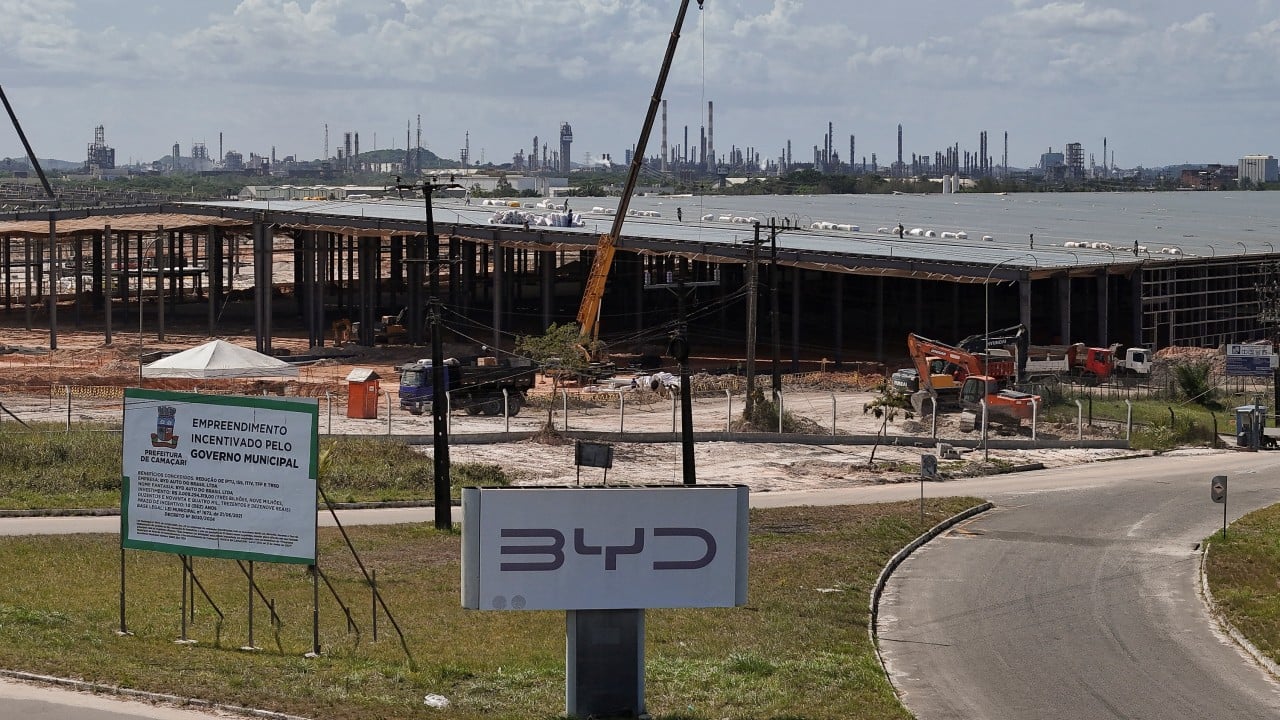
The investigation centered on the massive manufacturing site in Bahia, which BYD took over from Ford. According to the labor inspectors' reports, workers were subjected to conditions that the Brazilian legal system defines as "analogous to slavery." This usually involves exhausting workdays, degrading living conditions, or debt bondage. In this specific case, the findings point toward a systemic failure to provide safe environments and fair treatment for the people actually building these "clean" vehicles.
It's ironic. We talk about EVs saving the planet, yet the people making them are being treated like disposable parts. The Camaçari plant was supposed to be the jewel in BYD's crown outside of China, representing a $600 million investment. Instead, it’s become a symbol of corporate negligence. Labor advocates in Brazil aren't surprised. They’ve been sounding the alarm about the "race to the bottom" in manufacturing costs for years. When a company tries to undercut everyone else on price, the savings usually come out of the workers' pockets. Investopedia has also covered this critical subject in extensive detail.
How the Brazilian blacklist actually works
Brazil’s "Lista Suja" (Dirty List) is one of the most powerful tools in the country's labor law arsenal. It’s updated every six months and serves as a public shaming mechanism with real financial teeth. When a company ends up here, they aren't just getting a slap on the wrist. They lose the ability to get loans from major institutions like BNDES (The Brazilian Development Bank). For a company like BYD, which relies on heavy capital for expansion, this is a massive blow.
The list is managed by the Ministry of Labor and reflects cases where inspectors found evidence of forced labor or degrading conditions. Companies stay on this list for two years. During that time, they have to prove they’ve fixed the issues and paid all necessary fines and reparations. Honestly, it’s a brilliant bit of legislation because it hits corporations where it hurts most: their access to cash and their public image. BYD isn't the first big name to land there, but they are certainly one of the most high-profile international players to get caught in the dragnet recently.
Geopolitical fallout and the China factor
This isn't happening in a vacuum. Brazil's relationship with China is complicated. China is Brazil's largest trading partner, buying up massive amounts of soy and iron ore. President Lula has been trying to balance this economic dependency with a desire to revitalize Brazil’s own industrial sector. By bringing BYD to Bahia, the government hoped to jumpstart a local EV industry.
Now, the administration is in a tough spot. They want the jobs and the technology, but they can't ignore blatant labor violations without looking like hypocrites. This blacklisting shows that Brazil's labor institutions still have some bite, even when dealing with global superpowers. It’s a clear message to Beijing: you’re welcome to invest, but you have to play by our rules. You can't just import labor practices that don't fly in a democratic society.
The cost of cheap electric cars
We need to talk about the "green at any cost" mentality. For years, the narrative has been that we need to get everyone into an EV as fast as possible to stop climate change. That’s a noble goal, but it’s created a blind spot. We look at the tailpipe emissions—or lack thereof—but we don't look at the factory floor.
BYD’s success is built on vertical integration. They make their own batteries, their own chips, and their own cars. This allows them to keep costs incredibly low. But if part of that "efficiency" comes from exploiting workers in Brazil or anywhere else, then the car isn't actually "clean." It’s just shifting the pollution from the atmosphere to human lives. Consumers are starting to wake up to this. People want to know that their car didn't come from a place where workers weren't allowed to take breaks or were forced to live in squalor.
What BYD has to do to fix this
BYD’s PR team is likely working overtime, but press releases won't fix this. They need to radically overhaul their management structure in South America. They can't just treat the Bahia plant like an extension of their domestic operations. They have to respect local unions, adhere to strict safety protocols, and ensure every subcontractor is held to the same standard.
- Immediate Independent Audits: They should hire third-party human rights firms to comb through every inch of their operations.
- Full Reparations: Pay the affected workers not just what they’re owed, but significant damages for the conditions they endured.
- Transparency: Open the doors. Let labor inspectors and journalists see the improvements in real-time.
The company has already stated they are contesting the findings, which is a standard corporate move. But fighting the government in court while your name is on a "slave labor" list is a losing strategy. The faster they admit fault and change, the faster they can get back to selling cars.
Why this matters for your next car purchase
If you're in the market for an EV, this story should give you pause. It’s not about boycotting BYD necessarily, but about demanding better across the board. Tesla, VW, and GM all have their own supply chain issues, often hidden deep in the mines of the Congo or Indonesia. BYD just happened to get caught in a very public way in a country that actually monitors these things.
The "dirty list" inclusion is a warning shot for the entire industry. It says that the transition to sustainable energy won't be used as a cover for human rights abuses. As Brazil continues to push for industrialization, the tension between economic growth and worker protections will only tighten. If you're an investor, you should be looking at "S" in ESG (Environmental, Social, and Governance) more closely than ever. Environmental goals are great, but the social cost can bankrupt a company’s reputation overnight.
Watch the Brazilian courts and the Ministry of Labor closely over the next few months. How BYD responds will tell us everything we need to know about whether they're a truly modern company or just an old-school industrialist wearing a green mask. If they don't fix this, their "biggest plant outside China" might just become their biggest mistake. Owners of BYD vehicles and prospective buyers should keep a close eye on whether the company takes accountability or continues to deflect. Real change happens when the bottom line is threatened. In Brazil, that threat just became very real. Moving forward, the focus shifts to whether other nations will follow Brazil's lead in auditing the labor practices of the companies we rely on for the "green revolution." Expect more scrutiny, more lists, and hopefully, better treatment for the people on the assembly line.
Stay informed by checking official Brazilian government portals for updates on the Register of Employers. If you're an advocate for ethical manufacturing, support organizations like Anti-Slavery International or local Brazilian unions like the Metalworkers' Union, which are on the front lines of these disputes. Demand that EV manufacturers provide full transparency into their labor practices before you sign on the dotted line. It's the only way to ensure the future of transport is actually as clean as it claims to be.