In a small, sun-drenched living room in the American Midwest, a three-year-old named Leo is struggling to see. The light from the window, usually a source of joy for a boy who loves chasing dust motes, now feels like needles pressing into his eyes. His skin is a roadmap of angry, flat red spots that began at his hairline and have since migrated down his neck, over his chest, and toward his feet. His cough is dry and hacking, a sound that belongs in a nineteenth-century ward, not a modern suburban home.
This is measles.
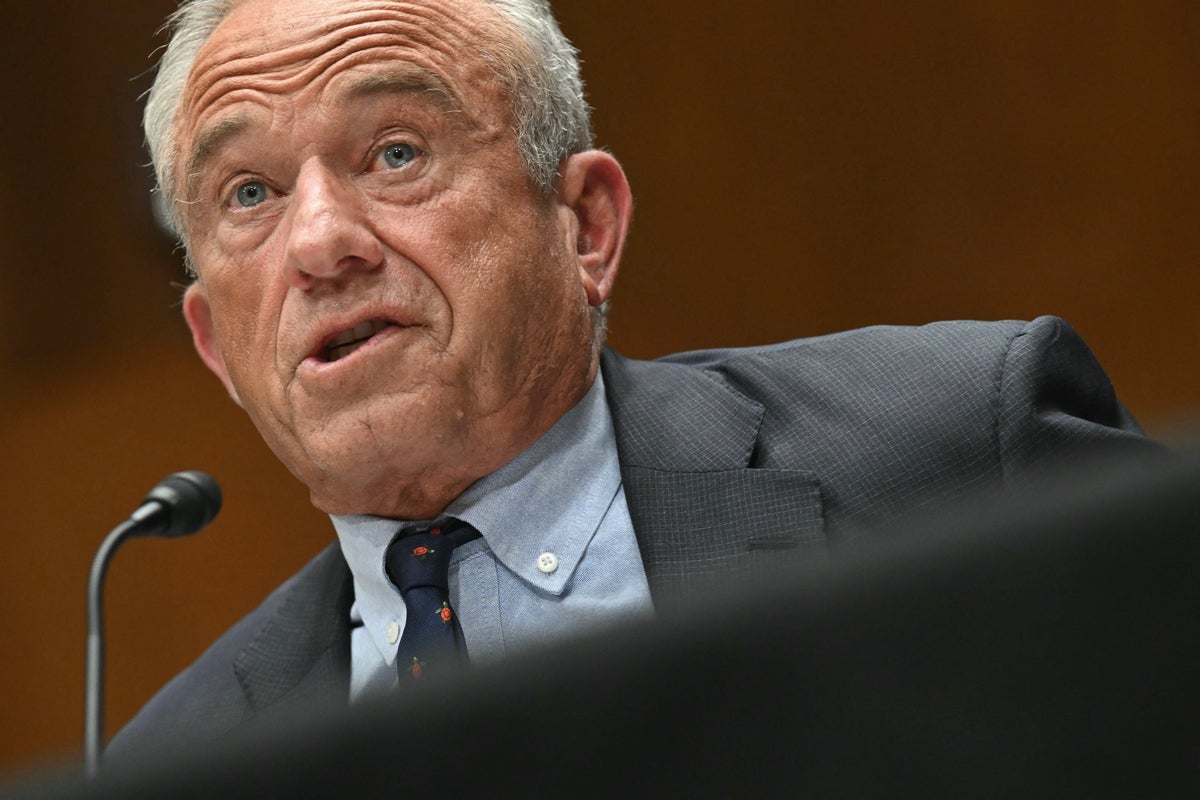
For decades, we treated this virus like a ghost story—something our grandparents whispered about, a relic of a time before the 1960s when the world finally found a way to stop the itch and the ache. But the ghost has found its way back into the hallway. Across the United States, cases are climbing at a rate that has public health officials sounding an alarm that many people have simply learned to tune out. At the center of this storm is Robert F. Kennedy Jr., a man whose name carries the weight of American royalty and whose words now carry the weight of a growing medical crisis.
The Architect of Doubt
To understand why people are calling for RFK Jr. to be removed from his positions of influence—or "fired" from the public stage entirely—you have to understand the power of a story told by a trusted voice. Kennedy isn't just a politician; he is a man who has spent years weaving a narrative of deep-seated skepticism toward the very institutions designed to keep Leo safe.
He speaks of "medical freedom" and "informed consent," phrases that sound noble and quintessentially American. But the reality on the ground is far more jagged. When a prominent figure suggests that the science behind immunization is a web of profit-driven lies, the result isn't just a debate on a cable news set. The result is a drop in vaccination rates. The result is a loss of "herd immunity," that invisible shield that protects the most vulnerable among us.
Consider the math of a virus. Measles is one of the most contagious diseases known to humankind. If one person has it, up to 90% of the people close to that person who are not immune will also become infected. It lingers in the air like a bad memory, waiting for the next pair of lungs. To stop it, we need about 95% of the population to be vaccinated. When that number dips even slightly—to 93%, to 91%—the shield shatters.
The Human Cost of a Trend
It starts with a fever. Then the "three Cs": cough, coryza (a runny nose), and conjunctivitis.
By the time the rash appears, the damage is often deep. For every thousand children who get measles, one or two will die. Others will suffer from encephalitis, a swelling of the brain that can lead to permanent deafness or intellectual disability. This isn't a hypothetical risk. It is a statistical certainty when vaccination rates fall.
The calls for Kennedy’s removal aren't coming from a place of political theater; they are coming from pediatricians who are tired of watching children suffer from preventable illnesses. They are coming from parents of immunocompromised kids who can't get the vaccine themselves and rely entirely on the neighbors to keep the virus at bay.
The critics argue that Kennedy has used his platform to "mainstream" fringe theories. When he joins the government or advises on health policy, he isn't just one voice among many. He becomes the hand on the tiller. If that hand is guided by a fundamental distrust of the CDC and the FDA, the entire ship begins to veer toward the rocks.
The Weight of a Name
Names matter. The Kennedy legacy is built on public service, on the idea of a "New Frontier." When RFK Jr. speaks, people listen because they remember his father and his uncle. They want to believe that he is fighting for the little guy against the "Big Pharma" giants. It’s a classic David and Goliath story, and we are hardwired to root for David.
But in this version of the story, David is throwing stones at the walls of the city that keep the wolves out.
The backlash has reached a fever pitch because the data is no longer abstract. We are seeing outbreaks in Florida, in Pennsylvania, in California. These aren't just numbers on a spreadsheet. They are closed schools. They are panicked emails from daycare centers. They are the quiet, terrifying hours in a pediatric ICU where a parent watches their child’s oxygen levels dip.
Critics point out that Kennedy’s rhetoric has shifted the conversation from "how do we keep everyone safe?" to "why should I trust you?" While healthy skepticism is a pillar of science, total cynicism is its poison. Science requires the constant testing of hypotheses, but it also requires an acknowledgment of proven results. The measles vaccine has saved millions of lives since 1963. That isn't an opinion. It is a historical fact written in the absence of tiny graves.
The Invisible Stakes
If you walk through a cemetery from the early 1900s, you will see the rows of small headstones. They are the silent witnesses to a time before vaccines, when a summer fever could mean the end of a family’s lineage. We have lived in the sunlight of medical progress for so long that we have forgotten what the shadows look like.
RFK Jr.’s rise to a position where he might influence national health policy represents a fork in the road. On one path, we continue to rely on the rigorous, peer-reviewed, albeit imperfect systems of modern medicine. On the other, we follow the charismatic leader into a world where "personal truth" carries more weight than biological reality.
The demand for his "firing" is essentially a demand for the restoration of a shared reality. It is a plea to keep the pulpit of public health reserved for those who believe in the tools that actually work.
The debate often gets lost in the weeds of constitutional law or political maneuvering. Is it a violation of free speech to sideline a man for his views? Perhaps. But is it a violation of the social contract to allow a preventable plague to return to our streets?
The stakes are found in the breathing of a sick child. Every wheeze is a reminder that the virus doesn't care about politics. It doesn't care about "freedom" or "narratives" or "disruption." It only cares about finding a host.
The Room Where It Happens
Imagine a room where the future of American health is decided. In one chair sits a scientist who has spent forty years studying the molecular structure of viral proteins. In the other sits a man who believes the scientist is part of a grand conspiracy. If we give them equal weight, we aren't being "fair." We are being reckless.
The calls for action against Kennedy are motivated by the fear that we are losing our grip on the basic truths that allow a complex society to function. If we can't agree that a vaccine which eliminated a disease from the Western Hemisphere is a "good thing," what can we agree on?
The tragedy of the current moment is that the people most likely to be harmed by this shift in rhetoric are the ones who trust the storytellers the most. They are the parents who think they are doing the right thing by "waiting" or "doing their own research," only to find themselves in an emergency room with a child whose body is being ravaged by a virus we should have conquered decades ago.
The light in Leo’s room remains dim. His mother sits by the bed, checking his temperature for the tenth time in an hour. She remembers reading a post online. She remembers a video of a man with a famous name and a raspy voice telling her that she was being lied to. She remembers feeling empowered by that doubt.
Now, she just feels afraid.
The debate over RFK Jr. isn't about one man's career or one family's legacy. It is about whether we will choose to live in a world guarded by the cold, hard brilliance of science, or if we will let the walls crumble and wait for the fever to return. The virus is already here. It is waiting in the air, silent and patient, for us to decide whose story we believe.