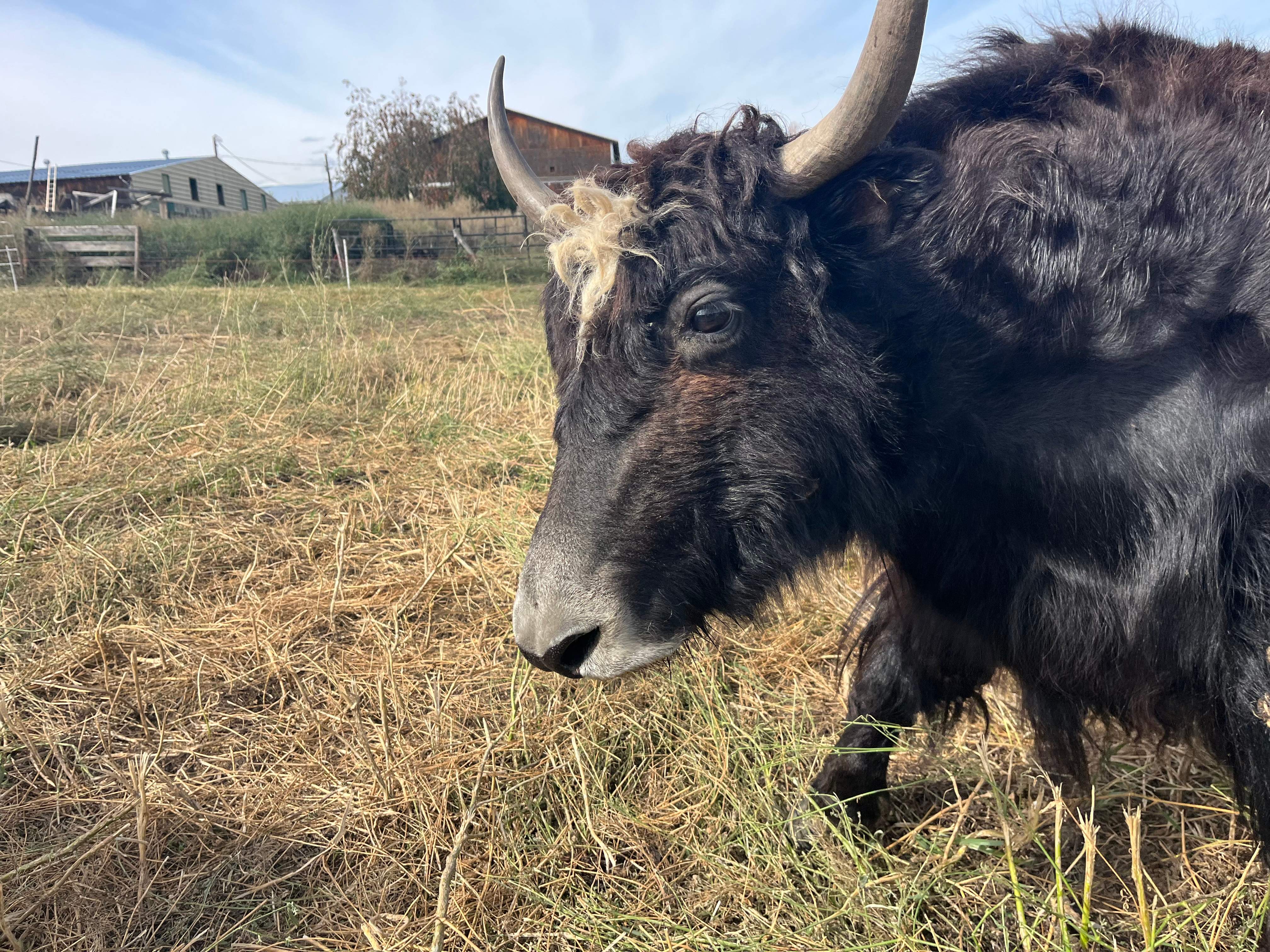
Horses slip on wet shale, panic at steep drop-offs, and need expensive grain feed shipped in during harsh winter storms. Yaks don't care about mud, snow, or vertical grades. Across British Columbia, livestock producers are looking past traditional cattle and horses to embrace an animal built by evolution for high-altitude survival: the domestic yak. While most people still associate these shaggy beasts exclusively with meat production or exotic livestock farming, a major shift is happening in the rugged backcountry. Ranchers are skipping the saddle horse entirely and throwing pack saddles and riding riggings straight onto yaks.
Traditional equine handlers usually scoff at the idea until they watch a yak navigate boulder fields that would break a horse's leg. Yaks possess a calm, deliberate intelligence that looks like stubbornness until you understand how they think. They don't bolt from predators. They turn around and face them. That temperament changes everything when you're hauling gear up an unforgiving mountain trail or trying to manage livestock in grizzly country. You might also find this connected coverage insightful: Why Your Clean Desk is Killing Your Focus.
Why Yaks Outperform Horses in Mountain Terrain
Anatomy dictates utility. Yaks feature broad, cloven hooves with hard outer rims and soft, rubbery pads inside. This design functions like natural hiking boots, gripping slick rock and packed ice with ease. Horses have single-walled hooves that require metal shoes, nails, and constant blacksmith attention, especially on abrasive granite trails. If a horse loses a shoe miles into the backcountry, your trip is effectively over. A yak just keeps walking.
Consider lung capacity and thermal regulation. Yaks developed in the thin air of the Tibetan Plateau, meaning their hearts and lungs process oxygen with terrifying efficiency. British Columbia’s interior mountain ranges present brutal conditions where equines struggle with heavy exertion at high elevations. Yaks thrive there. As reported in recent articles by Apartment Therapy, the effects are widespread.
Their coat provides another massive operational advantage. A yak sports a dense double coat consisting of coarse guard hairs and a cashmere-like down undercoat. They do not need blankets, heated barns, or elaborate windbreaks. When winter temperatures plummet to minus forty, your horses are burning through expensive hay just to stay warm while shivering in a paddock. Yaks stand out in the pasture, chewing cud while covered in a thick layer of insulating snow that doesn't even melt from body heat because their exterior hide is so well-insulated.
The physics of packing also favors the bovine. A yak's center of gravity is lower and wider than a horse's. Their shoulder structure allows them to climb like goats rather than leap like horses. When you need to move salt licks, fencing supplies, or camp gear into high-elevation alpine pastures, a string of pack yaks gets the job done without slipping or throwing tantrums on narrow ledges.
Breaking Down the Training Process
How do you actually train a thousand-pound beast of burden that isn't biologically wired to cater to humans the way horses have been bred to for millennia? It takes patience. You can't beat or rush a yak. They remember mistreatment longer than elephants do, and an angry yak is a formidable opponent with sharp, sweeping horns.
Step one involves halter breaking from an early age. If you wait until a yak is three years old and fully grown to introduce a halter, you are in for a violent struggle. Successful breeders work with calves shortly after weaning, getting them used to human touch, brushing, and leading. Consistent handling turns a wild mountain animal into a remarkably docile companion.
Transitioning to weight requires a gradual approach. You start with light pack blankets, move to empty panniers, and then slowly add weight over several weeks. When introducing a rider, the process mirrors breaking a green horse, but with vastly different behavioral responses.
Yaks tend to freeze rather than bolt when startled. That freeze response can be terrifying for an inexperienced rider who expects a forward burst of speed, but it is actually a safety feature once you learn to read it. When a yak stops dead on a trail, it is assessing a threat. Pushing them forward forcefully results in stubborn resistance. Giving them thirty seconds to look at a fallen log or a piece of plastic flapping in the wind usually results in the yak simply stepping over the obstacle on its own accord.
Shifting from Meat Production to Working Animals
Historically, North American yak farming started as a niche meat market. Yak meat is lean, high in protein, sweet-flavored, and remarkably low in cholesterol compared to beef. Ranchers realized early on that these animals adapt exceptionally well to Canadian winters without needing expensive climate-controlled infrastructure.
Meat is only one piece of the economic puzzle for modern small-scale farmers. Diversification keeps ranches alive in volatile economic climates. Adding pack and riding capabilities opens entirely new revenue streams. Guided backcountry pack trips using yaks instead of horses draw curiosity seekers, hunters, and eco-tourists who want something unique.
Outfitters love them because they cause minimal ecological damage to trails. Heavy-hoofed horses tear up delicate alpine turf, widen trails, and accelerate erosion. Yaks leave a much lighter footprint. Their split hooves distribute weight evenly and compact soil rather than gouging it out. Land managers in public parks are increasingly welcoming to pack yaks for trail maintenance and backcountry supply runs for this exact reason.
Common Misconceptions About Handling Yaks
People see the long horns and assume yaks are dangerous killers. Honestly, they are typically docile, curious, and remarkably gentle if raised around people. They aren't aggressive livestock; they are just cautious. A cow with a calf will defend her young fiercely, exactly like a cattle breed, but a castrated male steer is often as docile as a golden retriever.
Another myth is that yaks only survive in freezing cold. While they thrive in sub-zero weather, they handle moderate summer heat surprisingly well as long as they have access to shade, clean water, and a chance to shed that heavy winter wool. In fact, their downy undercoat—known as qiviut or cashgora-like fiber—is harvested annually and fetches a massive premium among spinners, knitters, and textile artists. A single adult yak can produce several pounds of valuable fiber every spring, adding yet another income stream that horses simply cannot match.
What to Consider Before Adding Yaks to Your Operation
Fencing is the first hurdle. Standard barbed wire won't hold a determined yak, especially when they rub their massive horns against wooden posts. High-tensile electric fencing works best, provided it has enough voltage to penetrate that thick coat. Once they learn respect for an electric fence, they stay put, but testing a new paddock requires supervision.
Veterinary care can also present challenges. Many rural veterinarians are experts in cattle and horses but have zero experience with Bos grunniens. You have to become your own frontline veterinarian, learning normal temperatures, parasite management, and nutritional needs through hands-on experience and mentorship from seasoned breeders.
Cost of acquisition plays a role as well. Quality breeding stock is not cheap. Buying a pair of halter-broke pack steers requires a serious financial commitment compared to buying a standard feeder calf. But the return on investment comes through durability, low feed costs, and unique market positioning.
The transformation from meat animal to saddle mount isn't just a quirky headline. It represents a practical pivot for ranchers facing rising feed costs and unpredictable weather patterns. If you are looking to diversify your acreage or simply want a pack animal that won't quit when the trail turns vertical, look past the traditional corral. The shaggy titan of the high country is ready to go to work.


