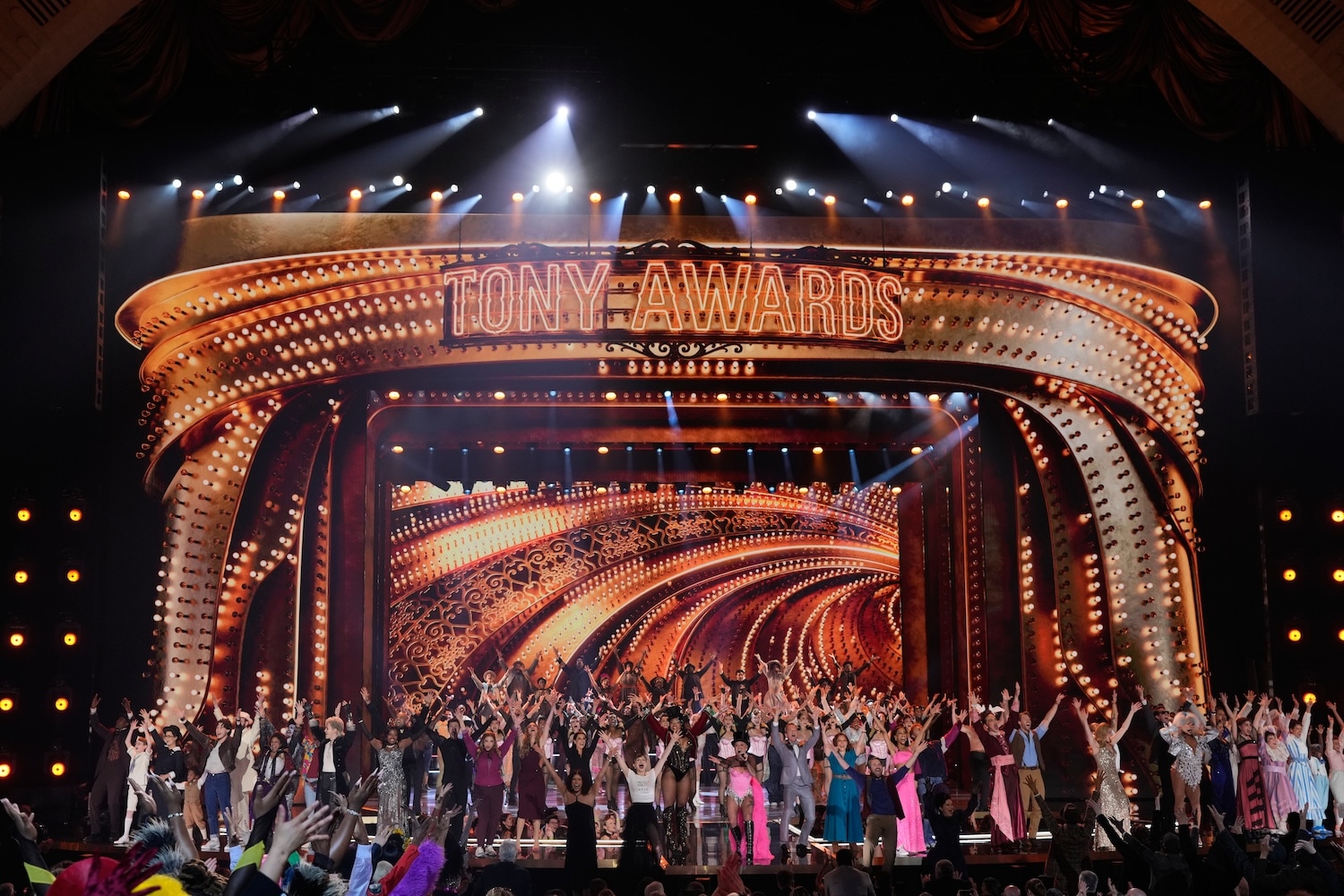
The theater establishment is patting itself on the back again. The 79th Annual Tony Awards wrapped up last night, and the standard press releases are already written. They will tell you that the night belonged to historic triumphs, legendary actors, and a vibrant Broadway ecosystem. They point to Joe Mantello’s stripped-back production of Arthur Miller's Death of a Salesman netting six trophies—becoming the most awarded play revival in history. They cheer for John Lithgow winning his third Tony for Giant and Lesley Manville conquering her Broadway debut with Oedipus.
It is a beautiful narrative. It is also completely wrong.
By drowning veteran stars in praise and handing half a dozen trophies to a 77-year-old play that has already been revived on Broadway four times before this run, the Tony voters exposed a terrifying lack of imagination. Broadway isn't thriving because it broke a record with Death of a Salesman. Broadway is hiding behind it. The industry is treating the Tony Awards like a prestigious retirement home, celebrating nostalgic comfort food while ignoring the actual economic and creative shifts required to keep the lights on in Midtown Manhattan.
The Death of Innovation in the Revival Category
Let's look at the data before we buy into the romance of the marquee. Death of a Salesman won for Best Revival of a Play. It won in 1984, 1999, and 2012. Giving it six more awards in 2026 is not an achievement; it is a creative audit failure.
I have watched commercial producers blow millions trying to package old properties into "stark, reimagined" versions just to court Tony voters who crave familiarity. The consensus among critics is that Mantello’s version "talks to us through time." Sure, it does. But so do dozens of new, contemporary plays that struggled to find investors this season because theater owners would rather rent their venues to an established Miller intellectual property guaranteed to pull in boomer ticket buyers.
By validating a fifth iteration of Willy Loman over bolder choices, the American Theatre Wing sent a clear signal to the industry: stop taking risks. If you want a trophy, find a script written before the invention of the internet, hire a couple of household names, and strip the set down to bare walls to make it look edgy.
The Safe Star Bias
Then there are the acting categories. John Lithgow is an undeniable titan of the stage. His performance as Roald Dahl in Giant is excellent. Lesley Manville is equally brilliant in Oedipus. Nobody is arguing that these individuals lack talent.
The issue is the systemic laziness of crowning the most recognizable names in the room. Lithgow won his first Tony 53 years ago. Manville already has an Olivier. When the Tony committee continually rewards actors who already possess packed trophy rooms, they miss the entire point of what a Tony Award does for a production.
An award for a Hollywood crossover or an international icon does not change their career trajectory. It does not sell out a 20-week extension for an experimental play. But when you award a younger, rising star—the theater-first actors who live on the boards year-round—you create the next generation of marquee draws. Instead, Broadway keeps cannibalizing its own future to honor its past.
The Musical Paradox
The musical categories offered a slight departure from the nostalgia trap, but still highlighted a core contradiction. Schmigadoon! took home Best Musical, and Ragtime took Best Musical Revival.
Think about the message this sends. Schmigadoon! is a brilliant satire, but it is fundamentally a meta-commentary on the golden age of musicals, adapted from a streaming television show. It succeeded because it targets the exact insular, self-referential theater audience that votes on these awards. It is an inside joke that cost millions to mount on a stage.
Meanwhile, genuinely weird, genre-pushing work is left to fight for scraps. If a musical cannot rely on existing IP or a television fan base, it is dead on arrival in the current economic climate. The industry cheers for Schmigadoon! while ignoring that the pipeline for totally original, non-IP musical theater is effectively dried up. Producers cannot risk $15 million on an original concept when the voters only reward parodies of the genre or revivals of Ragtime.
The Real Actionable Reality for Broadway
If theater executives actually want to protect their investments and ensure the industry survives the next decade, they need to stop designing shows to win these specific, broken metrics.
- Ditch the Traditional Star Casting Trap: Stop building limited runs around 70-year-old film actors who cannot commit to long contracts. It creates a boom-and-bust cycle that leaves theaters empty for months at a time once the star departs.
- Cap the Revival Eligibility: The Tony Awards should implement a rule preventing a play from being nominated for Best Revival more than twice in a twenty-year period. Force producers to look at the massive library of mid-century and late-century work that hasn't been mounted five times already.
- Invest in Technical and Ensemble Continuity: The real heroes of the season were the ensembles of shows like The Lost Boys and the technical execution of Cats: The Jellicle Ball (which snagged Best Direction of a Musical for Zhailon Levingston and Bill Rauch). That is where the actual future of theatrical energy lives—in subcultures, movement, and community-driven staging, not in a single monologue delivered by a star under a solitary spotlight.
The theater community will spend the next week celebrating the winners of the 79th Annual Tonys, believing that a record-breaking night for a 1949 classic means the industry is in good health. It isn't. It is an industry running on fumes, sustained by the memory of what used to work, terrified to step into the dark without a script that has already been tested for half a century.