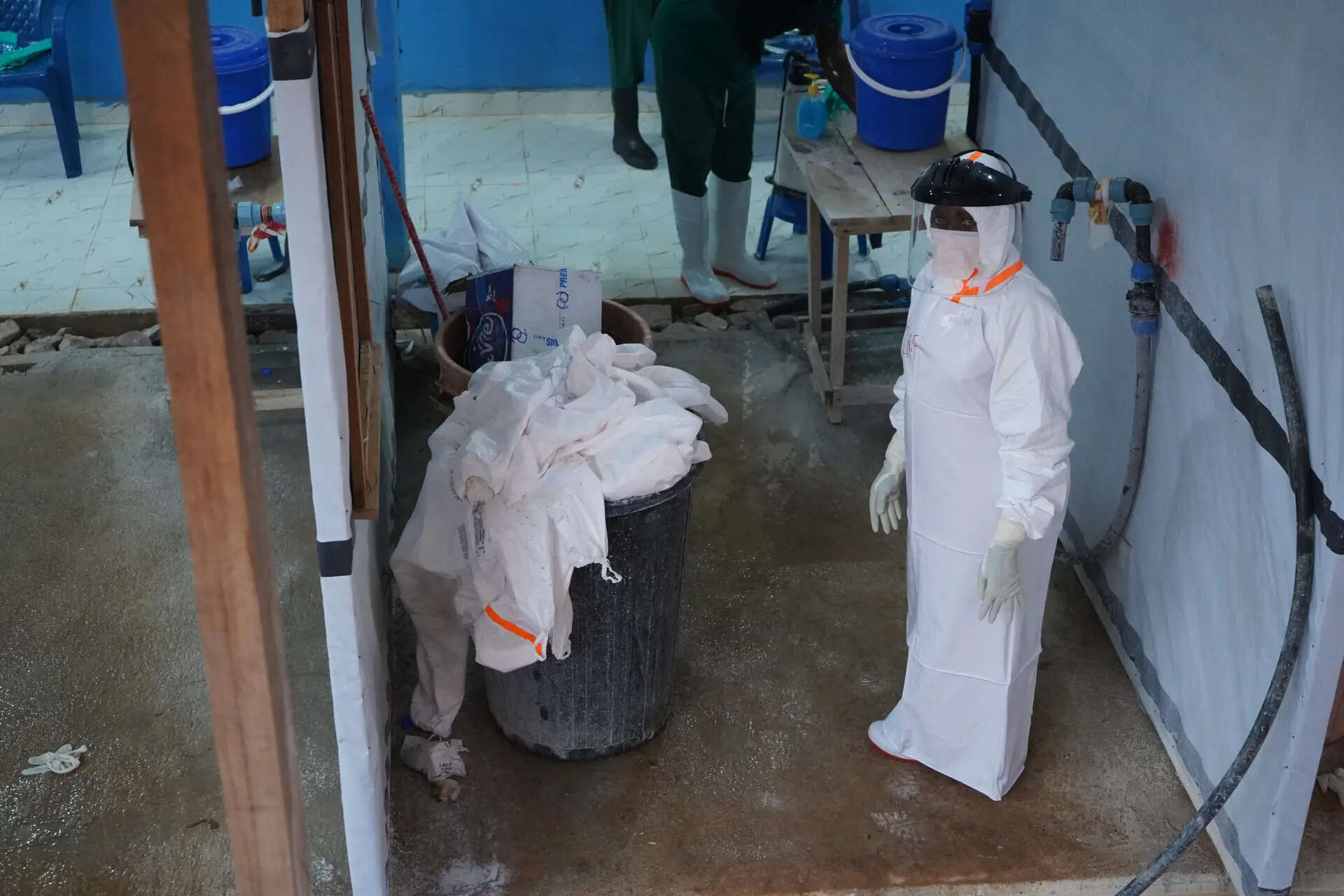
The Democratic Republic of Congo is facing a public health emergency as its latest Ebola outbreak claims 999 lives, with confirmed and probable cases surging to 2,473 across eastern provinces. Originating in northeastern mining towns like Rwampara and Mongbwalu, the virus has spread faster than any recorded strain in history. International agencies are struggling to keep pace because 80 percent of newly reported cases emerge outside known monitoring networks, while over 60 percent of deaths occur at home before patients ever reach a medical facility.
This surge is not merely a statistical anomaly. It represents a systemic breakdown of containment strategies in one of the most volatile regions on earth. While official press releases emphasize logistical hurdles and civil unrest, the internal realities on the ground present a far more troubling picture. Public health infrastructure has fractured under the combined weight of administrative paralysis, unpaid workers, severe shortages of basic supplies, and deep-seated community alienation.
A Pathogen Without a Shield
Epidemiologists tracking the outbreak face a critical biological obstacle that sets this crisis apart from recent epidemics. The pathogen responsible for this spread is the Bundibugyo virus strain.
During the massive 2018–2020 outbreak in North Kivu, response agencies deployed the Ervebo vaccine alongside advanced monoclonal antibody therapies such as mAb114 and REGN-EB3 to protect exposed populations and reduce mortality rates. Those biological interventions offered a buffer. They allowed health organizations to ring-vaccinate contacts and provide genuine hope inside treatment units.
The Bundibugyo strain carries no such defense. There is no widely approved vaccine for Bundibugyo, nor is there an established, stockpiled therapeutic treatment validated for widespread human administration. Doctors in treatment facilities are left with supportive care—intravenous fluids, electrolyte balancing, and symptom management.
Without medical weapons, containment relies almost entirely on basic public health discipline. That discipline demands rigorous isolation, rapid contact identification, and safe burial practices. When those operational pillars fail, the virus spreads unchecked through families and medical staff.
The Mirage of Contact Tracing
The core metric of any infectious disease intervention is the percentage of contacts successfully monitored. If responders can identify everyone who interacted with an infected individual, they can isolate new cases before secondary transmission occurs.
In eastern Congo, that system has collapsed.
Fewer than 9 percent of expected contacts are currently under active surveillance by health authorities. That means more than nine out of ten people exposed to Ebola walk freely through local markets, board crowded public transport, and travel between gold mining sites and regional urban centers.
Consider how the infection moves through gold mining hubs like Mongbwalu. Transient workers arrive from distant territories in Ituri and North Kivu, live in high-density informal settlements with minimal sanitation, and move on when work shifts or security conditions change. When an artisan miner falls ill, tracing their contacts requires detailed local knowledge and immediate mobility.
Instead, field teams encounter blank slates. Contact tracers arrive days after an infected individual has departed, leaving authorities unaware of where the next cluster will emerge. By the time a patient arrives at a regional clinic, they have often passed the virus to immediate family members, traditional healers, and neighborhood caregivers.
Frontline Collapse and Unpaid Health Personnel
Public statements often attribute containment failures solely to armed militia attacks and geographical difficulties. Yet internal friction within the response apparatus itself has proven equally destructive.
In several key health zones across Ituri province, local medical staff and field workers have engaged in strikes over unpaid stipends. Healthcare professionals tasked with entering high-risk isolation wards and managing hazardous biological waste have gone months without receiving promised hazard pay.
Ebola Outbreak Operational Breakdown
─────────────────────────────────────────────────────────────────
• Unmonitored Contacts : Over 91% of exposures untracked
• Off-Grid Fatalities  : 60%+ of deaths occur in home settings
• Medical Deficit      : Zero approved vaccines for Bundibugyo strain
• Frontline Friction   : Field strikes over delayed hazard pay
─────────────────────────────────────────────────────────────────
When frontline workers walk off the job, crucial operations halt. Decontamination crews stop processing infected homes. Surveillance teams stop conducting home visits. Surveillance logs gather dust in field offices while suspected cases multiply in surrounding villages.
Simultaneously, logistics pipelines are breaking down. Safe burial units lack basic body bags, personal protective equipment, and specialized disinfectant solutions. When a family reports an Ebola death at home, response teams sometimes take twenty-four to forty-eight hours to arrive simply because they lack transport fuel or proper protective gear.
During that delay, grieving family members perform traditional washing and preparation of the deceased. In Ebola cases, a corpse carries its highest viral load at the moment of death. Handling the body without heavy-duty protection almost guarantees transmission.
The Friction of Armed Escorts
Community resistance remains a dominant obstacle, but its roots are frequently misunderstood.
Eastern Congo has endured decades of violent conflict involving dozens of armed groups, including the Allied Democratic Forces. Millions of residents have lived through repeated displacement, state abandonment, and violence. Into this environment arrive international organizations, luxury four-wheel-drive vehicles, and heavily armed government escorts.
To civil protection officials in Bunia, assigning military escorts to burial teams appears to be a practical necessity to prevent armed attacks. To local residents, the arrival of soldiers surrounding white biohazard suits feels like an armed intrusion.
The Stoning of Response Teams
When security forces accompany health teams into sensitive neighborhoods, panic spreads quickly. Residents view the intervention not as medical relief, but as a militarized enforcement action.
In Bunia, local youths pelted response vehicles with stones after a burial detail completed its work, injuring responders and forcing aid groups to suspend operations. These altercations create a self-reinforcing cycle:
- Resistance leads authorities to increase military presence around medical workers.
- Increased military presence heightens community suspicion and fear.
- Families hide sick relatives at home to avoid force-based isolation.
- Home-based care causes new clusters that go undetected until bodies are buried secretly.
When sixty percent of deaths occur in home settings, it signals that the public health apparatus is viewed not as a sanctuary, but as a threat to be avoided.
Border Vulnerabilities and the Regional Threat
The geography of eastern Congo makes isolation difficult. Commercial corridors connect Ituri and North Kivu directly to Uganda, Rwanda, and South Sudan.
Thousands of informal crossing points dot the porous borders along Lake Albert and the surrounding hills. Traders, agricultural workers, and displaced families move across these points daily, bypassing formal health screening posts where temperature checks and handwashing stations are installed.
Uganda has already instituted strict border controls and declared active border monitors following confirmed cross-border transmissions. However, formal border closures rarely stop human movement in trade-dependent border zones. Instead, they push travel onto unmonitored back paths, making surveillance even more difficult.
International funding deficits compound the danger. Response plans organized by relief agencies face multi-million-dollar funding shortfalls. Essential operational categories—including pediatric care support, community-level diagnostic labs, and psychological services—are operating far below capacity.
Rebuilding Strategy from the Ground Up
Containing the Bundibugyo outbreak requires abandoning top-down enforcement in favor of operational overhaul.
First, central health authorities must resolve the wage disputes paralyzing local medical staff. Field workers who risk their lives daily must be paid reliably and supplied with functional safety equipment. Expecting unpaid workers to face lethal pathogens and hostile crowds is structurally unsustainable.
Second, medical agencies must demilitarize the public health response. Relying on armed escorts for routine community health visits undermines local trust. Field teams must partner with respected neighborhood leaders, traditional authorities, and trusted local health workers who live within the affected communities.
Third, surveillance needs to shift closer to home. Establishing decentralized, community-managed transit centers allows patients to receive supportive care and rapid diagnostic testing without being forcibly transported to distant, centralized facilities. When families can see that their loved ones receive humane treatment nearby, hiding the sick ceases to be the default choice.
The current death toll of nearly 1,000 people is a direct consequence of a response system operating out of sync with regional realities. Continuing to deploy armed enforcement and underfunded field teams while nine out of ten exposed contacts remain unmonitored guarantees that the virus will keep winning. Containing this surge requires fixing the broken infrastructure behind the frontline before the window for regional control closes entirely.