The front door of house number 42 on Maple Street has a brass knocker shaped like a lion head. Its mouth holds a heavy ring that drops with a dull, heavy clunk against the oak. For forty years, that sound meant safety. It meant the groceries were unloaded, the shoes were kicked off in the hallway, and the world—no matter how loud or sharp it felt outside—stopped at the threshold.
Elena and Marcus stood on that porch last Tuesday, staring at the brass lion. They weren't holding grocery bags. They were holding a printed PDF from a loan officer named Greg, folded twice into the pocket of a worn denim jacket.
The numbers on the paper were simple, cold, and final. Another upward tick in mortgage rates. Another door swinging shut before they could even touch the handle.
"We missed it," Elena said. Her voice didn't shake. That was worse. It was flat, hollowed out by the exhaustion of a three-year arithmetic problem that kept changing its answers while they slept.
They hadn't missed it because they bought too many coffees or failed to save. They missed it because the floorboards of the American economy shifted beneath their feet while they were busy working.
To understand why a mortgage rate isn't just a percentage point on a bank statement, you have to look at what a home actually is to a generation that came of age after the financial tremors of the early century. It is not an asset class. It is punctuation. It is the comma that separates the chaotic sentence of youth from the stable clause of a settled life. When the interest rates climb—crossing boundaries that once felt like historical relics—that punctuation mark is erased.
Consider what happens when the Federal Reserve adjusts its posture, or when bond markets react to inflation whispers like sailors smelling a squall. The ripple doesn't stay in New York or Frankfurt. It travels down the fiber-optic lines, pools in local credit unions, and translates directly into Marcus staring at his laptop at midnight, deleting a three-bedroom suburban listing because the monthly payment just jumped by four hundred dollars. Four hundred dollars. That is a used car payment. That is grocery money for a month. That is the margin between breathing and drowning.
We are told that the market is correcting. Economists use words like cooling, stabilization, and normalization.
Words are easy when you aren't the one packing your life into cardboard boxes every twelve months because the landlord decided to double the rent.
Let us be entirely clear about the mechanical reality. When mortgage rates hover near modern highs, purchasing power evaporates like morning dew on asphalt. A buyer who qualified for a four-hundred-thousand-dollar home twelve months ago now qualifies for three hundred and twenty thousand. But the houses didn't get smaller. The sellers didn't lower their prices to match the math. Instead, inventory froze. Why would anyone sell a home with a locked-in three percent rate to buy another home at seven percent? They wouldn't. They stay put. They lock the doors, clutch their low rates like heirlooms, and wait out a storm that has no clear horizon.
The result is a strange, paralyzingly quiet standoff.
On one side are the dreamers, clutching their down payment savings like dry kindling, watching the goalposts sprint further down the field every time a new inflation report drops. On the other side are the owners, barricaded in houses that no longer fit their growing families or their retiring bones, trapped by golden handcuffs of cheap debt issued in a different economic epoch.
Marcus and Elena represent a million kitchen tables across the country.
They live in a rented duplex with a radiator that knocks rhythmically through winter nights like a persistent clock. They have good jobs. Marcus manages logistics for a regional supply chain; Elena designs interfaces for a healthcare startup. Their combined income would have bought them a gracious, sunlit corner of almost any American suburb twenty years ago. Today, it buys them the privilege of pre-qualification letters that expire before they can find an inspection company with an open slot.
"Maybe we should look further out," Marcus had suggested six months ago.
They drove an hour past the beltway, past the strip malls and the sprawling distribution centers, out to where the subdivision signs rusted among the corn stubble. The houses there were built of quick timber and vinyl siding, jammed close enough together that you could hear your neighbor's television through the drywall. Even there, the prices defied gravity. Even there, the monthly debt service demanded a sacrifice of every other joy they valued—travel, savings, the occasional dinner out without checking the receipt twice.
They turned the car around and drove back in silence.
The American dream of homeownership was never really about the lumber or the shingle. It was about autonomy. It was about the simple, radical dignity of hammering a nail into a wall without asking permission from a man in property management. It was about planting a perennial garden knowing you'd be there to see it bloom next spring.
When that dream is priced out of reach, something subtle breaks in the civic architecture. People stop investing in the long term. They stop planting perennials. They rent indefinitely, moving from one temporary space to another, carrying their lives in plastic bins. They build their futures on rented land, and rented land has a way of making you feel like a guest in your own country.
There is a temptation here to offer a neat prescription. To tell you that saving more, budgeting tighter, or waiting for the inevitable market swing will fix the machinery.
That would be a comfort, but it would be a lie.
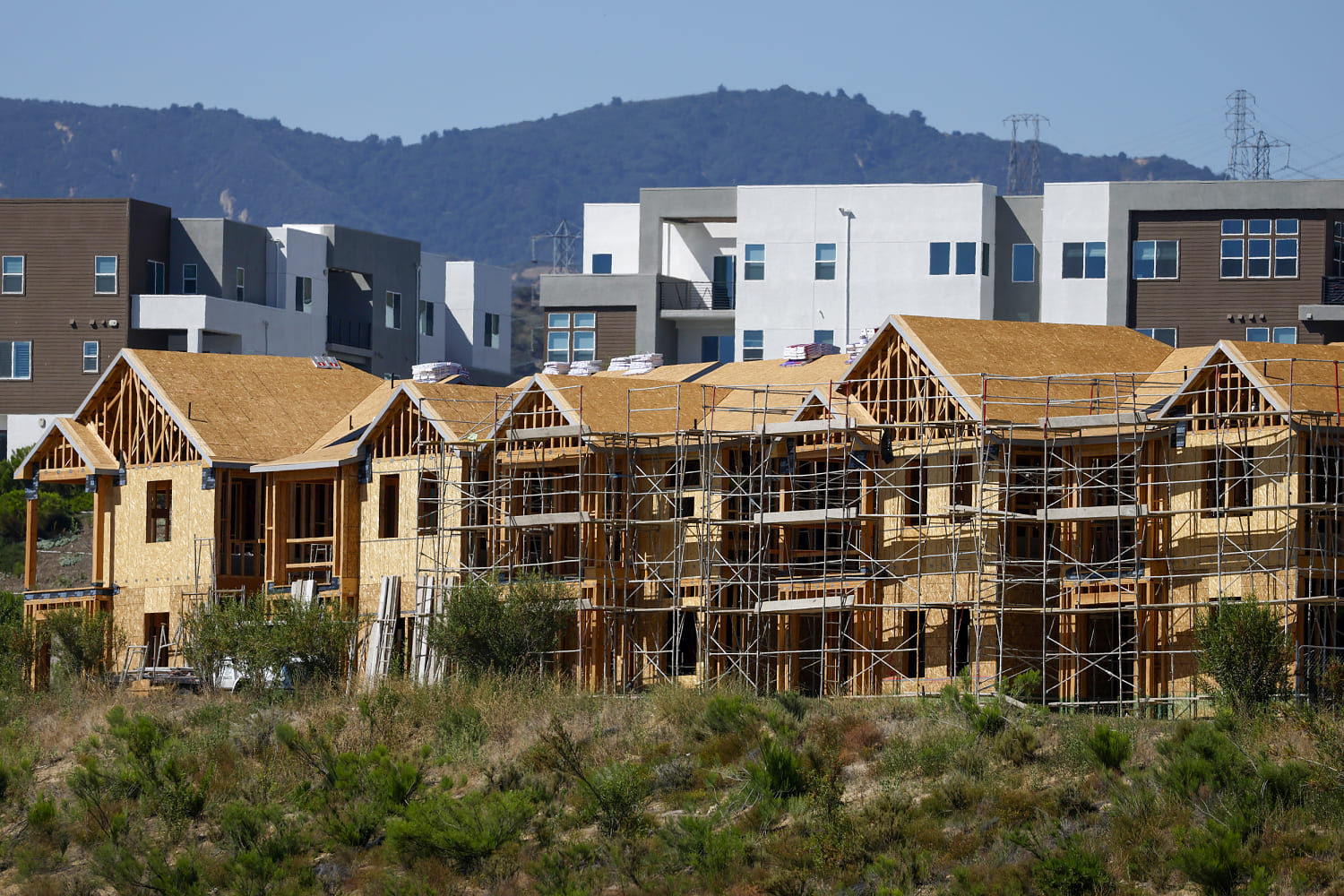
The housing market is currently locked in a structural gridlock born of demographic pressure, historical under-building, and monetary policy colliding with human stubbornness. Homeowners aren't selling because they can't afford to trade their low rates. Builders aren't building enough entry-level homes because regulatory red tape and material costs make luxury margins the only survival strategy.
And so the gap widens. On one side, the haves are comfortably insulated by fixed rates secured in calmer years. On the other side, the aspiring class stands on the porch, hand raised, finger poised over a brass knocker that feels heavier by the day.
Elena closed her laptop. The screen faded to black, reflecting her tired eyes in the dim kitchen light.
Outside, on Maple Street, a car drove slowly by, its tires hissing against the damp pavement. Somewhere down the block, a front door opened, voices spilled out into the evening air, and then a latch clicked shut. A secure sound. A final sound.
Marcus reached across the table and touched her hand. They didn't talk about interest rates anymore. They didn't talk about the Fed, or bond yields, or housing starts. They just sat in the quiet, waiting for the radiator to knock.