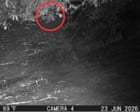
The return of a single North American river otter to the Bronx River is not merely a heartwarming animal story. It is a biological diagnostic test for the city, a cold, hard measurement of how far we have dragged this waterway back from the brink of total annihilation. For the first time in roughly a century, a camera trap caught a Lontra canadensis foraging in these waters, a moment that confirms the river is no longer an open sewer. But the celebration masking the reality of this sighting is misplaced. This otter is a solitary explorer in a fragmented world, and its presence highlights just how fragile our urban ecological recovery remains.
We treat this sighting as a victory, yet we must ask why it took one hundred years to achieve. The Bronx River did not suffer a natural decline. It was murdered by industrial progress. During the nineteenth and twentieth centuries, the river acted as a convenient disposal unit for a city obsessed with exponential growth. Slaughterhouses, chemical plants, and factories utilized the current to carry away blood, oil, and heavy metals. Municipal waste turned the banks into a dumping ground for tires and discarded appliances. By the mid-twentieth century, the river was effectively biologically dead.
The return of the otter is a testament to the Clean Water Act and decades of relentless, often thankless, restoration work. However, there is a fundamental tension here. An otter requires clean water, but it also requires a vast, connected home range and an abundant, stable food supply. A lone individual photographed in June is a positive indicator of water quality, but it does not equate to a population. We are seeing a single migrant exploring a recovery zone, not a species reclaiming a permanent residence.
If we look at the history of urban rewilding, we see a pattern of "island" populations. Beavers returned to the Bronx River in 2007, and their presence has been intermittent and precarious. The challenge is not just keeping the water clean enough to keep these animals from dying immediately upon contact. The challenge is the physical structure of the river itself. It is twenty-three miles of channelized, hemmed-in water surrounded by millions of people, highways, and concrete. It is a biological corridor that is frequently interrupted by human infrastructure.
To understand why this is a crisis of sustainability rather than just a moment of triumph, consider the requirements of a thriving river otter colony. These animals are top predators. They are incredibly sensitive to human disturbance. They need banks with complex vegetation for denning and an undisturbed prey base of fish and crustaceans. In the Bronx, they are navigating a world where they must constantly evade human encroachment. The moment they venture too far from the protected zones of the Bronx Zoo or the restricted stretches of the river, they are exposed to the full, chaotic pressure of the city.
The scientific community often emphasizes that the return of one species signals the return of the ecosystem. That is true, but it is an incomplete narrative. We have turned a toxic wasteland into something that can host a tourist. The next hurdle is moving from hosting visitors to sustaining residents. A healthy ecosystem should have the redundancy to handle environmental fluctuations, like a particularly harsh winter or a sudden spike in pollution. A single otter, no matter how symbolic, has zero redundancy.
We must also confront the reality of the surrounding urban grid. The Bronx River does not exist in a vacuum. It is deeply integrated into the city’s drainage and infrastructure systems. Every time a heavy rain hits New York, the combined sewer systems overflow. Despite improvements, raw sewage still finds its way into the river during these events. If we want this otter to be the first of many, rather than a statistical anomaly that disappears by next year, we need to address these systemic infrastructure failures. We cannot claim a victory for nature while continuing to use the river as a relief valve for our aging sewers.
The focus should now shift toward connectivity. A river that flows through a dense urban core needs more than just clean water; it needs protected passage. Wildlife does not respect municipal boundaries or property lines. If a pair of otters eventually decides to mate, they will need a habitat that spans more than just a few isolated pockets of restoration. They need a continuous, safe environment. Creating that is a battle against property development, infrastructure maintenance, and the relentless pressure of urban expansion.
We have spent billions of dollars and decades of effort to stop killing the river. We are only now entering the phase where we must actively manage it as a living, functioning habitat. This is a profound shift in perspective. It requires acknowledging that our past neglect was an active choice, and that our current efforts to sustain these animals must be equally deliberate.
The otter is not an ambassador of a job well done. It is a bellwether of a precarious, long-term commitment. It is telling us that the water is safe enough to touch, but not yet safe enough to call a home. We have cleared the toxic debris of the industrial era, but we are now staring at the more difficult task of integrating wildlife into a space that was designed to exclude it.
If the city does not commit to the next stage of aggressive restoration—specifically focusing on habitat connectivity and eliminating the residual impacts of combined sewer overflows—this animal will remain a one-off sighting. A biological curiosity to be analyzed and forgotten. We have finally earned the right to have these species return. Now we must prove we have the discipline to keep them here. The river is breathing again, but it is still fighting for its life.


