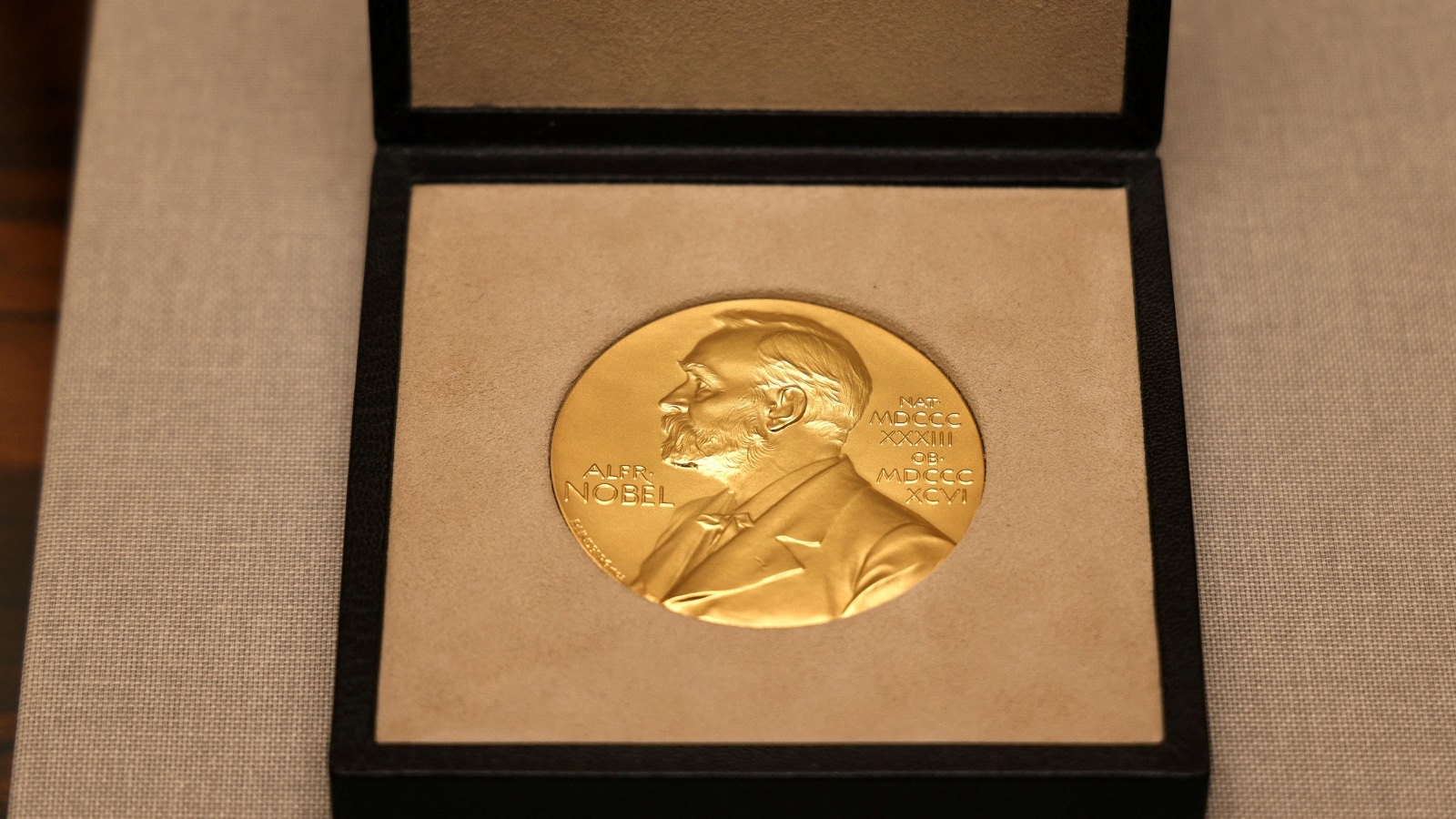
In Oslo, the winter air does not merely chill the skin; it hollows out the bones. The stones of the City Hall stand gray against a slate sky, silent witnesses to a century of human ambition, blood, and diplomatic theater. Inside, beneath the towering murals of peace and labor, a five-person committee sits behind closed doors. They hold in their hands a piece of heavy, cold gold bearing the profile of an irascible Swedish chemist who spent his fortune apologizing for inventing destruction.
Every autumn, the world looks toward that room. We wait for a name. We listen for the rustle of paper, the cautious cadence of a chairman announcing who has mended the world. For a different look, read: this related article.
Right now, in the quiet corridors of foreign ministries from Washington to Jerusalem, a different kind of speculation hums. People are asking an uncomfortable question. Can Donald Trump win the Nobel Peace Prize in 2026?
To utter the question in polite company is to invite a sharp intake of breath. For some, the mere association of that name with Alfred Nobel’s legacy feels like a profanity, a collision of oil and water, a circus ring invading a cathedral. For others, particularly those who remember the sudden silences that followed foreign policy breakthroughs in the Middle East and the Balkans during his presidency, the question is not only serious but long overdue. Further insight on the subject has been provided by NPR.
Let us step back from the cable news shouting matches and the polarized trenches. Let us look at how peace actually happens. It rarely arrives on a white charger through a spotless meadow. More often, it drags itself out of the mud, smelling of compromise, transaction, and bruised egos.
Diplomacy is an ugly trade.
Consider the mechanics of the prize itself. The Norwegian Nobel Committee operates under strict rules laid down in a 19th-century will. Nominations stream in by the thousands every winter from parliamentarians, professors, previous laureates, and international judges. Anyone meeting basic criteria can nominate anyone. Adolf Hitler was nominated in 1939 by a Swedish legislator attempting a satirical point about totalitarianism. Mahatma Gandhi was nominated five times and never received the honor—an omission that remains one of the committee’s quietest shames.
The prize is not a moral purity test. If it were, the vault would be empty. It is a political instrument designed to encourage those who, in the words of Nobel’s will, have done the most or the best work for fraternity between nations, for the abolition or reduction of standing armies, and for the holding and promotion of peace congresses.
When experts weigh Trump’s potential candidacy for 2026, they do not look at his Twitter feed or his rally rhetoric. They look at a ledger of agreements that reshaped diplomatic maps.
The Abraham Accords remain the central pillar of any serious argument for his candidacy. For decades, foreign policy orthodoxy held that peace between Israel and Arab nations could only happen after a comprehensive settlement of the Palestinian conflict. It was an ironclad dogma taught in every Ivy League seminar and Foreign Service institute. It was also an orthodoxy that produced decades of stagnation.
Then came a shift in posture. In 2020, through intense back-channel negotiations led by a team that included Jared Kushner and seasoned diplomats, the United Arab Emirates and Bahrain normalized relations with Israel. Sudan and Morocco followed. There were no grand multinational summits on Swiss lakes. There were hotel rooms in Washington, signatures on parchment, and the cold calculation of mutual economic and security interests.
Critics rightly point out that these accords bypassed the core grievance of Palestinians and cemented regional alliances aimed primarily at countering Iran. They were transactional. They were messy.
Yet history is rarely written by saints. The Camp David Accords were transactional. The Good Friday Agreement was transactional. Peace is almost always bought with concessions that leave everyone slightly dissatisfied.
To understand why experts view 2026 as a focal point, we must examine the shifting sands of global conflict. By 2026, the world has grown weary of endless attrition. The protracted conflicts in Eastern Europe and the Middle East have ground economies down and exhausted populations. In this climate of fatigue, any leader who claims the ability to broker a rapid cessation of hostilities commands immediate attention.
Trump’s persistent assertion that he could end the war in Ukraine within twenty-four hours—dismissed by detractors as reckless grandstanding—taps into a deep, primal hunger among war-weary publics. Whether such a claim is logistically possible is almost beside the point in the realm of political perception. The promise of disruption carries immense gravity when the current system offers nothing but a horizon of unending graveyards.
If a second-term administration were to successfully force a ceasefire or a negotiated settlement in Eastern Europe, the gravitational pull on the Nobel Committee would be undeniable. The committee has awarded the prize for diplomatic breakthroughs before, even when the recipients possessed complicated, controversial domestic profiles. Henry Kissinger shared the prize in 1973 alongside Le Duc Tho for the Paris Peace Accords, a decision that prompted two committee members to resign in protest amid the ongoing shadow of Vietnam.
The Nobel Committee is no stranger to controversy. They swim in it. They gave it to Barack Obama in 2009 mere months into his first term, largely as an aspiration for a world free of nuclear weapons—a gesture that even supporters later acknowledged felt premature. They gave it to European Union institutions when the continent was staggering under economic debt crises.
So what stands in the way?
Everything.
The primary barrier is not the lack of agreements signed, but the nature of the man himself. Alfred Nobel spoke of fraternity between nations. Trump’s political brand has historically thrived on division, nationalist friction, and the deliberate upending of international alliances like NATO. To honor a leader whose core philosophy is America First is to endorse a direct challenge to the multilateral architecture that Norway and its European neighbors spent three-quarters of a century building.
Furthermore, the committee values continuity and institutional respect. The foreign policy establishment across Western Europe views unpredictable unilateralism as an existential threat to global stability. For the five members of the committee to select Trump would require them to perform a profound ideological pivot: to value raw transactional results over institutional norms and diplomatic decorum.
Can they make that leap?
Consider the shifting definition of international leadership. We live in an era where traditional diplomacy is sputtering. The old machinery of ambassadors, communiques, and endless Geneva conferences looks increasingly like a museum piece while modern conflicts burn through cities in real time. When institutions fail, the world turns to strongmen and dealmakers, for better or worse.
If the 2026 window opens wide enough—if a major European war is frozen through sheer force of will and economic leverage, or if the Middle Eastern framework expands to include deeper regional normalization—the debate inside that Oslo fortress will become fierce.
The discussion will not be about whether Trump is a good man. The Nobel Peace Prize has never required that. It will be about whether the brute-force disruption of entrenched stalemates is worth more to human survival than the polite preservation of failing systems.
Picture the room in Oslo again. The fire crackles against the October chill. The committee members look at the dossiers. They see the signatures on the documents from Abu Dhabi and Manama. They see the potential outlines of a negotiated silence on the eastern edge of Europe. They see the protests outside their windows, the editorial boards screaming in outrage, the diplomats shaking their heads in quiet disbelief.
A prize given for peace is never neutral. It is always a statement about what kind of world we wish to encourage.
If they give it, they legitimize the bulldozer approach to international relations. If they withhold it, they risk looking detached from the brutal, messy realities of a world that desperately needs the killing to stop, regardless of who swings the hammer.
The decision, when it comes, will not be about erasing the flaws of the past. It will be about calculating the value of a quiet battlefield. And as the winter frost deepens over the Norwegian fjords, the world will wait to see if the committee dares to reward the most unconventional architect of our fractured age.