The sudden cooling of tensions between Washington and Tehran has less to do with Donald Trump’s psychological warfare and everything to do with a desperate convergence of internal fragility. While pundits scramble to credit the "Madman Theory"—the idea that Trump’s perceived unpredictability forced Iran to blink—the reality is far more transactional and grounded in survival. Tehran did not retreat because they feared a chaotic commander-in-chief; they paused because the structural pillars of the Islamic Republic are buckling under the weight of a failing economy and a restless, young population that no longer buys the revolutionary rhetoric.
At the same time, the White House is operating on a clock that has nothing to do with Middle Eastern stability. The administration needs a win that doesn't involve more boots on the ground or a spike in global oil prices. This isn't a diplomatic breakthrough born of mutual respect or successful intimidation. It is a tactical breather between two exhausted combatants who realized they have more to lose by fighting right now than by pretending to negotiate.
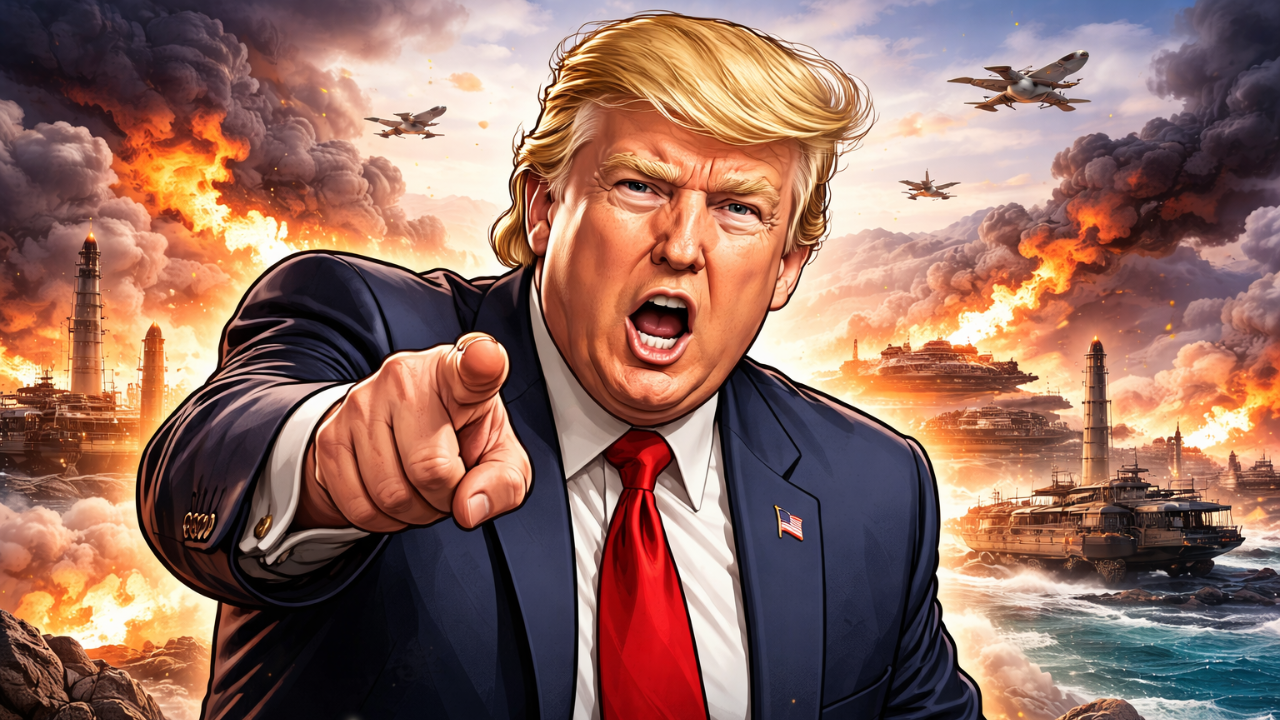
The Myth of the Madman
The narrative that Trump "tricked" Iran into a ceasefire by acting erratically ignores how the IRGC (Islamic Revolutionary Guard Corps) actually processes threats. For decades, the Iranian leadership has specialized in reading American political cycles. They know that an American president facing domestic pressure is often more dangerous, not less. The "Madman Theory," originally attributed to Richard Nixon, suggests that if your enemy thinks you are unstable enough to use nuclear weapons or launch a total war, they will concede.
But Iran’s Supreme Leader, Ali Khamenei, doesn’t view Trump as a madman. He views him as a businessman who is allergic to long-term, expensive foreign entanglements. Tehran’s strategic shift was a response to a specific set of economic data points, not a fear of a "wild card" in the Oval Office. When the rial hit record lows and bread riots began bubbling up in provinces previously considered loyal to the regime, the calculus changed.
The Economic Noose
The "Maximum Pressure" campaign, for all its critics, did create a specific kind of leverage that differs from traditional diplomacy. It didn't change Iranian behavior by winning hearts and minds; it worked by making the cost of regional proxy wars a direct threat to the regime’s domestic grip on power.
- Inflation rates in Iran have hovered at levels that make basic subsistence a daily struggle for the middle class.
- Oil exports, despite "ghost armada" smuggling operations to China, have remained insufficient to fund both a welfare state and a multi-front shadow war.
- Infrastructure decay has led to chronic water and power shortages, fueling local insurgencies that the IRGC is finding harder to suppress with bullets alone.
A Ceasefire Built on Quicksand
The current pause is fragile because it addresses the symptoms of the conflict rather than the underlying causes. Washington wants Iran to stop its nuclear enrichment and cease its support for the "Axis of Resistance." Tehran wants a total lifting of sanctions and a guarantee that the U.S. will not pursue regime change. Neither side is willing to grant the other's primary wish.
What we are seeing is a "frozen conflict" model. By agreeing to a ceasefire, Trump can claim he "solved" a problem that his predecessors couldn't, providing him with a powerful talking point for his base. Meanwhile, Tehran gets a temporary reprieve from the most punishing sanctions, allowing them to refill their coffers and suppress internal dissent before the next inevitable flare-up.
The Overlooked Role of Regional Players
While the headlines focus on the bilateral drama between D.C. and Tehran, the quiet mediation of regional powers like Qatar and Oman has been the actual engine of this ceasefire. These intermediaries aren't interested in American grandstanding or Iranian revolutionary fervor. They are interested in regional maritime security and the uninterrupted flow of liquefied natural gas.
The ceasefire was likely greased by backdoor deals involving prisoner swaps and the release of frozen Iranian assets in third-country banks. This is the "how" that the Madman Theory ignores. It wasn't a sudden epiphany in Tehran; it was a series of wire transfers and logistical guarantees that allowed both sides to save face.
The Failure of Predictability
One of the most dangerous elements of the current situation is the breakdown of traditional "red lines." In the past, both the U.S. and Iran knew exactly how far they could push each other before a kinetic response was guaranteed. That clarity is gone.
By utilizing a more volatile rhetoric, the Trump administration has effectively moved the goalposts. This creates a short-term advantage—Iran is currently paralyzed by uncertainty—but it creates a massive long-term risk. When red lines are blurred, the chance of a catastrophic miscalculation increases. A low-level drone strike that might have been ignored five years ago could now trigger a regional conflagration because neither side knows the other's true breaking point.
The Nuclear Wildcard
Despite the ceasefire, Iran's nuclear centrifuges continue to spin. They may have slowed the rate of enrichment to 60%, but the technical knowledge gained during this period is irreversible. The ceasefire does nothing to address the "breakout time"—the period it would take for Iran to produce enough weapons-grade uranium for a device.
Critics of the current administration argue that the ceasefire is a gift to the hardliners in Tehran, giving them the time they need to perfect their delivery systems under the guise of a diplomatic pause. They point to historical precedents where North Korea used similar "freezes" to advance their weapons programs while receiving international aid.
Strategic Exhaustion as a Policy
The U.S. military is currently stretched thin. With focus shifting toward the Indo-Pacific and the ongoing support for Ukraine, the Pentagon is not looking for a new theater of operations in the Persian Gulf. The veteran analysts who have watched this cycle for forty years see this ceasefire for what it is: strategic exhaustion.
America is tired of "forever wars," and Iran is tired of being a pariah state that can’t keep its lights on. This alignment of exhaustion is the most powerful force in geopolitics today. It is more influential than any "Art of the Deal" posturing or any "Great Satan" sermon.
The Youth Factor
Inside Iran, a demographic shift is occurring that the old guard cannot stop. Over 60% of the population is under the age of 30. They have no memory of the 1979 Revolution and little interest in the ideological battles of their grandfathers. They want high-speed internet, global trade, and personal freedom.
The IRGC knows this. They understand that every dollar spent on a missile for a proxy group in Yemen is a dollar not spent on the digital infrastructure and jobs required to keep their own youth from burning down the ministries. This domestic pressure is a more effective check on Iranian aggression than any carrier strike group.
The Mirage of Victory
To call this a "trick" or a "win" for the Madman Theory is to misunderstand the nature of the Middle East. No one wins; they only survive until the next cycle. The ceasefire is a managed retreat for both parties. Trump gets to avoid a war that would sink his domestic agenda, and the Ayatollah gets to keep his regime alive for another fiscal year.
The real test will come when the first violation occurs. In a relationship defined by forty years of bad faith, a violation isn't a possibility; it is a certainty. When a proxy group in Iraq or Syria eventually fires a rocket at a U.S. installation, we will see if the "Madman" is willing to follow through, or if the ceasefire was just a convenient fiction for two leaders who are running out of options.
The intelligence community is already watching the movement of short-range ballistic missiles within Iran's borders. They aren't being dismantled. They are being repositioned and hardened. The factories are still running. The propaganda machines are still churning. This isn't peace; it's a refill.
Stock up on chips, but keep your eyes on the oil prices. The theater is dark, but the actors are still on stage, waiting for the lights to come back up.