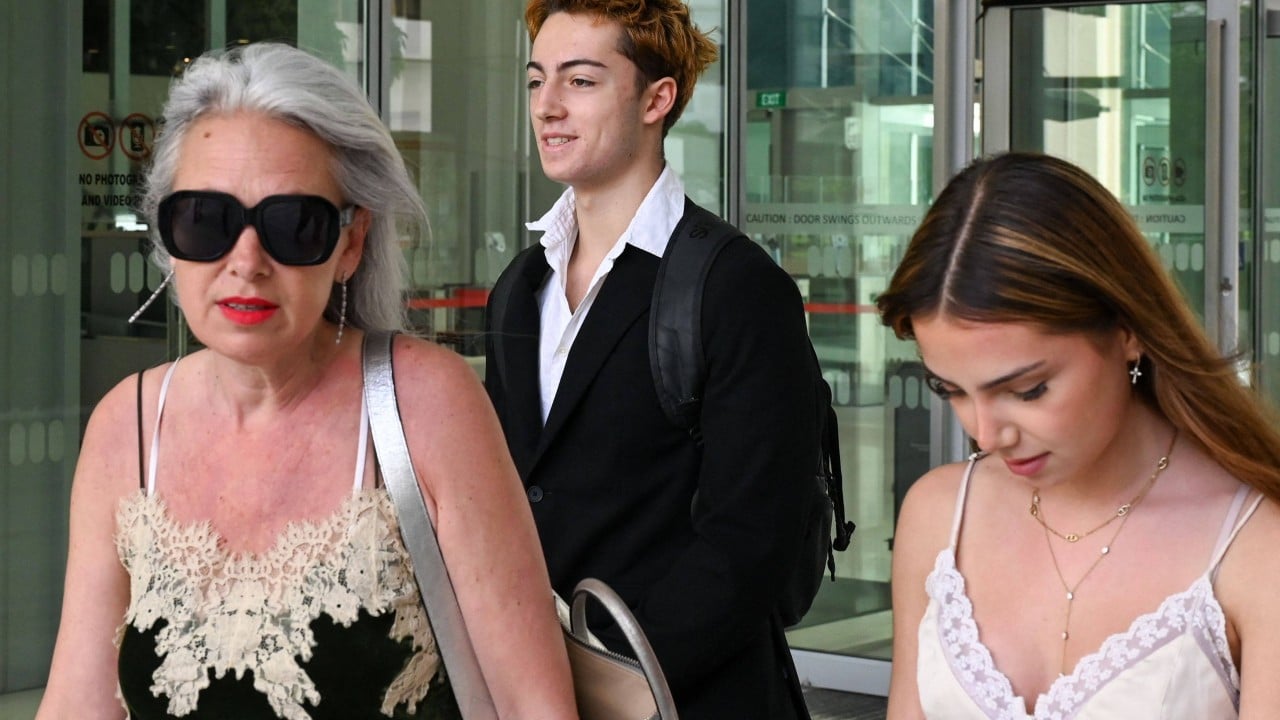
Singapore has long maintained a reputation as the "Fine City," a double entendre referring to both its manicured cleanliness and its penchant for hitting rule-breakers where it hurts: the wallet and the freedom of movement. For a 19-year-old French national, a momentary lapse in judgment for the sake of a viral video became a masterclass in the city-state's uncompromising legal machinery. After months of being barred from leaving the country while facing a potential jail sentence for "public nuisance," the teenager was finally permitted to return home. But the resolution of this case isn't just a story about a prank gone wrong; it is a clinical look at how Singapore uses individual cases to reinforce a collective social contract that Western tourists frequently underestimate.
The incident was deceptively simple. While inside a local convenience store, the youth filmed himself sipping from a straw in a drink carton, placing it back on the shelf, and then laughing. It was a classic "clout-chasing" maneuver, a digital-era trope designed to garner views through low-stakes defiance. In many global capitals, such an act would result in a stern lecture from a store manager or, at worst, a small fine and a permanent ban from the premises. In Singapore, however, the video's upload triggered a police investigation that treated the act as a serious breach of public hygiene and order. Meanwhile, you can find related stories here: Why the Nepal Airlines Map Error is a Major Diplomatic Headache.
The Mechanics of Zero Tolerance
Singapore’s legal system does not view a "stunt" in a vacuum. It views it as an assault on the high-trust environment required to keep a hyper-dense island nation functioning. When the video began circulating, it wasn't just seen as a teen being immature. It was interpreted as a threat to public health standards and a mockery of the retail ecosystem. The authorities acted with a speed that often shocks those used to the backlogged courts of Europe or North America.
Under the Miscellaneous Offences (Public Order and Nuisance) Act, the penalties are not merely suggestions. Public nuisance charges can carry fines of up to $2,000, while more serious iterations involving perceived threats to public safety can lead to imprisonment. The French teen found himself caught in a legal limbo, his passport impounded, and his life put on an indefinite pause. This is the "hidden" penalty of the Singaporean system: the administrative weight of the process itself. Even before a judge renders a verdict, the loss of mobility and the mounting legal fees serve as a potent deterrent. To understand the complete picture, we recommend the recent analysis by Reuters.
The Psychology of the Social Contract
To understand why the state spent resources pursuing a straw-licking incident, one must understand the fragility of the Singaporean model. This is a country with no natural resources, reliant entirely on its reputation for being safe, predictable, and clean. This "brand" is protected with a fervor that borders on the religious.
The government maintains a social contract where citizens trade certain individual liberties for unparalleled safety and efficiency. When a visitor enters this space and flouts those rules—even in a way that seems trivial—they aren't just breaking a law. They are insulting the sacrifice the local population makes daily to maintain that order. The public outcry following the video's release was not driven by the state media, but by a genuine sense of indignation from residents who felt their standard of living was being trivialized for "likes."
The Diplomacy of the Exit
The decision to allow the teenager to leave Singapore suggests a pragmatic conclusion to a situation that had served its purpose. The message had been sent. By the time the teen was granted permission to depart, the story had already saturated local and international headlines. The deterrent effect was achieved.
The legal resolution often involves a "composition" of the offense—a fine paid in lieu of prosecution—or a conditional warning. However, the months spent under investigation act as a de facto sentence. For the French youth, the cost of a three-second video clip was months of isolation in a foreign country, legal uncertainty, and a permanent record in one of the world's most diligent databases.
The Tourism Disconnect
There is a growing friction between the global "influencer" culture and the sovereignty of nations with strict social codes. Travelers often carry a sense of legal extraterritoriality, assuming that their home country's norms—or the "fairness" of the internet—will protect them. Singapore consistently proves this assumption wrong. From the 1994 caning of Michael Fay to recent crackdowns on "urban explorers" climbing skyscrapers, the state has a long memory and a heavy hand.
The French embassy’s involvement in these cases is typically limited. While they provide consular support, they cannot override local laws. This leaves the individual entirely at the mercy of a system that values the collective over the one. It is a stark reminder that "common sense" is not a global constant; it is defined by the borders you cross.
The Digital Footprint as Evidence
One of the most remarkable aspects of this case is the self-incriminating nature of modern crime. The teen provided the evidence, the timeline, and the motive via his own social media account. In a city-state blanketed by CCTV and supported by a tech-savvy police force, uploading a crime is effectively a confession.
The Singaporean police have integrated social media monitoring into their standard operating procedures. They do not wait for a victim to file a report if the evidence of a public nuisance is broadcasting to thousands of people in real-time. This creates a reality where the "vibe" of a city is policed as much as its physical safety. The straw-licking incident was a digital biohazard in the eyes of the law, and the response was commensurate with that perceived threat.
The Reality of the Fine City
Many critics argue that the response was disproportionate, citing the teen's age and the lack of permanent damage. Yet, from a policy perspective, Singapore cannot afford to be "proportionate" in the way Westerners expect. If one person licks a straw without consequence, the standard slips. If the standard slips, the image of the city-state as a premium, safe hub for global business erodes.
The teen’s departure is not a sign of leniency, but a sign that the system has finished with him. He is a data point in a long-running campaign to ensure that every person stepping off a plane at Changi Airport understands that the rules apply to everyone, regardless of the passport they hold or the number of followers they have.
The true cost of the stunt was never the potential fine. It was the realization that in some parts of the world, your digital identity can be discarded by a state that cares far more about its shelves being clean than your need for content. If you are planning to travel to a nation that treats social harmony as a national security issue, remember that the "joke" is only funny until the police arrive at your hotel room. Don't touch things that don't belong to you.