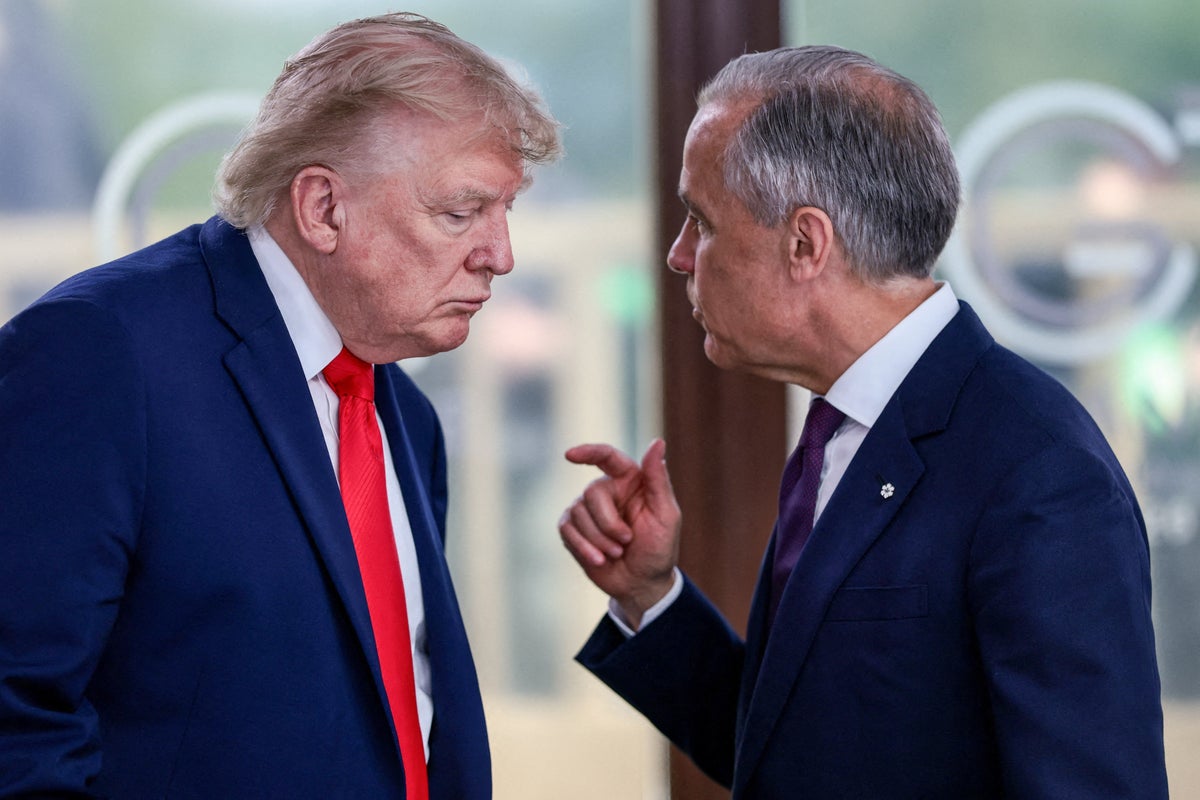
The North American trade architecture is buckling. As of this Saturday, the United States has activated a 50 percent tariff on roughly 20 billion dollars of Canadian goods, and Ottawa has pledged an immediate, reciprocal response. Prime Minister Mark Carney has signaled that Canada will match these levies dollar for dollar, a move that signals the end of a long-standing era of predictable cross-border commerce. The immediate fallout involves a vast array of consumer items—furniture, alcohol, and sporting equipment—while effectively bypassing core energy sectors that remain vital to American industrial output.
This is not merely a policy disagreement. It is a fundamental decoupling of two nations that exchanged 880 billion dollars in goods and services last year.
The mechanism for this escalation is as archaic as it is aggressive. Washington is invoking Section 338 of the Tariff Act of 1930, a Great Depression-era provision that grants the executive branch sweeping authority to impose duties on nations deemed to be discriminating against American commercial interests. By utilizing this rarely seen legal lever, the White House has bypassed the traditional investigative thresholds that usually govern trade disputes. For Canadian negotiators, this was the final straw. They had arrived in Washington with the intent to secure relief on existing penalties covering steel, aluminum, and automotive parts, only to face what they described as shifting, unreliable terms from their counterparts.
The breakdown occurred in the final hours of a three-day extension meant to prevent exactly this outcome. According to U.S. Trade Representative Jamieson Greer, the American side had offered a historic partnership, yet Canada walked away. From Ottawa’s perspective, the deal on the table was a mirage. Prime Minister Carney stated that the U.S. proposal contained last-minute adjustments that were economically unsustainable and undermined the possibility of a stable, long-term agreement.
Consider a hypothetical scenario to understand the operational impact. A Canadian manufacturer of specialized automotive components, already facing existing duties, suddenly sees their final shipment to a Detroit assembly line hit with an additional 50 percent tax. They have two options: absorb the cost and watch their margins evaporate, or pass the price increase to their American buyer. If the buyer switches to a domestic supplier, the Canadian firm faces potential insolvency. If the buyer keeps the order, the final price of the vehicle climbs. This creates a chain reaction of inflationary pressure that eventually lands on the desk of the American consumer.
The decision to exempt oil and natural gas from these tariffs reveals the calculated nature of this conflict. American industry remains critically dependent on Canadian energy imports. Applying a 50 percent tariff to that flow would have resulted in immediate, acute pain for the American energy sector and electricity grid. By keeping these commodities free from the current round of levies, Washington is attempting to weaponize trade without inducing a self-inflicted recession in the heart of its own manufacturing base.
Canada’s reaction represents a strategic shift in survival. With the North American trade pact under severe strain, Ottawa is acknowledging that the diplomatic climate of the previous decade is gone. They are no longer operating under the assumption that historical friendship will protect them from protectionist policies. Instead, the Canadian government is pivoting toward a broader international strategy, seeking to reduce its near-total reliance on the American market.
This move toward diversification is costly. It requires immense infrastructure investment and the arduous process of realigning supply chains that have been North American-centric for decades. Even so, the political reality in Ottawa is that remaining tethered to a volatile trade partner without leverage is viewed as an unacceptable risk.
For the business owner or the average citizen, the immediate effect is volatility. The uncertainty surrounding supply chains will drive up inventory costs and force companies to look for alternative providers, often in less stable markets. The current environment is characterized by a lack of trust between the two capitals. When negotiators can no longer rely on the consistency of the terms they discuss, the incentive to finalize any agreement vanishes.
This standoff is a symptom of a larger shift in global trade. Countries are moving away from the integrated, borderless ideals of the early 2000s and toward a system defined by national self-interest and mercantilist tactics. The 20 billion dollar tax bill is just the opening volley in a much longer struggle over the future of North American competitiveness. Washington may be betting that its massive market size will force a quick capitulation from its northern neighbor. Canada, however, appears ready to endure the short-term economic shock in exchange for the ability to dictate its own policy path.
The outcome of this confrontation will likely not be determined by a single round of negotiations but by which economy proves more resilient to the rising cost of isolation. The old maps of North American trade are effectively obsolete. Every business must now account for the reality that the border is no longer just a line on a map but a barrier that can be adjusted, taxed, and militarized at a moment’s notice.