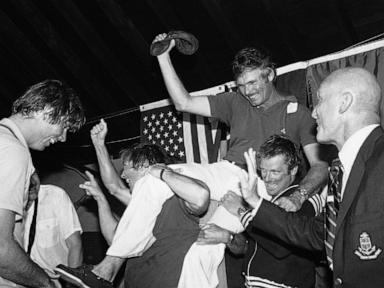
Ted Turner did not buy the Atlanta Braves because he loved baseball. He bought them because his television station was starving for content, and dead air is the only thing more expensive than a losing team. While the public fell in love with the "Mouth of the South" persona—the yacht-racing, foul-mouthed maverick who once tried to manage his own team from the dugout—the reality was a cold, calculated integration of media and muscle. Turner recognized decades before his peers that a sports franchise is not a trophy. It is a 162-episode scripted drama that provides the bedrock for a cable network’s survival.
By acquiring the Braves in 1976 and the Atlanta Hawks shortly after, Turner solved the most pressing problem of the early cable era: the void. He turned a local UHF station, WTCG, into the "Superstation" TBS. He then forced every cable operator in America to carry the Braves, effectively making them "America's Team" by default. This wasn't about the love of the game. It was about the ownership of the distribution pipe and the water flowing through it.
The Invention of the National Local Fan
Before Turner, baseball was a regional affair. You watched your local team on a local affiliate, or you didn't watch at all. Turner shattered this geographic gatekeeping. By beaming Braves games via satellite to every corner of the country, he created a bizarre cultural phenomenon where a kid in rural Idaho could become a die-hard fan of a mediocre team in Georgia.
This was the birth of the modern sports broadcast model. Turner understood that if he owned the team, he didn't have to negotiate for the rights to film them. He was both the buyer and the seller. This vertical integration allowed him to subsidize a losing baseball team with cable subscription fees, then use the popularity of that team to hike those same fees. It was a closed-loop system of capital generation that the rest of the sporting world is still trying to replicate.
The Satellite Gamble
In the mid-1970s, the idea of using satellites for television was experimental and prohibitively expensive for most. Turner ignored the skeptics. He saw that terrestrial broadcasting was limited by the height of a tower and the curvature of the earth. Satellite bypassed the physical limits of the industry.
When he moved WTCG to the satellite in December 1976, he wasn't just changing his frequency. He was declaring war on the Big Three networks—ABC, CBS, and NBC. Those giants relied on a network of affiliates. Turner relied on a piece of hardware in space. By putting the Braves on that satellite, he gave cable operators a reason to exist. People didn't subscribe to cable for "better reception" in those early days; they subscribed so they could watch the Braves.
Chaos as a Marketing Strategy
Turner’s personal antics often overshadowed his boardroom brilliance, but the two were inextricably linked. Every time he got fined by the commissioner or engaged in a public feud, the TBS ratings ticked upward. In 1977, after a losing streak, Turner sent manager Dave Bristol on a "ten-day scouting trip" and put himself in the dugout to manage the team. He wore a jersey with "Captain" on the back.
The league office was horrified. Commissioner Bowie Kuhn suspended him almost immediately, citing the "integrity of the game." To the purists, Turner was a barbarian at the gates. To the advertisers, he was a godsend. He understood that in a crowded media environment, negative attention is still attention. He turned the Braves into a soap opera where the owner was the lead villain, the hero, and the narrator all at once.
Buying the Audience
He didn't stop at baseball. The acquisition of the Atlanta Hawks gave him winter programming, ensuring that TBS never had an "off-season." Then came the move into professional wrestling. When Turner bought World Championship Wrestling (WCW) in 1988, he wasn't looking for athletic prestige. He was looking for cheap, high-rated content that appealed to the same demographic that watched the Braves.
Wrestling was the ultimate Turner product. It was scripted, it was loud, and he owned it outright. He used WCW to go directly after Vince McMahon’s WWF, sparking the "Monday Night Wars." This wasn't just a ratings battle; it was a test of Turner’s theory that sports-adjacent entertainment could anchor an entire media conglomerate. For a few years in the late 1990s, he was right. WCW beat the WWF in the ratings for 83 consecutive weeks, proving that Turner’s "more is more" philosophy could topple established monopolies.
The Goodwill Games and Geopolitical Posturing
Turner’s ambition eventually outgrew the American South. During the height of the Cold War, when the U.S. and the Soviet Union were busy boycotting each other’s Olympic Games, Turner stepped into the vacuum. He created the Goodwill Games in 1986.
This was perhaps his most audacious move. He spent millions of his own dollars to host an international multi-sport event in Moscow. Critics called it "Turner’s Olympics" and mocked it as a vanity project. Financially, it was a disaster; the games lost hundreds of millions over their lifespan. But as an analyst, one must look at what the games bought him: global access.
By dealing directly with the Kremlin and international sports federations, Turner established himself as a diplomat with a private air force. It paved the way for CNN to become the world's primary news source during the Gulf War. The sports investments were the "loss leaders" that gave him the credibility and the infrastructure to build a global news monopoly.
The Downward Spiral of Synergy
The very thing that made Turner successful—the aggressive bundling of assets—ultimately led to his marginalization. The 1996 merger between Turner Broadcasting and Time Warner was supposed to be the ultimate marriage of content and distribution. On paper, the "synergy" was undeniable. Time Warner had the movies and the magazines; Turner had the cable networks and the sports teams.
But corporate cultures rarely merge as cleanly as balance sheets. Turner, a man who functioned best as an absolute dictator, found himself buried in a bureaucracy. When Time Warner merged with AOL in 2000—a deal now regarded as one of the worst in business history—Turner’s influence evaporated. He watched from the sidelines as the new leadership began dismantling his empire.
The sports teams were the first to feel the chill. The Braves, once the crown jewel of TBS, were eventually sold off to Liberty Media in a complicated asset swap. The "America's Team" era ended not with a bang, but with a tax-efficient exit strategy.
The Modern Blueprint
If you look at the current sports landscape, Turner’s fingerprints are everywhere. When Disney uses ESPN to drive subscribers to Disney+, they are using the Turner playbook. When regional sports networks (RSNs) struggle today, it is because the "Superstation" model Turner invented has been disrupted by the very internet technology that succeeded his satellites.
The current crisis in sports broadcasting—where cord-cutting is killing the traditional cable bundle—is the final act of the play Turner started. He proved that sports are the only thing people will pay for in real-time. Without the Braves and the Hawks, Turner never builds the leverage to force CNN onto every cable package in the world.
He didn't just own teams; he weaponized them. He understood that in the attention economy, a 0-10 baseball team is still more valuable than a high-quality documentary that no one watches. You don't buy the team to win championships. You buy the team so that no one can ever turn the channel.
The lesson for the modern mogul is clear: Ownership of the content is meaningless without ownership of the platform. Turner lived in the friction between the two, and for twenty years, he was the only person who knew how to turn that heat into gold. He left the sports world not as a fan who made it big, but as a predator who realized that the stadium was just a very large television studio.
The game was always secondary to the broadcast.