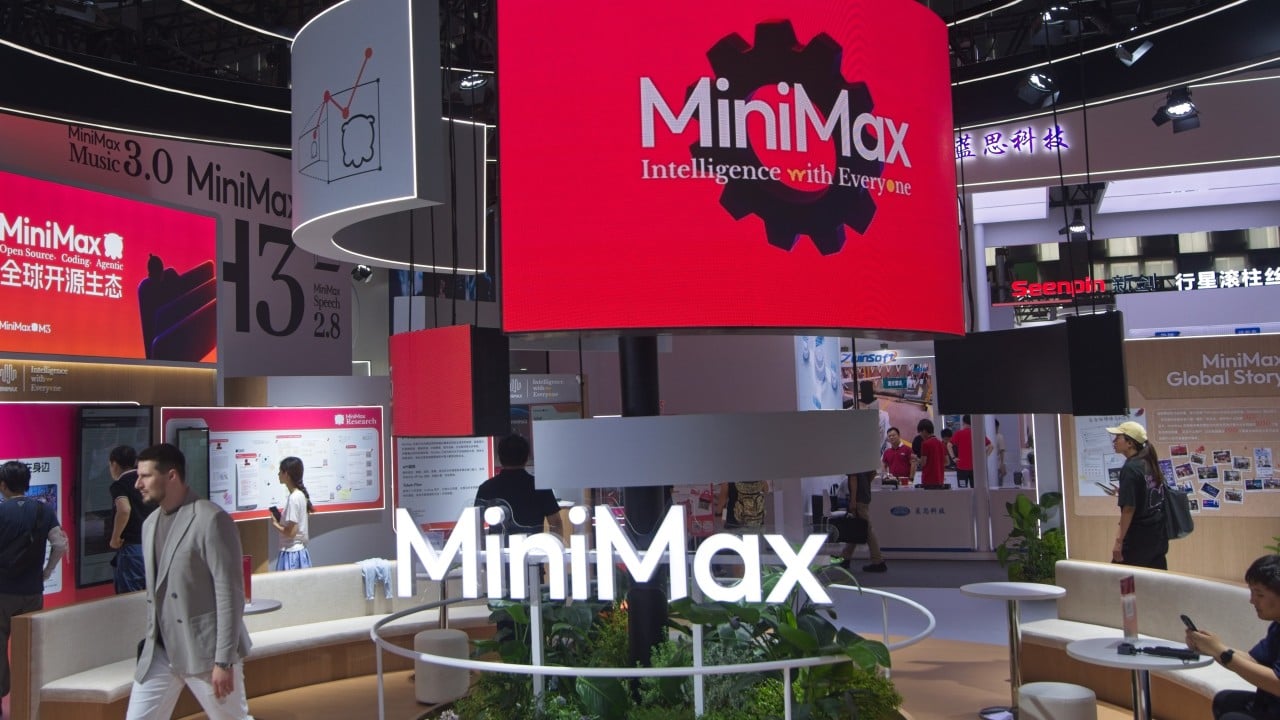
MiniMax has fundamentally altered its financial commitment to Alibaba Cloud, raising its spending cap to approximately 300 million dollars. This aggressive upward adjustment from a previous 115 million dollar ceiling signals an escalating struggle for compute capacity in the artificial intelligence sector. Training massive multimodal models and servicing millions of global users concurrently requires infrastructure that most independent startups cannot sustain on private metal alone.
The underlying economics of large language models have shifted from experimental software engineering into heavy industrial logistics. Every token generated and every parameter updated demands raw, unyielding electrical power and specialized processing clusters. MiniMax operates high-traffic consumer offerings like Talkie and Hailuo AI, where user retention depends entirely on low-latency responses and continuous capability upgrades. When user volume scales into tens of petabytes of operational data, local clusters buckle under the strain.
Cloud giants like Alibaba understand this vulnerability intimately. They are positioning themselves not merely as rental utilities, but as indispensable sovereign infrastructure providers for the entire generation of foundation model developers. By locking down multi-hundred-million-dollar commitments, cloud vendors secure long-term streams of high-margin consumption while startups mortgage their growth trajectories against future compute availability.
The mechanics of this partnership reveal how computational bottlenecks dictate corporate survival. MiniMax initially struggled with fragmented technology stacks, maintaining separate data pipelines across different regional providers. That operational friction wastes precious engineering cycles. Modern machine learning operations demand unified data warehouses capable of elastic scaling, shifting seamlessly between petabyte-scale batch preprocessing and real-time inference workloads.
When training cycles kick off, teams require immediate access to hundreds of thousands of CPU and GPU cores. Maintaining dedicated hardware for peak training loads leaves expensive assets idle during model evaluation phases. Elastic cloud architecture resolves this imbalance through hybrid provisioning models, combining monthly reserved floors with on-demand capacity spikes.
Yet, relying heavily on a single cloud partner introduces systemic risks. Capital concentration creates profound dependencies. If a primary infrastructure provider experiences supply chain constraints on next-generation accelerators, the dependent model developer watches its product roadmap stall. The race for compute superiority leaves little room for redundancy. Startups trade their operational independence for guaranteed access to high-performance data centers.
Behind the corporate press releases lies a bruising war of attrition. The commercial viability of consumer-facing artificial intelligence remains unproven at scale, yet the infrastructure bill arrives reliably every thirty days. MiniMax is placing a massive wager that its consumer applications will monetize fast enough to justify a tripling of cloud expenditure. If user growth decelerates while training costs mount, these expansion pacts will transform quickly from engines of innovation into heavy financial anchors.
The industry is watching closely. As foundation model developers burn through capital to maintain competitive parity, the line between software creator and hardware consumer blurs completely. Compute is the new oil, and the refineries are owned by a very small group of conglomerates. MiniMax has chosen its partner for the grueling marathon ahead, locking its financial fate to the infrastructure capacity of Alibaba Cloud. The bills are coming due, and the margin for error is shrinking by the gigawatt.