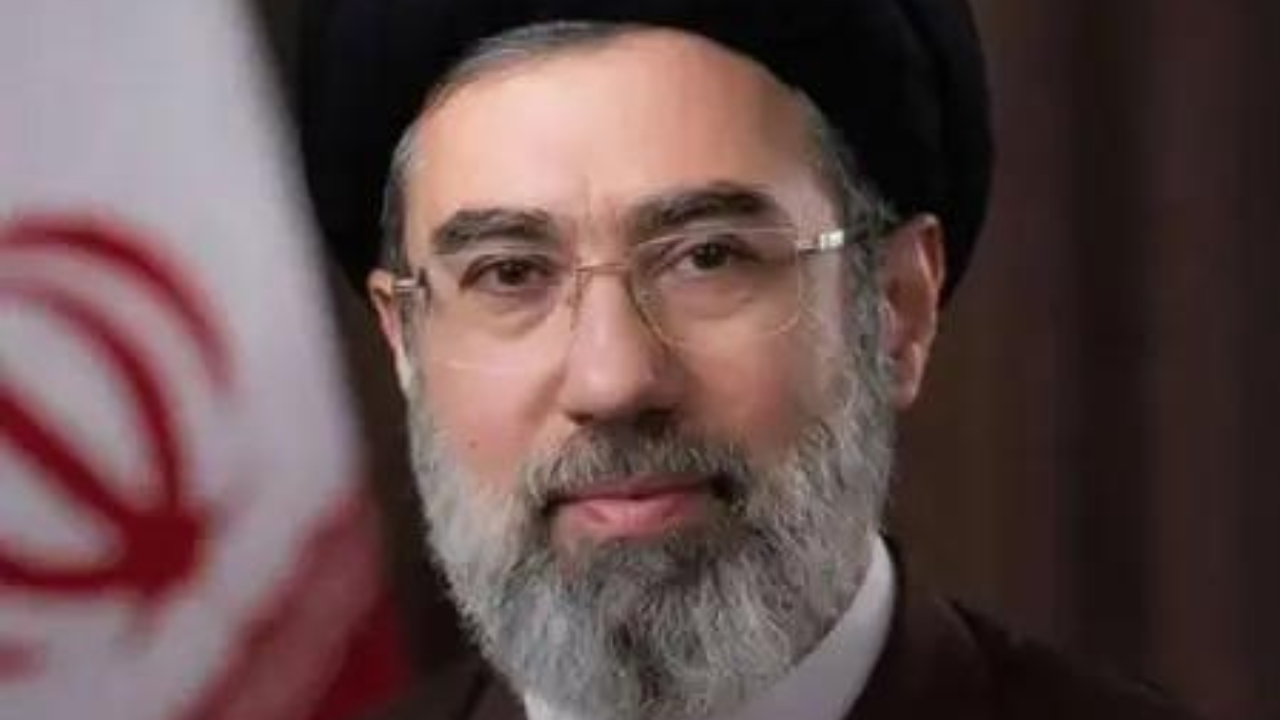
Ayatollah Ali Khamenei has signaled a definitive end to the era of cautious diplomacy in the Persian Gulf. By demanding the total removal of American naval assets and rejecting international nuclear constraints, the Iranian Supreme Leader is not just making a speech; he is executing a long-planned strategic shift toward total regional defiance. This stance effectively kills any immediate hope for a renewed nuclear pact and raises the stakes for maritime security in the world’s most sensitive oil artery.
The rhetoric coming out of Tehran recently has moved past standard revolutionary slogans. Khamenei’s specific imagery—suggesting the bottom of the Gulf is the only place for U.S. forces—points to a hardening of the "Forward Defense" doctrine. This isn't about starting a conventional war that Iran knows it would lose. It is about making the cost of American presence so high, both politically and through asymmetric threats, that withdrawal becomes the only logical path for Washington. Learn more on a similar subject: this related article.
The Strategy of Asymmetric Deterrence
Iran knows it cannot match a U.S. carrier strike group in a fair fight. Instead, they have spent decades perfecting a "mosquito fleet" strategy. This involves hundreds of fast-attack craft, sea mines, and shore-based anti-ship missiles designed to swarm and overwhelm sophisticated defenses. When Khamenei speaks of the Gulf waters being the final resting place for foreign intervention, he is referencing this specific military capability.
The "Great Satan" label is a political tool, but the rejection of nuclear curbs is the actual weapon. By refusing to return to the bargaining table under current terms, Iran is betting that its "breakout time"—the duration needed to produce enough weapons-grade uranium for a nuclear device—is its strongest piece of leverage. They are no longer hiding the ambition to reach the threshold of nuclear capability. They are using it as a shield to protect their regional maneuvers in Lebanon, Yemen, and Iraq. Additional reporting by Associated Press explores similar views on this issue.
Breaking the Nuclear Deadlock
The international community has long operated on the assumption that Iran wants sanctions relief more than it wants the bomb. That assumption appears to be failing. Tehran has pivoted its economy toward the East, strengthening ties with Moscow and Beijing to create a financial buffer. This "Resistance Economy" is designed to withstand the very pressures that were supposed to force Iran back to the nuclear negotiating table.
Without the incentive of sanctions relief, the West loses its primary carrot. What remains is the stick—military action or increased isolation. Khamenei’s latest declarations suggest he believes the West lacks the stomach for either. He sees a fractured American domestic landscape and a Europe distracted by the war in Ukraine. In his view, the window for Iran to assert itself as the undisputed master of the Gulf is wide open.
The Maritime Chokepoint
The Strait of Hormuz is the most vital oil transit point on earth. Roughly 20% of the world’s petroleum passes through this narrow stretch of water. By threatening the U.S. presence here, Iran is effectively holding the global energy market hostage. This isn't just about regional pride; it’s about the ability to crash the global economy at will.
Every time a drone is launched or a tanker is harassed, the insurance premiums for shipping skyrocket. This "shadow war" at sea serves a dual purpose. It reminds the world of Iran's reach and tests the resolve of the U.S. Navy's Fifth Fleet. If the U.S. reacts too strongly, it risks a broader conflict. If it does nothing, it looks weak and unreliable to its Gulf allies, such as Saudi Arabia and the UAE.
The Failure of Traditional Diplomacy
For years, diplomats in Vienna and Geneva believed that a series of technical fixes could solve the Iranian nuclear problem. They focused on centrifuge counts and enrichment percentages. They missed the underlying reality: the nuclear program is inseparable from Iran's desire for regional hegemony.
Khamenei’s refusal to accept curbs is a recognition that the 2015 agreement did not provide the long-term security the regime craves. They saw how easily a future administration could walk away from a deal. Now, they seek "guarantees" that no Western democracy can realistically provide. This creates a permanent stalemate where the only progress is made in Iranian labs and enrichment facilities.
Internal Pressure and External Defiance
There is a direct link between the unrest inside Iran and the aggression shown abroad. When the regime faces domestic challenges—inflation, water shortages, or civil rights protests—it historically leans into its role as the vanguard against Western imperialism. By framing the U.S. as an imminent threat in the Gulf, the leadership attempts to drum up nationalist fervor and justify its tight grip on power.
The rhetoric also serves to reassure the "Axis of Resistance." Groups like Hezbollah and the Houthis look to Tehran for a signal of strength. If the Supreme Leader appears to be backing down under Western pressure, the entire network of Iranian proxies feels the tremor. Khamenei’s hardline stance ensures that his foot soldiers across the Middle East remain committed to the cause.
The Role of New Alliances
The shift in tone is also a reflection of Iran’s new confidence in its alliances. The delivery of Iranian drones to Russia for use in Ukraine has changed the dynamic. Tehran is no longer a pariah state acting alone; it is a critical military supplier to a nuclear-armed superpower. This relationship provides Iran with a level of diplomatic cover at the UN Security Council that it hasn't enjoyed in decades.
China’s role is equally significant. As the primary buyer of "ghost" Iranian oil, Beijing provides the lifeblood that keeps the Iranian economy from collapsing. This Eastern tilt has convinced the leadership in Tehran that the "Great Satan" is a declining power, and that the future of the Middle East will be decided by those who stay, not those who sail in from across the Atlantic.
The Risks of Miscalculation
The danger of this heightened rhetoric is the thin margin for error. In the crowded waters of the Gulf, a single misunderstood maneuver by a Revolutionary Guard speedboat or a panicked reaction from a U.S. destroyer could trigger an escalation that neither side can easily de-escalate. Khamenei is gambling that the U.S. will always choose to avoid a full-scale war.
However, history is full of wars that started because one side assumed the other wouldn't fight. By explicitly stating there is no place for the U.S. in the Gulf, Iran is drawing a line in the sand that Washington cannot ignore without forfeiting its role as a global power. The rejection of nuclear curbs means the clock is ticking toward a point where the "military option" becomes the only topic left on the table.
Tactical Shifts on the Ground
Observers should look for increased activity in the cyber and drone domains. These are the tools Iran uses to project power while maintaining a degree of deniability. We will likely see more frequent "unprofessional" encounters between Iranian vessels and Western warships. These aren't accidents. They are calibrated stress tests of the rules of engagement.
The refusal to curb the nuclear program will also manifest in higher enrichment levels at sites like Fordow and Natanz. Each percentage point increase in purity is a deliberate slap in the face to the International Atomic Energy Agency (IAEA). It is a message that the era of international inspectors having meaningful access to Iranian facilities is coming to a close.
A New Regional Order
Iran’s goal is a Middle East where the U.S. security umbrella is retracted, leaving local powers to negotiate with Tehran from a position of weakness. They want to be the gatekeeper of the Gulf. This vision is fundamentally incompatible with the current global order, which relies on the free flow of commerce through international waters.
The rhetoric from the Supreme Leader confirms that the moderate factions within the Iranian government have been completely sidelined. The "hard-liners" are no longer just a faction; they are the state. Their worldview is one of perpetual struggle, where compromise is seen as a betrayal of the revolution.
The window for a "grand bargain" has not just closed; it has been boarded up. The focus for the international community must now shift from trying to find a diplomatic middle ground to managing a period of high-intensity friction that could last for years. This is the new normal in the Gulf: a state of constant, simmering readiness where the rhetoric of "the bottom of the waters" is treated not as a metaphor, but as a mission statement.
Military planners in the Pentagon and the halls of power in Tehran are now looking at the same map, but seeing two completely different futures. One sees a continued international presence securing the world's energy; the other sees an exclusionary zone where the "Great Satan" is finally purged. There is no middle path between those two visions.
The immediate consequence is a more volatile oil market and a more dangerous maritime environment. Shipping companies will need to adapt to a reality where the Iranian Revolutionary Guard Corps (IRGC) feels emboldened by the highest levels of their government to take more aggressive actions. The diplomatic path has hit a dead end, leaving only the cold reality of power projection and the constant threat of a spark in the world's most flammable region.