The diplomatic machinery currently grinding through the Middle East has effectively written off Lebanon as a secondary theater, leaving the nation trapped in a cycle of destruction while regional powers focus on a Gaza-centric resolution. While international headlines focus on the agonizingly slow ceasefire negotiations between Israel and Hamas, the northern front has decoupled from those talks entirely. Lebanon is not merely being excluded from the current diplomatic framework; it is being intentionally isolated as a pressure point to force a Hezbollah retreat that the group has no intention of granting.
This is the grim reality of the 2026 security architecture. The hope that a pause in Gaza would automatically trigger a quietus in Lebanon has evaporated. Instead, we are witnessing a strategic divergence where the rules of engagement in the north are becoming more aggressive, more permanent, and increasingly detached from the fate of the Palestinian territories.
The Myth of Linked Ceasefires
For months, the working assumption among Western diplomats was that Hezbollah’s "support front" would fold the moment a Gaza truce was signed. Hassan Nasrallah said as much in his early speeches. But the Israeli security cabinet has fundamentally shifted its stance. They no longer view a return to the October 6 status quo as a viable outcome for their northern communities. This shift has created a massive disconnect between what the U.S. State Department wants and what is happening on the ground near the Blue Line.
Israel’s current military objective is the systemic dismantling of Hezbollah’s infrastructure within ten miles of the border. This isn't a temporary skirmish. It is a long-term engineering project carried out via airstrikes. By treating the Lebanese front as a separate entity, Israel ensures that even if Gaza goes quiet, the pressure on Beirut continues until a new security reality is established—one that likely involves a significant buffer zone that exists in practice, if not in official treaty.
The Buffer Zone by Attrition
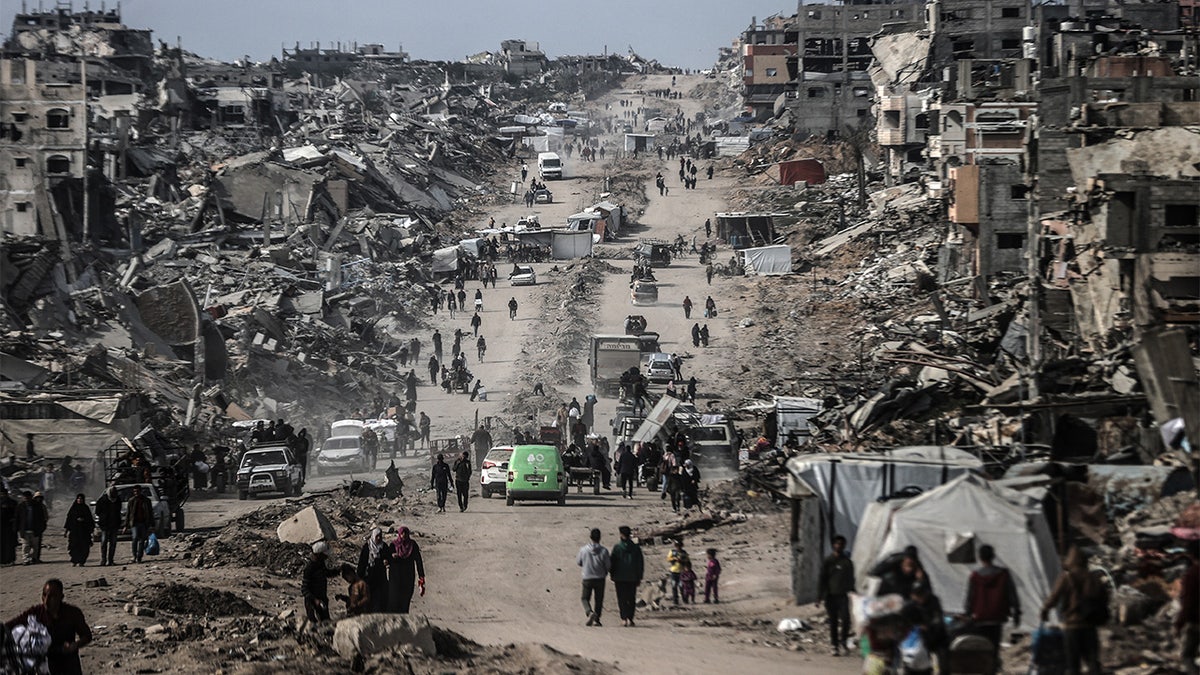
We are seeing the creation of a "dead zone" in Southern Lebanon. This isn't a formal occupation with tanks and outposts, but rather a scorched-earth policy achieved through precision munitions. When you systematically strike every structure, warehouse, and farmhouse within a specific radius of the border, you create a space where life cannot exist.
This is the "how" of the current exclusion. Lebanon remains under fire because the goal isn't just to stop the rockets; it is to ensure that there is nothing left to return to for the Radwan Force. The diplomatic exclusion is a tool of war. By refusing to include Lebanon in the broader regional negotiations, the international community allows this attrition to continue without the messy constraints of a formal ceasefire monitoring committee.
The Failure of Resolution 1701
Everyone points to UN Resolution 1701 as the solution. It’s a tired refrain. The resolution, which ended the 2006 war, stipulated that no armed personnel other than the Lebanese Army and UNIFIL should be south of the Litani River. It has been a dead letter for nearly twenty years.
Hezbollah never left. They simply moved their operations into private homes and underground bunkers. Now, the Lebanese state is too weak to enforce the resolution, and UNIFIL lacks the mandate or the stomach to get into a shooting war with the most heavily armed non-state actor in the world.
The current exclusion of Lebanon from ceasefire talks is an admission that 1701 is a ghost. Diplomacy has no new ideas. The parties are repeating old scripts while the geography of the border is being rewritten by the Israeli Air Force. If the Lebanese government cannot guarantee that Hezbollah will stay north of the Litani, Israel sees no reason to stop the strikes.
A State in Name Only
The Lebanese government is a spectator in its own destruction. Prime Minister Najib Mikati’s administration has zero leverage over Hezbollah’s military decisions. This power vacuum is why Lebanon is excluded. You cannot negotiate a ceasefire with a party that doesn't hold the gun.
Foreign ministers fly into Beirut, meet with officials, and then realize the real decisions are being made in the Dahiyeh suburbs or in Tehran. This makes Lebanon a geopolitical anomaly: a sovereign nation that cannot be a party to its own peace because it doesn't possess the monopoly on force within its borders.
The Tehran Factor and the Long Game
We must look at why Iran is comfortable with Lebanon being left out of the current Gaza negotiations. For Tehran, Hezbollah is the crown jewel of the "Axis of Resistance." It is their primary deterrent against a direct strike on Iranian nuclear facilities.
If Hezbollah enters a formal ceasefire now, they might be forced to make concessions on their missile stockpiles or their border positions. By staying "excluded" and maintaining a state of low-to-medium intensity conflict, Iran keeps the Israeli military stretched thin. It is a cynical calculation. The destruction of Lebanese villages and the displacement of nearly 100,000 Lebanese civilians is, in the eyes of the IRGC, a necessary price for maintaining strategic depth.
The Economic Death Spiral
While the bombs fall, the Lebanese economy—already a shambles—is taking its final breath. The agricultural sector in the south, which provides a significant portion of the country's tobacco and citrus, has been decimated. Phosphorus shells have tainted the soil.
The exclusion from ceasefire talks means there is no "reconstruction fund" on the horizon. Investors don't put money into a country where the northern border is a permanent combat zone. The longer this exclusion lasts, the more Lebanon shifts from a struggling state to a permanent gray-zone territory. This isn't just about security; it's about the viability of Lebanon as a functional entity in the next decade.
The Intelligence Gap and the Escalation Ladder
Israeli intelligence has spent the last two decades mapping Lebanon with a granularity that is only now becoming apparent. The frequency and precision of the strikes on mid-level Hezbollah commanders suggest a deep penetration of the group's communication networks.
This is why the strikes continue even as "peace" is discussed elsewhere. Israel believes they have a window of opportunity. They have the intelligence, they have the air superiority, and they have the political cover provided by the world’s obsession with Gaza. They are climbing the escalation ladder, betting that Hezbollah is too damaged—or too wary of a total war—to respond with their full long-range missile arsenal.
The Risk of Miscalculation
The danger of excluding Lebanon from the diplomatic table is that it leaves only the military channel open for communication. When you stop talking, you start signaling with high explosives. One stray rocket hitting a school or a hospital on either side could trigger the "Big One"—the total war that neither side claims to want but both sides are preparing for.
By not having a formal mechanism for a Lebanese ceasefire, the international community is playing a high-stakes game of chicken. They are assuming that the "controlled escalation" can stay controlled. History in this region suggests otherwise.
The Domestic Pressure Cooker in Israel
We cannot ignore the 80,000 Israeli displaced persons. They are the most significant political variable in this equation. In a democracy, you cannot leave tens of thousands of citizens in hotels for two years. The Israeli government is under immense pressure to "solve" the Lebanon problem before the next school year begins.
This domestic pressure translates into military aggression. A Gaza ceasefire doesn't solve the problem of the Galilee. If the residents of Kiryat Shmona don't feel safe returning home, the Israeli government will keep hitting Lebanon until they do. This is a cold, electoral reality that bypasses the niceties of international diplomacy.
The Invisible Casualty
The biggest casualty of Lebanon’s exclusion isn't just the buildings; it is the concept of Lebanese sovereignty. Every day that the strikes continue without a diplomatic path forward, the Lebanese state becomes more of a fiction.
The international community is essentially saying that Lebanon is a battlefield, not a country. By focusing exclusively on Gaza, they are signaling that the lives and stability of Lebanon are negotiable variables in a larger regional math problem. This is a dangerous precedent. It suggests that if a non-state actor takes up residence in your country, your sovereignty is effectively voided.
The strikes will continue. The drones will hum over Beirut. The diplomacy will remain focused on a tiny strip of land to the south while a much larger, more dangerous fire smolders in the north. Lebanon is waiting for a phone call that no one is making. The "support front" has become a permanent front, and the world seems content to let it burn as long as the flames stay within the borders of a country that has long been the Middle East's favorite punching bag.
The window for a diplomatic solution that preserves the Lebanese state is closing. If a separate track for Lebanon isn't established with the same urgency as the Gaza talks, we aren't looking at a temporary exclusion. We are looking at the permanent Lebanonization of the border—a state of perpetual, grinding conflict that will eventually consume whatever is left of the country's fragile social fabric. The strikes are not just hitting Hezbollah; they are hitting the very idea that Lebanon can survive this century as a unified nation.