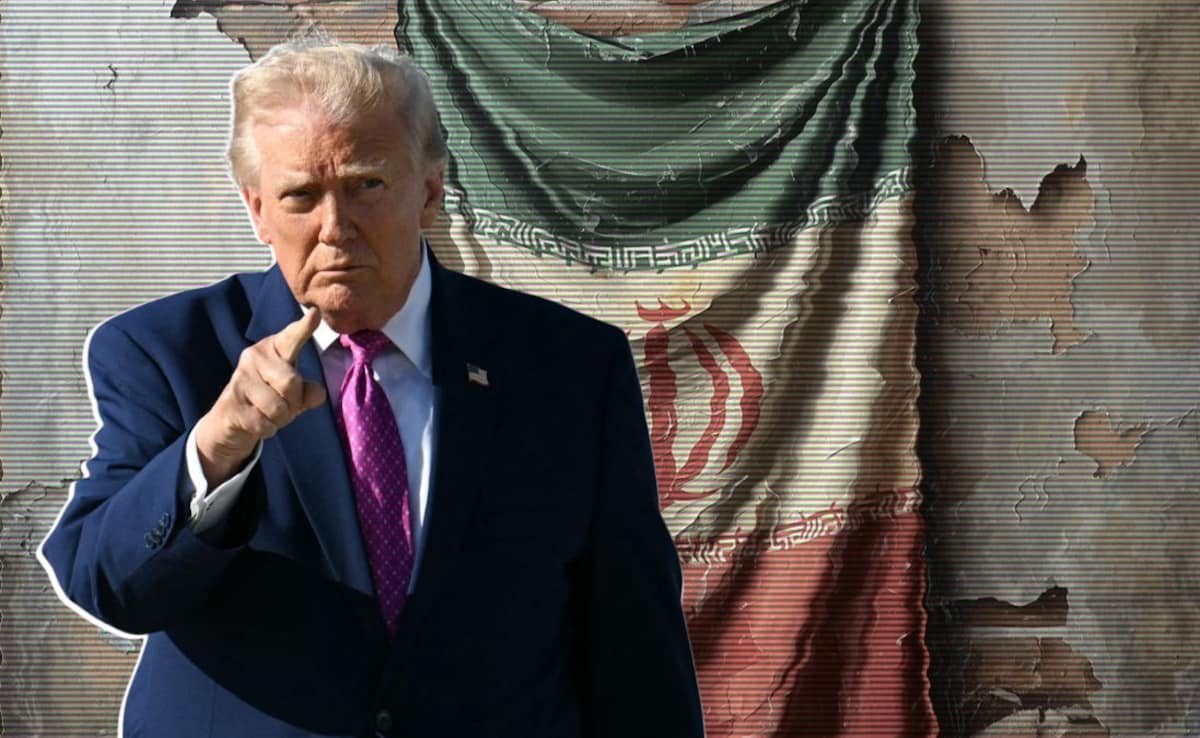
The current talk of a diplomatic reset between Washington and Tehran hinges on a precarious "Plan B" that is more about crushing economic pressure than surgical military strikes. If negotiations over Iran’s nuclear program and regional influence hit a wall, the Trump administration’s secondary strategy moves beyond simple sanctions and into the territory of a total energy blockade. This isn’t a hypothetical drift. It is a calculated return to the "Maximum Pressure" campaign, updated for a 2026 global economy that is far more fractured than it was during the first term.
Diplomatic circles in D.C. are no longer debating whether the talks will fail, but rather how fast the pivot to the backup plan will occur. Trump’s inner circle has signaled that the grace period for Tehran is finite. If the Iranian leadership does not agree to a broader deal—one that includes permanent bans on enrichment and an end to proxy funding—the United States will move to "zero out" Iranian oil exports once again. This time, however, the enforcement mechanism involves aggressive secondary sanctions against Chinese refineries, the primary buyers keeping the Iranian economy on life support.
The Mirage of Selective Engagement
The fundamental friction in the current U.S.-Iran dynamic is the discrepancy between what each side considers a win. Tehran wants a return to the 2015 status quo with guaranteed economic relief. Washington wants a total overhaul of the Iranian state’s strategic behavior. When these two immovable objects collide, the backup plan serves as the ultimate leverage.
Donald Trump’s approach to these negotiations has always been transactional. He views the nuclear issue not as an isolated scientific concern, but as one piece of a larger geopolitical ledger. If the ledger doesn't balance, the pressure returns. This isn’t just about "getting a better deal." It is about a systematic dismantling of the financial networks that allow Iran to operate outside the Western banking system.
The previous iteration of Maximum Pressure crippled the rial and caused massive internal inflation in Iran. Yet, it did not produce a signature on a new treaty. The updated backup plan assumes that the previous failure was a matter of timing, not strategy. By cutting off the "Ghost Fleet" of tankers that currently move Iranian crude under false flags, the administration aims to create a domestic crisis in Iran so severe that the regime has no choice but to capitulate or face internal collapse.
Choking the Ghost Fleet
The most significant change in the backup plan is the shift in focus toward the logistics of evasion. Over the last few years, Iran has perfected the art of ship-to-ship transfers and the use of "dark" tankers—vessels with disabled transponders and obscured ownership.
The U.S. Treasury and State Department have mapped these networks with more precision than ever before. If talks fail, the backup plan involves:
- Designating intermediate ports that facilitate the storage and blending of Iranian oil as sanctioned entities.
- Targeting the insurance providers and maritime service companies based in third-party countries that provide the legal cover for these shipments.
- Pressuring the United Arab Emirates and Malaysia to crack down on the offshore banking hubs that process the payments for these clandestine sales.
This isn't a shadow war fought with missiles. It is a war fought with ledgers and maritime law. The goal is to make Iranian oil so toxic that even the smallest "teapot" refineries in China find the risk-to-reward ratio unacceptable.
The China Factor and the Enforcement Gap
Beijing remains the primary obstacle to any U.S. backup plan. China has consistently ignored U.S. sanctions, viewing Iranian oil as a cheap, reliable energy source that also serves to undermine American influence in the Middle East.
For Trump’s backup plan to work, he has to be willing to trigger a trade confrontation with China that exceeds the scope of previous tariffs. We are looking at a scenario where major Chinese banks could be cut off from the SWIFT system for handling Iranian transactions. This is the "nuclear option" of financial warfare.
The risk is obvious. If Washington pushes too hard on Chinese entities, it could accelerate the creation of an alternative, non-dollar-based financial system. Critics argue that this backup plan might successfully hurt Iran while simultaneously destroying the effectiveness of the U.S. dollar as a global sanctioning tool. It is a high-stakes gamble that assumes the world still needs the greenback more than it needs Iranian crude.
Military Posturing as a Psychological Tool
While the backup plan is primarily economic, the threat of kinetic action remains the backdrop. Trump has frequently stated he does not want a "forever war," yet he has also authorized the most significant strike against Iranian leadership in decades with the 2020 elimination of Qasem Soleimani.
The backup plan includes a ramp-up of military assets in the Persian Gulf, not necessarily for an invasion, but to signal that any attempt by Iran to close the Strait of Hormuz will be met with immediate force. This is "coercive diplomacy" at its most raw. The administration believes that by making the threat of military intervention credible, the economic sanctions become more effective.
However, the Iranian response to a failed talk and a renewed blockade is unlikely to be a direct naval confrontation. Instead, expect an escalation in cyber warfare targeting U.S. infrastructure and an increase in harassment of commercial shipping via Houthi or other proxy forces. The backup plan has to account for these asymmetric responses, which can be just as damaging to global markets as a hot war.
The Regional Realignment
One overlooked factor in the collapse of talks is how Saudi Arabia and the UAE view the backup plan. In the past, Riyadh was a vocal supporter of Maximum Pressure. Today, the Gulf states are in a delicate period of detente with Tehran. They are rebuilding diplomatic ties and are wary of being caught in the crossfire of a U.S.-Iran escalation.
If the U.S. moves to Plan B, it risks alienating its partners in the region who are more interested in stability than regime change. These nations have realized that when Washington applies pressure, it is their oil facilities and shipping lanes that get targeted by Iranian retaliation. The backup plan, therefore, requires a level of regional coordination that may no longer exist.
Without the explicit cooperation of the Gulf monarchies, the U.S. will find it much harder to enforce a total blockade. If Iran can still move goods and money through Dubai or Doha, the sanctions will have holes large enough to drive an oil tanker through.
The Enrichment Threshold
The most dangerous part of the backup plan is the timeline. Iran is closer to weapons-grade uranium than at any point in its history. If talks fail and the U.S. reverts to economic strangulation, Tehran’s most likely counter-move is to sprint toward a 90% enrichment level.
This creates a "use it or lose it" dilemma for Washington and Israel. If the economic backup plan takes two years to work, but the nuclear breakout takes two months, the economic strategy becomes irrelevant. This reality forces the administration to consider "red lines" that, if crossed, would necessitate direct strikes on enrichment facilities like Fordow and Natanz.
Military planners have long warned that a strike would only delay the program, not destroy the knowledge behind it. It would also likely trigger a full-scale regional war. This is the ultimate "fail" state of the backup plan—where a strategy designed to avoid war through economic pressure ends up making war the only remaining option.
The Domestic Political Clock
Trump is acutely aware that the American public has no appetite for another conflict in the Middle East. Every move in the backup plan is calibrated against the domestic political landscape. High gas prices are the "kryptonite" of any presidency.
A total blockade of Iranian oil, if successful, removes roughly 1.5 to 2 million barrels of oil per day from the global market. Unless that volume is immediately replaced by increased production from the U.S. or OPEC, prices at the pump will spike. The backup plan, therefore, is not just a foreign policy strategy; it is a domestic energy gamble.
The administration must balance the desire to crush the Iranian economy with the need to keep the American consumer happy. If the backup plan leads to $5 or $6 per gallon gas, the political pressure to abandon the sanctions will become overwhelming. This creates a window of opportunity for Tehran to wait out the U.S. administration, betting that economic pain at home will force a pivot in Washington.
The Strategy of Attrition
Ultimately, the backup plan is a test of endurance. It assumes the U.S. can sustain a high-pressure campaign longer than the Iranian regime can survive it. It ignores the fact that the Iranian leadership has spent forty years learning how to live under sanctions. They have built a "resistance economy" that, while brittle, is designed to withstand exactly this kind of assault.
The failure of previous talks suggests that there is no "middle ground" that satisfies both the security concerns of the U.S. and the sovereignty demands of Iran. The backup plan is the acknowledgment that diplomacy may be a dead end.
If the talks fail, the world won't see a sudden explosion of violence. Instead, it will witness a slow, grinding tightening of the screws. The U.S. will attempt to isolate Iran until it becomes a pariah state on the level of North Korea. Whether the global economy—and the U.S. political system—can handle the fallout of that isolation remains the unanswered question. The backup plan is a map with no clear exit strategy, leading toward a destination that neither side is truly prepared to reach.
The choice for Tehran is clear: give up the nuclear ambition and regional reach, or face an economic siege that aims for nothing less than the total bankruptcy of the state. The choice for Washington is equally stark: maintain the pressure regardless of the cost to global alliances and energy markets, or accept a nuclear-capable Iran as a permanent reality.