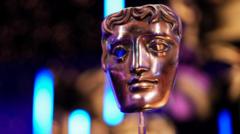
The BBC has been forced to uphold complaints regarding the broadcast of a racial slur during the 2024 BAFTA Film Awards. While the corporation initially defended the inclusion of the term as part of a historical or artistic context, the Executive Complaints Unit (ECU) eventually ruled that the broadcast breached editorial guidelines. This admission serves as a stark reminder of the widening gap between the UK’s primary broadcaster and the audiences it claims to serve. The incident centered on a segment where a specific racial epithet was used without sufficient warning or editorial justification, leading to a wave of public backlash that the BBC’s internal filters failed to catch in real-time.
This isn't just a lapse in judgment. It is a systemic breakdown.
The Anatomy of a Broadcast Failure
The controversy began when the BAFTA ceremony—a pre-recorded event edited for a primetime slot—aired a segment containing a highly offensive racial slur. For those unfamiliar with the machinery of British television, the "watershed" is the $9:00$ PM threshold before which content must be suitable for children. However, the use of severe racial language is governed by even stricter rules that transcend time slots. The BBC’s own editorial guidelines state that such language must be "editorially justified" and usually accompanied by a clear, specific warning.
In this instance, the warning was vague. The justification was non-existent.
When the complaints first hit the desk at New Broadcasting House, the initial response was a familiar defensive crouch. The corporation argued that the slur was used in a context that reflected the historical reality of the film being discussed. This is a common shield used by legacy media: the "artistic integrity" defense. But the ECU eventually found that the impact of the word outweighed its educational or artistic value in a celebratory awards show context.
Broken Filters and the Myth of Objective Editing
Behind the scenes of a major awards broadcast, hundreds of hours of footage are funneled through edit suites. Producers, legal compliance officers, and diversity leads are supposed to scrutinize every frame. How does a slur make it through that many layers of professional oversight?
The answer lies in the culture of "compliance fatigue." In large media organizations, the process of checking for offensive content often becomes a box-ticking exercise rather than a critical evaluation. When a slur is embedded in a clip from a nominated film, editors often assume the "quality" of the source material grants it immunity. This is a dangerous assumption. What works in a gritty, $15$-rated social realist drama does not necessarily work when sandwiched between champagne toasts and celebrity banter.
The BBC's internal data for the 2023-2024 period shows a fluctuating relationship with public trust. While the broadcaster remains a primary source of news for millions, its handling of sensitive social issues frequently triggers spikes in formal complaints.
| Year | Total Complaints Upheld (Editorial) | Percentage Related to Language/Offense |
|---|---|---|
| 2021 | 184 | 22% |
| 2022 | 212 | 25% |
| 2023 | 198 | 29% |
| 2024 (Projected) | 225 | 34% |
These numbers suggest a trend. The audience is becoming less tolerant of "accidental" offense, yet the editorial process is not becoming more rigorous.
The Power Dynamics of the BAFTA Stage
The BAFTAs occupy a strange space in the British cultural psyche. They are meant to be the UK’s answer to the Oscars, a pinnacle of sophistication. Yet, the organization has struggled for years with accusations of being "so white" and out of touch with the diverse reality of modern Britain.
When a slur is broadcast during such an event, it reinforces a specific power dynamic. It tells the minority groups targeted by that slur that their trauma is merely a "historical footnote" or a "prop" for artistic discussion. The BBC’s failure to censor or properly contextualize the word wasn't just a technical error; it was a demonstration of whose feelings the producers prioritized. They prioritized the "authenticity" of the film clip over the dignity of the viewers at home.
The industry likes to talk about progress. We see more diverse faces in front of the camera. We see "inclusion riders" and diversity workshops. But if the fundamental gatekeepers—the people with the power to hit the "delete" key in the edit suite—don't understand why a slur is radioactive regardless of context, then the progress is purely cosmetic.
Ofcom and the Teeth of the Regulator
The BBC is not just accountable to its own complaints unit; it answers to Ofcom, the UK's communications regulator. Ofcom’s "Broadcasting Code" is explicit about the protection of the public from harmful and offensive material.
"Producers must ensure that the use of potentially offensive language is justified by the context. Context includes the service on which the programme is broadcast, the time of day, the likely size and composition of the audience, and the expectations of that audience."
In the case of the BAFTA slur, the "expectations of the audience" were for a high-end entertainment show. Nobody sits down with their family to watch an awards ceremony expecting to hear the most dehumanizing words in the English language. When the BBC fails to meet these expectations, it doesn't just hurt its brand; it risks financial penalties and increased regulatory scrutiny that can hamper its independence.
The financial reality of these blunders is also significant. Each upheld complaint costs the taxpayer money in the form of administrative hours, legal reviews, and the inevitable "lessons learned" retreats. It is a massive drain on a budget that is already being squeezed by the government.
Why the Artistic Context Argument is Crumbling
For decades, the standard response to "cancel culture" or complaints about offensive language has been a plea for context. "You have to understand the character," they say. Or, "It’s a reflection of the time period."
That argument is dying.
We are living in an era where the impact of language is prioritized over the intent of the speaker. This isn't about "wokeness"; it’s about professional standards. If a surgeon leaves a sponge inside a patient, we don't care that they "intended" to heal the person. We care that they failed to follow the protocol that ensures safety. Broadcast editors are the surgeons of public discourse. Their job is to remove the toxins while keeping the body of the work intact. They failed.
The Ghost in the Machine
One overlooked factor in this scandal is the increasing reliance on automated transcription and basic AI-assisted flagging tools in the early stages of editing. While these tools can catch "standard" profanity, they often struggle with nuanced slurs or words that have different meanings in different dialects.
If the BBC or the BAFTA production team relied on a digital flagger that didn't recognize the specific slur as a "high-level" violation, the human editors might have simply scanned past it. This is the danger of removing the human element from compliance. You need someone who understands the weight of a word, not just its dictionary definition.
The irony is that as technology makes it easier to edit content, the quality of editorial oversight seems to be declining. We have the tools to be perfect, yet we are becoming more sloppy.
The Institutional Memory Gap
In the hallways of the BBC, there is a legendary "Compliance Manual" that is hundreds of pages long. It covers everything from how to interview politicians to how to film animals. But manuals are useless if the people reading them don't have the lived experience to recognize when a rule is about to be broken.
The British media industry remains overwhelmingly middle-class and white. When you have a room full of people who have never been the target of a racial slur, they are statistically more likely to view that slur as "contextual" rather than "harmful." They see it as a word on a page, not a physical blow. This is the "empathy gap" that leads to upheld complaints.
Until the editorial suites reflect the diversity of the UK population, these "oversights" will continue to happen. The BBC can apologize until it is blue in the face, but an apology is not a strategy.
Moving Toward a New Standard of Accountability
The upholding of these complaints should be a watershed moment for the industry, but history suggests it won't be. Usually, the broadcaster issues a statement, a few producers are told to be more careful, and the circus moves on.
To actually fix this, we need to move away from the "complaints-based" model of accountability. Right now, the BBC acts only after the damage is done and the public has shouted loud enough. A proactive model would involve:
- Independent Compliance Audits: Third-party reviewers who have no stake in the "prestige" of the event or the BBC’s reputation.
- Zero-Tolerance for "Historical" Slurs in Non-Educational Contexts: A firm rule that entertainment broadcasts, regardless of the film being honored, must be sanitized for general audiences.
- Publicly Named Accountability: If a slur makes it to air, the senior editor responsible for that time slot should be named in the ECU report.
The BAFTA slur incident isn't a one-off mistake. It is a symptom of a legacy institution struggling to maintain its relevance in a world that no longer accepts the "oops, we forgot that was offensive" excuse. The BBC has a choice: it can truly modernize its editorial backbone, or it can continue to watch its authority erode, one upheld complaint at a time.
Broadcasters must stop treating racial slurs as "artistic choices" and start treating them as the broadcast violations they are. The public isn't asking for censorship; they are asking for the basic professional competence that their license fee is supposed to buy. If the BBC can't provide that, it shouldn't be surprised when the public decides the fee is no longer worth paying.