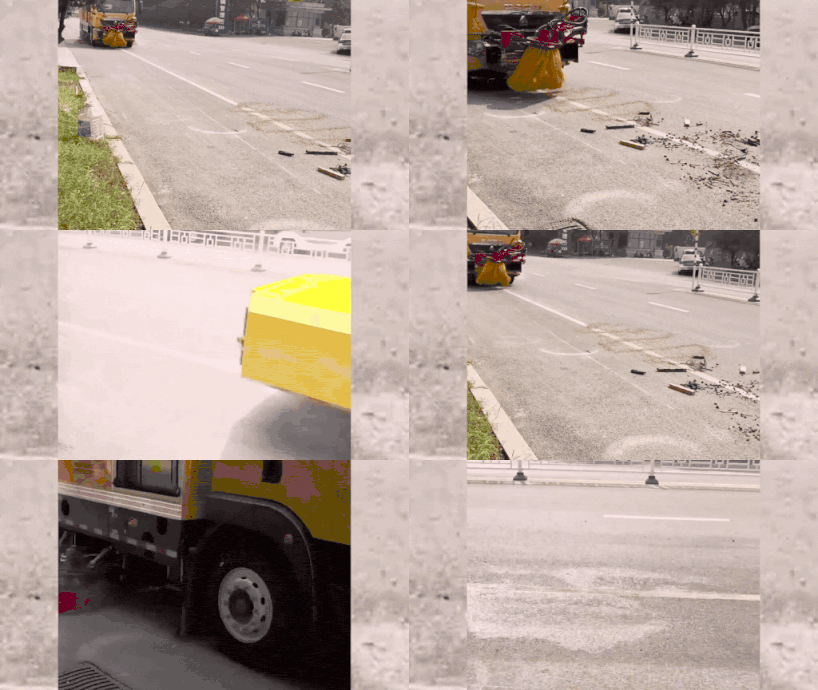
A viral video showing a heavy-duty municipal truck sweeping a highway at 80 kilometers per hour has flooded social media feeds. Viewers marvel at the speed. They comment on the sheer efficiency of clearing debris at highway velocities. But the viral footage misses the point entirely. Maintaining street sweepers at these speeds is not a simple triumph of automation. It is a desperate, expensive response to a severe logistical bottleneck in urban management.
High-speed street sweeping represents a massive shift in municipal engineering. Traditional sweeping vehicles crawl along curbs at 5 to 15 kilometers per hour. Moving ten times faster requires a total overhaul of fluid dynamics, material science, and mechanical engineering.
To understand why these machines exist, look at the geometry of modern infrastructure.
The Physics of Sweeping at Highway Speeds
Standard sweepers rely on mechanical brooms and low-pressure vacuum systems. If you run a traditional broom across asphalt at 80 kilometers per hour, the friction destroys the bristles in minutes. Furthermore, the rapid forward momentum creates a high-pressure air pocket beneath the vehicle. Instead of sucking up debris, a standard truck pushes the dirt outward, scattering it across adjacent lanes.
Overcoming this requires an entirely different approach to airflow. High-speed sweepers use a regenerative air system. Instead of merely vacuuming, the machine blasts a high-velocity stream of air down into the pavement through a specialized blast tracking hood. This jet of air dislodges heavy debris, compacted dirt, and micro-particles from the microscopic crevices of the asphalt.
Simultaneously, a massive suction hood seals against the road surface using flexible, highly durable rubber skirts. This creates a localized negative pressure zone. The loosened debris is instantly pulled into the hopper before the surrounding air currents can scatter it.
The engineering challenge is immense. The rubber skirts must maintain a tight seal while scraping over uneven road surfaces at highway speeds. If the seal breaks, the vacuum drops, and the machine instantly begins leaving debris behind.
The True Cost of Speed
Municipalities do not deploy these high-speed behemoths because they want to. They do it because they are forced to.
On modern ring roads, expressways, and elevated highways, slow-moving maintenance vehicles are a lethal hazard. A traditional sweeper moving at 10 kilometers per hour on a 100 kilometer per hour highway creates a massive speed differential. This leads to severe rear-end collisions and rolling traffic jams. Closing down lanes for routine cleaning costs millions in lost economic productivity and requires complex coordination with traffic police.
A machine that matches the flow of traffic eliminates the need for lane closures. It minimizes the danger to municipal workers.
However, this operational benefit comes with a steep financial catch.
- Exponential Fuel Consumption: Moving air at the velocities required to overpower highway-speed wind currents demands immense energy. These trucks often utilize two engines: one to propel the vehicle and an auxiliary diesel engine solely dedicated to powering the massive air blower. Fuel consumption skyrockets compared to low-speed models.
- Severe Component Wear: Blast hoods, suction nozzles, and internal ducting suffer from intense abrasion. Sand, gravel, and metal fragments traveling through the vacuum system at high speeds act like a sandblaster. The internal plumbing of the sweeper requires frequent replacement with specialized hardened steel or rubber liners.
- Debris Limitations: High-speed sweeping works well for dust, small rocks, and light litter. It struggles with heavy, wet debris or large objects like blown tire treads. If a high-speed unit hits a large piece of debris, the impact can destroy the vacuum hood mechanism entirely.
The Broader Urban Automation Illusion
The viral fascination with these high-speed sweepers highlights a broader trend in global municipal management. There is a growing obsession with high-tech, visible solutions to systemic infrastructure issues.
Building a truck that sweeps at 80 kilometers per hour is impressive engineering. Yet, it shifts the burden from labor costs to massive capital expenditure and intensive mechanical maintenance. It requires a highly skilled fleet of mechanics and a reliable supply chain for specialized parts. For many cities outside of major industrialized hubs, the total cost of ownership makes these machines entirely impractical.
The glittering promise of autonomous, high-speed sanitation often masks the reality of the daily upkeep. A machine is only as efficient as the workshop backing it up. When the specialized rubber skirts wear down or the auxiliary blower engine fails, the vehicle sits idle in a depot, representing hundreds of thousands of dollars in wasted capital.
Municipal efficiency is rarely achieved through flashy, high-speed spectacles. It is found in the unglamorous optimization of routing, durable pavement choices that resist dust accumulation, and balanced fleet management that matches the right tool to the specific environment. The 80 kilometer per hour sweeper is a specialized tool for a specific infrastructure crisis, not a magic wand for global urban sanitation.