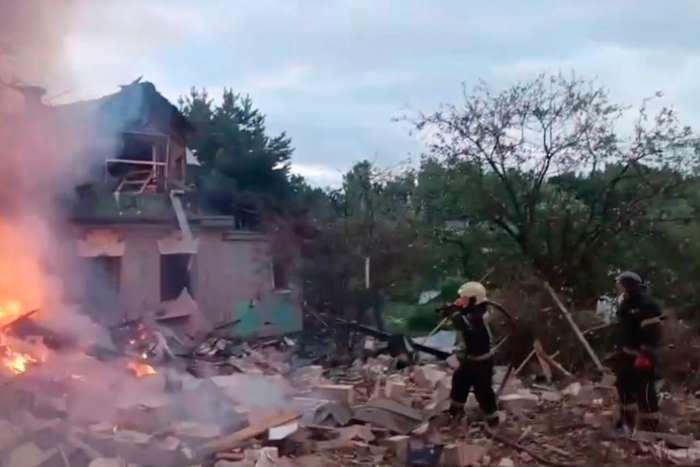
Ukrainian President Volodymyr Zelenskyy’s high-stakes meeting in Paris with European leaders exposes a stark reality that diplomatic communiqués attempt to hide. Ukraine urgently needs interceptor missiles and advanced air defense platforms to counter devastating aerial bombardments, but Europe’s defense industrial base cannot produce them fast enough. While the summit in France focuses on high-level political solidarity, the underlying crisis centers on depleted Western stockpiles and fragmented procurement strategies that leave frontline gaps exposed.
The political optics in Paris project unity. Behind closed doors, the discussions are transactional, urgent, and fraught with logistical friction.
The Empty Arsenals of Western Europe
For decades, European defense strategies relied on the assumption of prolonged peace, treating deep magazines of ammunition and sophisticated hardware as unnecessary overhead. That calculation proved disastrously wrong. When Ukraine requests additional Patriot batteries, SAMP/T systems, or IRIS-T units, it is not asking for surplus sitting quietly in storage. It is asking for systems that are currently integrated into the active, thin defensive screens of NATO member states.
The mathematics of modern attrition warfare are unforgiving. A single sustained wave of drone and missile strikes can exhaust a localized air defense umbrella in a matter of hours. Replacing those interceptors is where the system grinds to a halt. The production cycle for a Patriot PAC-3 MSE missile is measured not in weeks, but in years. Raw material shortages, specialized component bottlenecks, and a lack of skilled aerospace technicians mean that manufacturing lines cannot simply ramp up production by flipping a switch.
European capitals face an agonizing dilemma. They must choose between stripping their own skies of protection to sustain Ukraine's defense, or hoarding assets to maintain a baseline NATO readiness posture. Paris and Berlin have repeatedly hit the limits of what their military commanders deem an acceptable risk. Every battery transferred east represents a blind spot created at home, a reality that defense ministers are loath to admit publicly but argue over bitterly in private.
The Fragmented Sky
Even if financial commitments from European partners were unlimited, the lack of standardization across the continent paralyzes efficient deployment. Europe does not have a single, unified air defense infrastructure. Instead, it features a patchwork of competing systems developed by different national champions, each fiercely guarding its proprietary technology and domestic jobs.
The French-Italian SAMP/T system occupies a different logistical ecosystem than the American-built Patriot or the German IRIS-T. They use different radars, distinct command-and-control software, and entirely incompatible missile families. This fragmentation creates immense operational friction for Ukrainian forces on the ground, who must operate as a living science experiment—integrating disparate Western technologies with legacy Soviet-era hardware like the S-300 and Buk systems.
+-----------------------------------------------------------+
|          THE FRAGMENTED EUROPEAN AIR DEFENSE ECOSYSTEM    |
+-----------------------------------------------------------+
|  SYSTEM    | PRIMARY DEVELOPERS   | LOGISTICAL CHALLENGE  |
+------------+----------------------+-----------------------+
|  Patriot   | United States        | High U.S. dependency  |
|  SAMP/T    | France / Italy       | Limited production    |
|  IRIS-T    | Germany              | Scalability bottlenecks|
+------------+----------------------+-----------------------+
This structural division means that European financial aid cannot be easily converted into immediate battlefield capabilities. When France pledges money, it naturally seeks to support French defense contractors. When Germany funds initiatives, it prioritizes German engineering. This industrial protectionism slows down procurement at a moment when speed is the only metric that matters. The Paris summit must address this systemic failure, or any new financial package will simply sit on a ledger while skies remain unprotected.
The Industrial Latency Trap
Defense executives frequently point to full order books as a sign of strength, but an order book is not a weapon system. The lead time for advanced radar arrays and missile components routinely exceeds twenty-four months. This latency trap means decisions made today in Paris will not yield physical hardware on the Ukrainian frontline until late next year or beyond.
The supply chain relies on fragile nodes. Specialized semiconductors, advanced carbon fiber composites, and the chemical precursors for solid rocket propellants are often sourced from long, vulnerable global supply chains. A delay at a single sub-tier supplier in Asia or North America ripples through the entire assembly process, stalling final delivery.
Furthermore, Western defense procurement remains shackled to peacetime bureaucracy. Contracts require months of legal review, compliance auditing, and political sign-off before a single dollar moves. Ukraine operates on a timeline measured in minutes and hours; the European defense apparatus operates on fiscal quarters and legislative calendars. This temporal mismatch is the silent killer of effective military assistance.
The Cost Asymmetry Problem
There is an economic imbalance in this conflict that favors the aggressor. The cost of a single Western interceptor missile ranges from $2 million to over $4 million. The cost of the long-range attack drones utilized to saturate Ukrainian airspace is a fraction of that, often coming in at under $30,000 per unit.
Using multi-million-dollar missiles to down low-cost drones is financially unsustainable over the long term. It drains Western treasuries and exhausts interceptor stockpiles far faster than they can be replenished. Ukraine has attempted to mitigate this by deploying mobile fire groups equipped with older anti-aircraft guns and thermal optics, but these manual systems cannot stop high-altitude ballistic or hypersonic missiles. For those threats, the expensive, scarce interceptors are the only option, forcing Ukrainian commanders to make brutal triage decisions daily about which cities or critical infrastructure nodes to protect and which to leave vulnerable.
Beyond the Rhetoric of Solidarity
The speeches delivered in Paris will undoubtedly emphasize unwavering commitment and the defense of European democratic values. These words cost nothing. The true measure of the summit’s success lies in whether European leaders are willing to take politically uncomfortable steps to break the industrial logjam.
This requires forcing defense contractors to prioritize state orders over commercial exports, bankrolling the expansion of factories with direct government capital, and overriding national bureaucratic hurdles to create a synchronized European defense production line. It also means accepting the domestic political vulnerability of drawing down national stockpiles past traditional safety margins.
The air defense crisis is not a problem that can be solved by creative financing or diplomatic signaling. It is a concrete material deficit. If the European leadership gathered in Paris fails to transition their domestic defense industries from a comfortable peacetime footing to an emergency production posture, the sky over Ukraine will remain dangerously open. The limits of European strategic autonomy are being tested right now, not in the abstract future, but on the production floors of missile factories and the battlefields of Eastern Europe.


