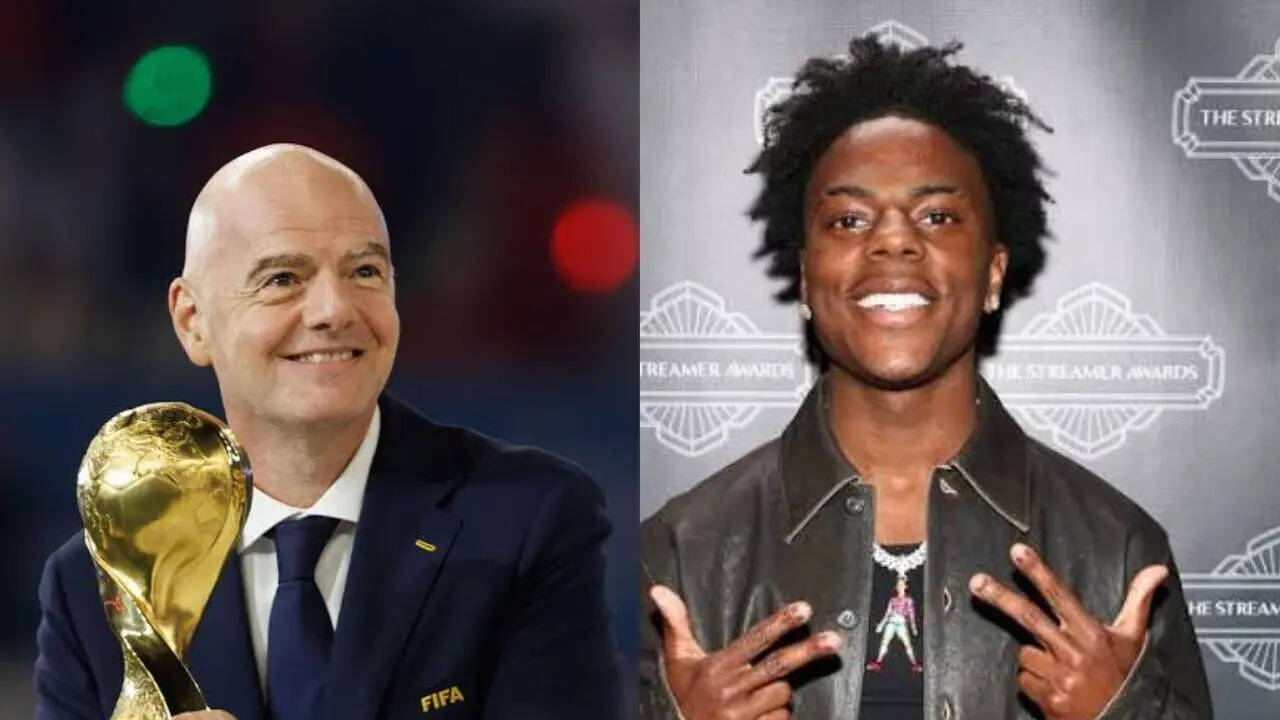
FIFA has officially integrated controversial streaming sensation Darren "IShowSpeed" Watkins Jr. into its promotional strategy for the 2026 World Cup, following a viral video featuring the creator alongside FIFA President Gianni Infantino. This move marks a fundamental shift in how football’s governing body attempts to secure the next generation of consumers. Facing a stark decline in traditional broadcast engagement among teenagers and young adults, football's governing body is bypassing traditional media filters to tap directly into algorithmic fandom. It is a transactional marriage between an institution desperate for cultural relevance and a creator built on chaotic internet spectacle.
The Generation Gap Haunting Zurich
Football is losing its grip on the youth. For decades, FIFA relied on a simple formula to maintain its dominance. Broadcast rights went to the highest television bidder, sponsors paid premium rates to plaster their logos across stadiums, and the world tuned in every four years.
That ecosystem is fracturing.
Internal data and independent viewership metrics paint a bleak picture of Gen Z and Gen Alpha media consumption. Young audiences do not watch 90 minutes of live sports on linear television. They consume football through TikTok clips, YouTube highlights, and EA Sports FC video games. The traditional broadcast model is too slow, too rigid, and too expensive for a demographic accustomed to instant gratification and free, decentralized content.
By bringing Watkins into the inner sanctum of the 2026 tournament, Infantino is acknowledging a uncomfortable reality. The FIFA brand on its own no longer guarantees youth engagement. The organization needs external amplifiers who possess the direct, unfiltered attention of tens of millions of fans. Watkins does not just have followers. He commands a hyper-reactive digital army that moves across platforms at his whim.
The Architecture of a Engineered Viral Moment
The video that triggered this media wave was not a spontaneous encounter. The skit featuring Watkins and Infantino was a calculated piece of corporate public relations disguised as organic internet culture.
In the clip, Watkins reacts with his trademark exaggerated disbelief, while Infantino plays the straight man, mimicking the creator's signature expressions and catchphrases. It was designed specifically to maximize short-form video algorithms, engineered to be cut into millions of secondary TikToks, Instagram Reels, and YouTube Shorts.
Traditional Media Hook: Press Release -> Journalist Report -> Passive Audience
Algorithmic Media Hook: Creator Collab -> Algorithmic Push -> Active Remixing -> Exponential Reach
This is the new playbook for sports marketing. FIFA did not issue a standard press release to announce its new direction. Instead, it co-signed a piece of internet performance art. The success of the video proved the thesis. Within hours, the content accumulated tens of millions of views, outpacing any traditional marketing campaign FIFA could have launched through conventional channels. It cost a fraction of a standard advertising buy, yet achieved far deeper penetration into the target demographic.
The Financial Mechanics of Content Creator Diplomacy
This partnership goes far beyond a single video. It represents a structural overhaul of tournament broadcasting access.
Historically, FIFA guarded its media rights with aggressive litigation. Broadcasters paid billions for exclusive access to players, pitches, and stadiums. Non-rights holders were strictly banned from recording inside the venue footprint.
The 2026 tournament will see a loosening of these restrictions for a select group of mega-creators. FIFA is establishing specialized creator hubs and granting unprecedented access to matches, training sessions, and behind-the-scenes areas. The financial logic is straightforward. While broadcasters still provide the lion's share of FIFA’s revenue, creators act as the top-of-funnel marketing engine that keeps the sport relevant enough to justify those multi-billion-dollar broadcast deals in the future.
This creates a dual-track monetization strategy:
- Primary Tier: Legacy media companies paying for live broadcasting rights to cater to older, affluent demographics.
- Secondary Tier: Content creators receiving access in exchange for generating free, high-volume promotional material aimed at future consumers.
The High Risk of Unpredictable Brand Ambassadors
This strategy is fraught with significant brand risk. Watkins built his massive following on unpredictability, erratic behavior, and controversies that would traditionally alienate corporate sponsors.
He has faced platform bans for aggressive outbursts, sexism in gaming communities, and reckless public stunts. He represents the antithesis of the highly sanitized, corporate image that FIFA’s tier-one sponsors usually demand.
When an organization aligns itself with an individual whose entire brand relies on crossing boundaries, it abdicates control over its own narrative. FIFA can script a 60-second video in a boardroom, but they cannot script a live stream in front of 80,000 fans in a stadium. A single unscripted, offensive moment broadcast live to millions could trigger a massive backlash from corporate partners who pay hundreds of millions of dollars to maintain a wholesome, family-friendly image.
Yet, FIFA has calculated that the risk of irrelevance is far greater than the risk of controversy. The governing body has repeatedly shown a willingness to overlook reputational concerns if the financial and statistical upside is large enough.
The Dilution of Athletic Merit
This integration highlights a deeper, more existential tension within the sport. Football has long been a meritocracy where access and fame are earned on the pitch through athletic excellence.
Now, a creator who cannot professionally control a ball is receiving the same level of access, attention, and institutional backing as the world’s elite athletes. This shift changes the nature of sports stardom. The 2026 World Cup will be the first tournament where the narrative surrounding the event is shaped as much by the people in the luxury suites holding smartphones as the players on the grass.
This dynamic risks alienating traditional purists who view the sport as sacred. For these fans, the invasion of internet culture into the World Cup feels like a cheapening of the spectacle, turning a historic sporting event into a backdrop for influencer content.
But FIFA is not writing its strategy for the purists. They already have their loyalty. The organization is hunting for the ambivalent teenager who would rather watch a streamer react to a goal than watch the actual match build-up.
A Template for the Future of Global Sports
The 2026 World Cup across the United States, Canada, and Mexico is the perfect testing ground for this experiment. The North American market is highly saturated and driven by celebrity culture, entertainment value, and digital-first media consumption.
If this creator-led model succeeds in driving engagement and merchandising revenue over the next month, it will become the blueprint for every major sporting event moving forward. The Olympic Games, the Super Bowl, and Formula 1 are all watching this experiment closely, eager to see if a chaotic internet personality can truly bridge the gap between legacy sports and the fractured digital attention span of the modern teenager.
The boundaries between sports, entertainment, and content creation have dissolved entirely. FIFA’s alliance with digital creators is not a temporary marketing fad. It is an act of institutional survival.