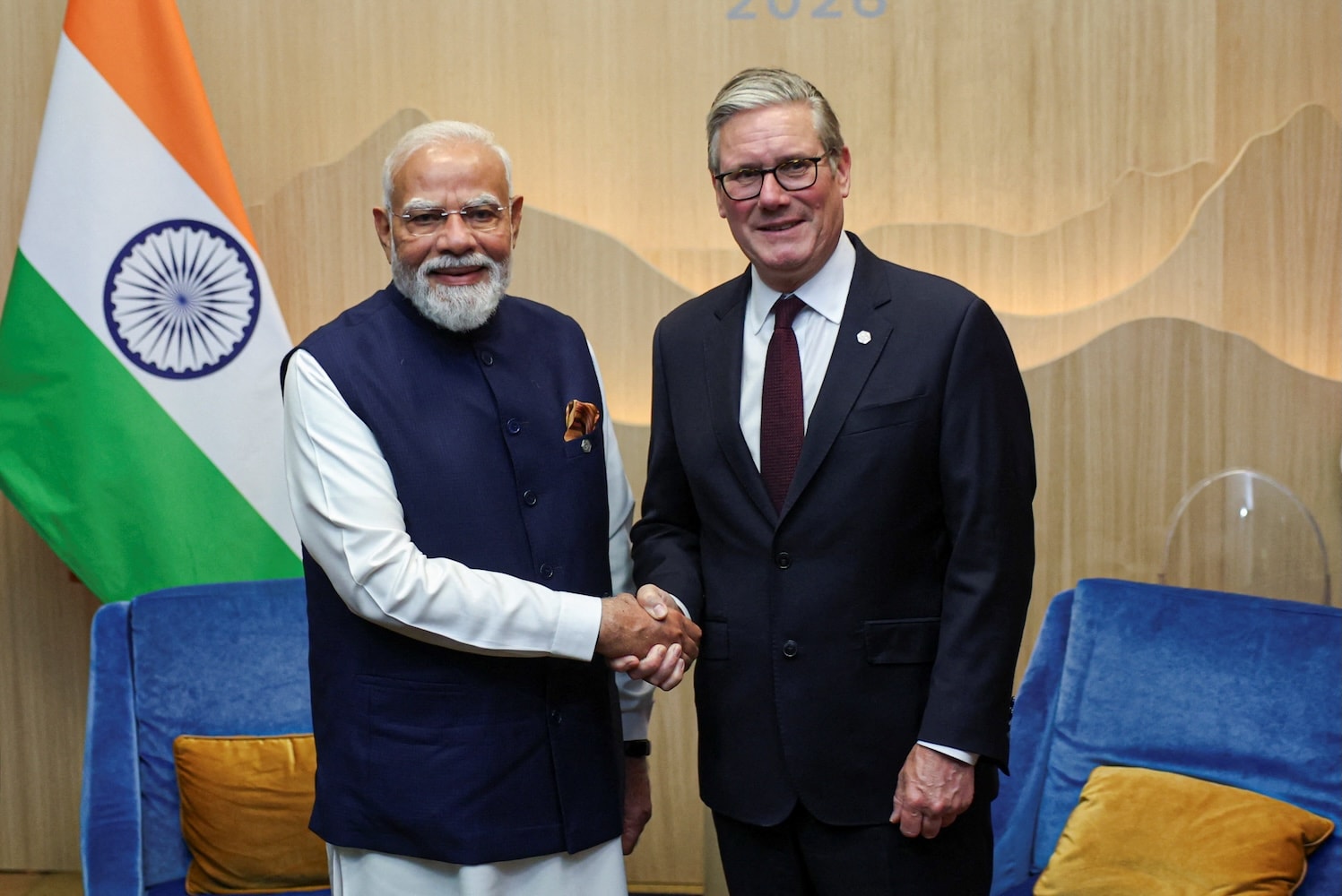
On the sidelines of the G7 summit in Evian, France, a hot microphone caught Indian Prime Minister Narendra Modi and British Prime Minister Keir Starmer trading quiet congratulations. "We did it," Modi said. Starmer nodded, replying, "We got it over the line." Hours later, both governments confirmed that the India-UK Comprehensive Economic and Trade Agreement will formally take effect on July 15, 2026. This announcement ends five years of tortuous negotiations, surviving three British prime ministers, a general election, and a fierce, late-stage dispute over industrial steel tariffs that nearly derailed the entire economic architecture at the eleventh hour.
The sudden breakthrough ends months of diplomatic stagnation. While official press releases celebrate a projected 25.5 billion pound annual boost to bilateral commerce by 2040, the reality behind the closed doors of Whitehall and New Delhi reveals a transactional compromise where both sides surrendered long-held domestic economic red lines to secure a mutual political victory. For an alternative look, read: this related article.
For the United Kingdom, this represents the largest bilateral trade agreement secured since exiting the European Union. For India, it stands as the most comprehensive economic pact signed in a generation. Yet, understanding the actual mechanism of this deal requires looking past the political handshakes and examining the quiet concessions made on steel safeguards, corporate tax exemptions, and visa mobility.
The Steel Safe-guard Friction That Almost Broke the Deal
Negotiations appeared completely deadlocked just weeks ago over Britain's incoming steel safeguard measures, scheduled for enforcement on July 1, 2026. New Delhi viewed these domestic protectionist quotas as a direct penalty on Indian industrial exports. Indian commerce officials threatened to delay the entire implementation of the trade pact indefinitely unless British Business Secretary Peter Kyle provided a formal workaround. Related analysis on the subject has been published by TIME.
The compromise required a late-night diplomatic intervention in France. British negotiators ultimately agreed to create a specific tariff-rate quota carve-out for Indian primary steel products, ensuring that current export volumes to the United Kingdom remain unpenalized. In exchange, India agreed to accelerate its reduction of import barriers on high-value British manufacturing components.
This friction highlighted a deeper structural conflict. The British government is attempting to execute a modern industrial strategy aimed at reviving domestic manufacturing. India is concurrently pushing its own production initiatives to scale up heavy industry. Balancing these twin protectionist impulses required a highly technical, product-by-product negotiation that left both nations' domestic trade unions quietly dissatisfied.
The Mobility Compromise and the Double Contribution Victory
The true core of India’s negotiating position was never about physical goods. It was about people. Specifically, New Delhi demanded clear provisions for corporate mobility, allowing Indian technology, financial, and engineering specialists to work temporarily within British borders without facing prohibitive regulatory friction.
The crowning achievement for the Indian delegation is the concurrent implementation of the Agreement on Social Security, widely known as the Double Contribution Convention. Under the terms of this specific mechanism, Indian companies operating within the United Kingdom will no longer be required to pay local social security or National Insurance contributions for employees seconded abroad for up to five years.
Previously, these temporary workers paid into a British system they would never benefit from, costing Indian corporations millions of pounds annually. By extending this exemption period from three years to five years, New Delhi secured an immense financial victory for its massive outbound information technology sector.
- Old System: Indian firms paid double social security taxes on short-term workers sent to the UK.
- New System: Full tax exemption for the first five years of an employee's UK deployment.
- Economic Impact: Expected to save Indian technology corporations hundreds of millions in overhead annually.
Predictably, this concession faces significant domestic criticism within the United Kingdom. British labor groups argue that the National Insurance exemption creates an artificial financial incentive for companies to favor foreign contractors over domestic tech workers. Chancellor Rachel Reeves defended the provision by pointing to a brand-new, standalone financial services chapter built into the treaty. This chapter guarantees long-term market access worth an estimated 13.6 billion pounds for London-based banks, wealth managers, and insurance firms seeking to enter India's rapidly growing consumer market.
Whisky and Cars
To secure access for its service professionals, India had to dismantle some of the highest tariff walls in the developing world. The British spirits industry has targeted the Indian market for decades, hindered by an aggressive 150% basic customs duty on imported Scotch whisky.
The new treaty slashes this tariff immediately to 75%, with a mandated reduction down to 40% over the next decade. For the Scotch Whisky Association, this single clause opens up a consumer base of hundreds of millions of upwardly mobile citizens. Similarly, British automotive manufacturers will see India's historical 100% import duty on passenger cars drop to 10% under a strictly managed annual quota system.
This tariff reduction is not a unilateral victory for British exporters. British small and medium enterprises will still have to navigate a complex, multi-layered Indian regulatory bureaucracy. To mitigate this, the agreement mandates that India process arrived goods within newly established, transparent timeframes and publish all customs procedures online in English. Digital trade rules have also been updated to legally recognize electronic contracts, an attempt to cut through the notorious bureaucratic red tape that historically characterized Indian ports of entry.
The Blind Spot of Strategic Autonomy
The geopolitical backdrop of this trade deal contains a glaring contradiction that both leaders deliberately avoided during their joint press conferences in France. Throughout the multi-year negotiation process, Western nations imposed severe economic sanctions on the Russian Federation. India, maintaining its doctrine of strategic independence, significantly increased its purchases of discounted Russian crude oil, refining it and exporting the secondary petroleum products directly to global markets, including Europe.
When pressed by domestic critics regarding India's ongoing economic ties with Moscow, Starmer took a pragmatic stance, stating that the British government respects India's long-standing strategic positions. The sheer economic necessity of securing a major post-Brexit trade victory outweighed the geopolitical desire to enforce uniform compliance on sanctions.
Britain's economic growth mission required access to the Indian economy, which is expanding at over 6% annually. Geopolitical purism was sacrificed for commercial survival.
The agreement officially shifts the bilateral relationship into a formal Comprehensive Strategic Partnership under a broader Vision 2035 framework. This parallel agreement maps out joint development projects in advanced manufacturing, electric propulsion, and jet engine technologies. By binding the two economies through deep regulatory alignment, both nations hope to future-proof their supply chains against growing trade volatility between Western economies and East Asian manufacturing centers.
British exporters looking to benefit from the immediate tariff reductions on July 15 must register formally with His Majesty’s Revenue and Customs to obtain certificates of origin. The regulatory framework is set, the political speeches are finished, and the economic reality of this massive shift will begin to register on global corporate balance sheets within the month.