Pakistan is once again pulling the plug on its own economy to keep its power grid from collapsing. The federal government’s recent mandate to shut down markets by 8:00 PM and marriage halls by 10:00 PM is a desperate attempt to curb fuel consumption as West Asia’s volatility sends global oil prices into a tailspin. While officials frame this as a temporary conservation measure, the reality is a systemic failure of energy security and a chronic reliance on imported liquid natural gas (LNG) and furnace oil that the national treasury can no longer afford. This isn't just about dimming the lights; it is a forced contraction of a retail sector that provides the primary heartbeat of urban employment.
The mechanics of this crisis are as predictable as they are painful. When conflict flares in the Middle East, the immediate risk is not just the price of a barrel of Brent crude, but the disruption of the maritime corridors that feed Pakistan’s refineries. The country imports roughly 70% of its total energy needs. This creates a precarious feedback loop where every cent increase in global fuel prices widens a fiscal deficit that is already being propped up by high-interest international loans.
The High Cost of Buying Time
The government’s math is simple, if somewhat cynical. By forcing shops to close early, they hope to shave approximately 1,000 to 1,500 megawatts off the peak evening demand. On paper, this reduces the need to run the most expensive "peaker" plants—those inefficient facilities that burn diesel or furnace oil when the sun goes down and solar contributions vanish.
However, the math for the shopkeeper in Lahore or Karachi does not add up. The evening hours are when the majority of Pakistan's middle class does its shopping, escaping the heat of the day. Forcing a shutdown at 8:00 PM effectively wipes out three to four hours of peak revenue. We are looking at a projected 20% to 30% drop in daily turnover for small and medium-sized enterprises. These businesses operate on razor-thin margins. They cannot absorb a sudden loss of foot traffic while their rent, labor costs, and taxes remain fixed or continue to rise.
Why the Grid is Always on the Brink
To understand why a war thousands of miles away can turn off the lights in a Peshawar bazaar, one has to look at the structural decay of the Pakistan power sector. The issue is not just a lack of "fuel." It is a massive, looming debt known as circular debt.
This is a uniquely broken financial arrangement. The power distribution companies fail to collect full payments from consumers or lose electricity to theft and old wires. Consequently, they cannot pay the power producers. The producers then cannot pay the fuel suppliers. When a global crisis hits and fuel prices jump, the government—already struggling to pay its bills—finds itself at the end of the line. Suppliers demand cash up front or divert shipments to wealthier nations in Europe or East Asia.
Pakistan is essentially a customer with a maxed-out credit card trying to buy gas at a station that only takes cash during a hurricane.
The LNG Trap
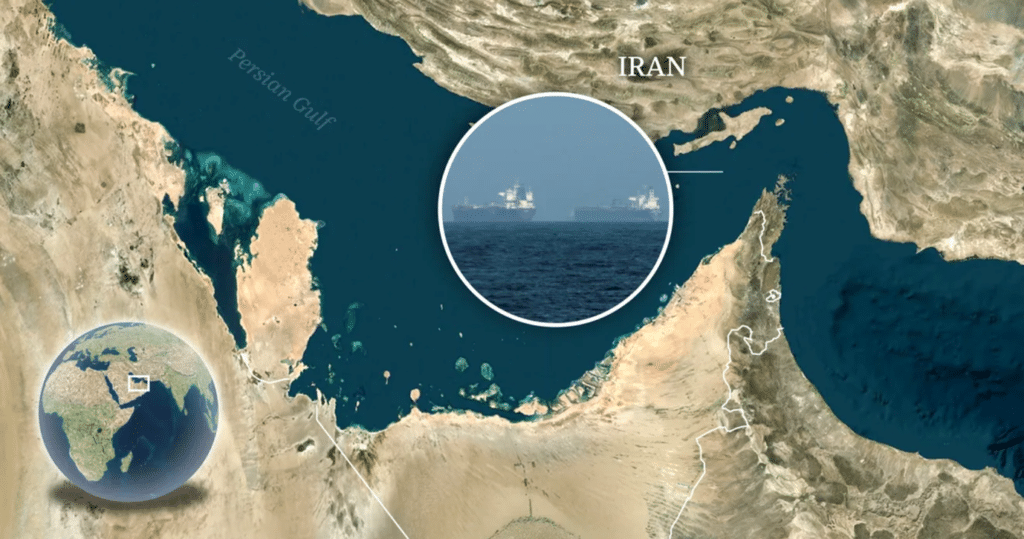
For years, the pivot toward LNG was sold as a cleaner, more stable alternative to oil. That proved to be a strategic blunder. Unlike long-term oil contracts, the spot market for LNG is incredibly volatile. When Russia’s invasion of Ukraine sent European buyers scrambling for non-Russian gas, Pakistan was outbid. Now, with West Asian tensions threatening the Strait of Hormuz, the supply chain is even more fragile.
If a tanker is delayed by even forty-eight hours due to regional skirmishes, the national reserves drop to critical levels. The early market closure is a pre-emptive strike against a total blackout. It is an admission that the state has no buffer.
The Ghost of IMF Compliance
We cannot ignore the shadow of international lenders in this decision. The International Monetary Fund (IMF) has been clear: Pakistan must stop subsidizing the energy sector. This means prices must go up and consumption must stay within the bounds of what the country can actually pay for.
By enforcing early closures, the government is attempting to avoid the political suicide of further massive price hikes per kilowatt-hour. They are choosing to ration supply rather than price the remaining population out of the market entirely. It is a choice between a slow economic strangulation and an immediate social explosion.
The Retail Rebellion and the Informal Economy
Every time these orders are issued, they are met with fierce resistance from traders' associations. These groups are a powerful political bloc. They argue, correctly, that the government is punishing the productive sector while failing to address its own inefficiencies.
- Line losses and theft: In some regions, over 30% of generated power is lost to "non-technical" reasons—a polite term for electricity theft.
- Government arrears: Public sector offices are notorious for not paying their utility bills, yet they are rarely the ones facing the first round of load-shedding.
- Taxation: The retail sector is one of the few places where the government can squeeze for revenue. By shutting them down early, the state is effectively sabotaging its own tax collection targets for the next quarter.
There is also the shift to the informal economy. When the "legal" markets close, trade doesn't stop; it just moves to the shadows or into unregulated street vending. This doesn't save as much energy as the government claims, but it does ensure that the transactions are unrecorded and untaxed.
The Solar Flight
There is a quiet exodus happening that the government hasn't quite accounted for. Anyone who can afford it is going "off-grid." The surge in rooftop solar panels across Islamabad, Lahore, and Karachi is a direct response to the unreliability of the state-managed system.
While this sounds like a win for green energy, it creates a "death spiral" for the national utility companies. As the wealthiest residential and commercial consumers switch to solar, the pool of paying customers for the national grid shrinks. This leaves the poorest citizens to shoulder the burden of the grid's massive fixed costs. The early market closures only accelerate this trend. The business owner who can no longer rely on the government for four hours of evening light will eventually buy a battery and a set of panels, further eroding the state’s revenue base.
The Geopolitical Reality
The current conflict in West Asia is not just a headline; it is a direct threat to the flow of the Arabian Light and other crudes that Pakistan’s refineries are calibrated to handle. If the conflict expands to include direct hits on oil infrastructure or a prolonged closure of shipping lanes, market closures will be the least of the country’s worries.
Pakistan’s energy policy has been reactionary for decades. It jumps from one "emergency" fuel source to another, never investing the capital required to modernize the transmission lines or build out a truly diversified base-load capacity that isn't tied to the price of a commodity traded in US dollars.
What is Actually Required
True energy security does not come from a 7:55 PM countdown. It comes from a brutal overhaul of the distribution companies and a pivot toward indigenous resources like domestic coal and hydro, despite the environmental trade-offs. It requires the political will to prosecute electricity theft at the highest levels and the financial discipline to pay power producers on time.
Until then, the people of Pakistan are being asked to live in a smaller, darker version of their own country. The 8:00 PM closure is a white flag. It is a signal to the world—and to the citizens—that the state has lost control over its most basic infrastructure.
Stop viewing these closures as a "conservation strategy." They are a liquidation of the country’s evening productivity. The shops close, the streets go dark, and the economy waits for a morning that keeps getting more expensive to reach.