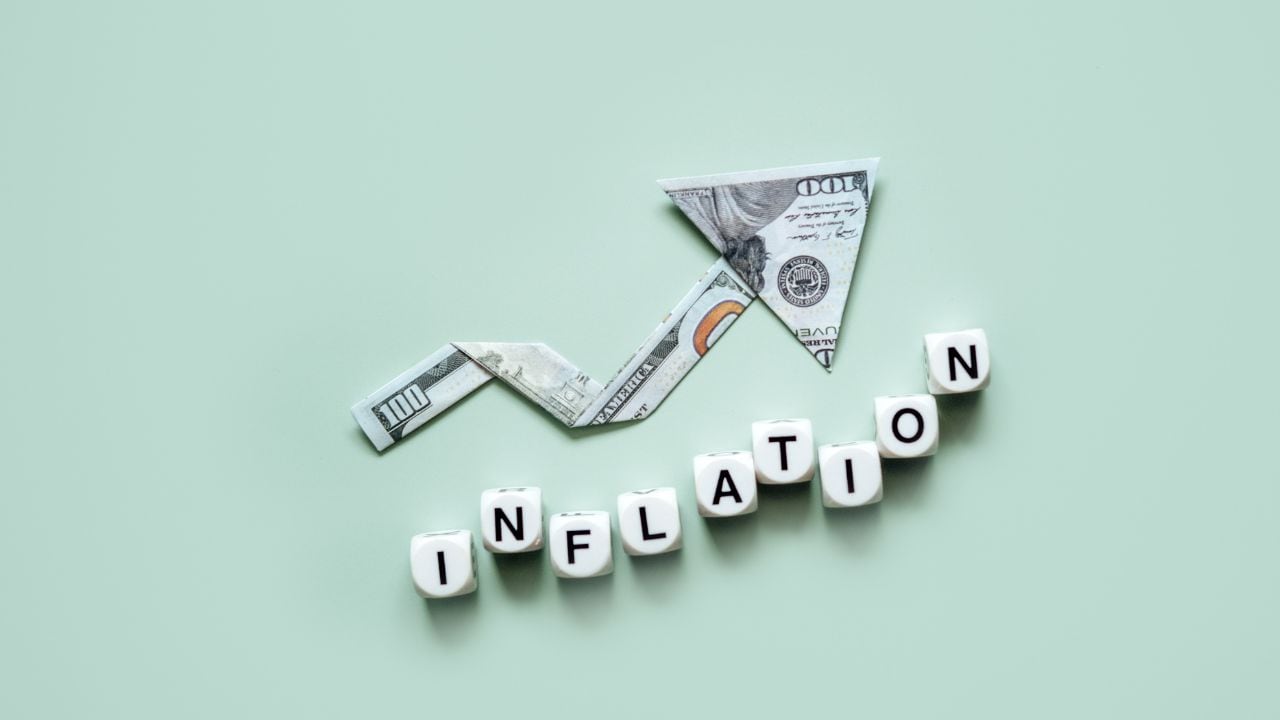
The Philippine economy is currently caught in a pincer movement that few saw coming with this level of ferocity. While official figures suggest a manageable uptick, the reality on the ground in Manila and the provinces tells a more aggressive story. Inflation in March has surged to its highest point in nearly two years, driven primarily by a volatile cocktail of geopolitical fire in the Middle East and a crumbling domestic agricultural defense. The disruption of oil supply lines following the escalation of conflict involving Iran has sent Brent crude spiraling, but for the Philippines, this isn't just a pricing headache. It is a fundamental threat to the nation’s consumption-led growth model.
When oil prices jump, the Philippines bleeds faster than its neighbors. The country remains one of the most energy-insecure nations in Southeast Asia, relying on imports for the vast majority of its fuel needs. This vulnerability turns every skirmish in the Persian Gulf into a direct tax on the Filipino commuter and the small-scale farmer. In March, the headline inflation rate broke past expectations, fueled by a 10 percent jump in transport costs and a stubborn refusal of food prices to stabilize.
The Iran Factor and the Straight of Hormuz Trap
Market analysts often talk about "geopolitical premiums" as if they are abstract percentages on a Bloomberg terminal. For a jeepney driver in Quezon City, that premium is the difference between three meals a day and two. The recent escalation in the Middle East has placed the Strait of Hormuz—a narrow chokepoint through which 20 percent of the world's oil passes—under a shadow of uncertainty.
The Philippines imports roughly 90 percent of its fuel. Unlike larger economies with strategic reserves that can last months, the Philippine supply chain operates on a much tighter window. When Iran-related tensions spike, global traders bake in the risk immediately. This manifests at local pumps within days. The Department of Energy often tries to cushion the blow through dialogue with "the Big Three" oil players, but the math is unforgiving. If the landed cost of a barrel rises, the price at the pump follows, or the supply simply dries up.
This isn't just about the cost of filling up a Toyota Vios. The entire logistics backbone of the archipelago runs on diesel. When diesel prices rise, the cost of transporting rice from the plains of Central Luzon to the markets of Metro Manila rises in lockstep. We are seeing a "cascading inflation" effect where energy costs are hidden inside the price of every tomato and every kilo of pork.
The Rice Myth and Agricultural Failure
While the Iran-Israel shadow war provides a convenient external villain, the internal rot in the agricultural sector is equally to blame for the March surge. For decades, the Philippine government has promised rice self-sufficiency. That promise remains unfulfilled. In March, rice inflation hit a fifteen-year high, contributing nearly half of the total inflation growth for the month.
The strategy of lowering tariffs to allow cheap imports was supposed to be a temporary fix. Instead, it has become a crutch that has hobbled local production. Farmers, unable to compete with the influx of cheaper Vietnamese and Thai grain, are abandoning their fields or selling land to developers. This leaves the Philippines at the mercy of the "thin" international rice market. When global prices rise—as they have due to El Niño and export bans in India—the Philippines has no buffer.
The El Niño Multiplier
The weather is not a neutral observer in this economic crisis. The current El Niño cycle has been particularly brutal, drying up irrigation systems across the Cagayan Valley. This has led to a supply contraction that oil prices only exacerbate.
- Crop Yields: Estimates suggest a 15-20 percent drop in localized corn and rice production.
- Power Costs: Low water levels in hydroelectric dams force a shift to coal and gas-fired plants, which are—coincidentally—pegged to global commodity prices.
- Labor Migration: As farms fail, rural workers flood into cities, putting further pressure on urban infrastructure and driving up the "informal" cost of living.
The Central Bank’s Limited Arsenal
The Bangko Sentral ng Pilipinas (BSP) finds itself in a corner. Standard economic theory dictates that when inflation rises, you raise interest rates to cool the economy. But the current inflation isn't being driven by an "overheated" economy where people have too much money to spend. It is "supply-side" inflation. People are paying more because things are scarce, not because they are wealthy.
Raising rates further risks killing the very growth the government is counting on to pay down national debt. The Philippine debt-to-GDP ratio remains a concern, and high interest rates make servicing that debt more expensive. If the BSP raises rates to defend the Peso against a surging Dollar (driven by global flight to safety during the Iran war), it crushes local businesses that rely on credit. If it stays pat, the Peso depreciates, making those critical oil imports even more expensive. It is a no-win scenario.
The Disappearing Middle Class Buffer
The most dangerous aspect of the March inflation spike is the erosion of the middle class. While social safety nets like the Pantawid Pamilyang Pilipino Program (4Ps) provide a meager shield for the ultra-poor, the working middle class—the call center agents, the teachers, the junior managers—are being hollowed out.
These are the people who do not qualify for government subsidies but are seeing their disposable income evaporated by $70$ percent increases in utility bills and $20$ percent jumps in grocery staples. This group drives the retail sector. When they stop spending on non-essentials, the malls empty out, and the domestic economy stalls.
We are observing a shift in consumption patterns that resembles a "survival economy." Families are pivoting away from protein-heavy diets toward cheaper carbohydrates, and discretionary spending on domestic travel or electronics has plummeted. This has a long-term cooling effect on the economy that a simple GDP headline won't capture for months.
Infrastructure as a Double Edged Sword
The current administration has doubled down on infrastructure spending as a way to "build" the country out of trouble. While new bridges and railways are vital for long-term efficiency, in the short term, they are massive consumers of fuel and imported materials.
There is a grim irony in the fact that the very projects meant to modernize the Philippines are becoming more expensive by the day because of the oil shock. Construction firms are already petitioning for "price escalation" clauses in government contracts. This means the taxpayer ends up paying twice: once at the pump, and again through the national budget as project costs balloon.
The Foreign Policy Paradox
The Philippines has traditionally maintained a neutral or pro-Western stance in Middle Eastern affairs. However, the current volatility forces a re-evaluation of energy diplomacy. The reliance on the spot market for oil is a systemic failure of long-term planning.
While neighbors like Indonesia and Malaysia have significant domestic oil and gas reserves to act as a shock absorber, the Philippines' Malampaya gas field is depleting. The failure to secure new exploration deals in the West Philippine Sea—largely due to the ongoing territorial friction with China—has left the country completely exposed to the whims of the Strait of Hormuz.
[Image comparing Southeast Asian energy independence levels]
Why the Official Numbers Feel Like a Lie
There is a growing disconnect between the Philippine Statistics Authority (PSA) reports and the "palengke" (market) reality. This is because the consumer price index (CPI) basket is weighted in a way that doesn't always reflect the immediate pain of price shocks.
For instance, the weight of house rentals in the CPI can mask the volatility of food and fuel. If your rent stays the same but your food bill doubles, the "average" inflation might look like 4 or 5 percent, but your personal inflation is closer to 20 percent. This gap breeds public distrust and political instability. History in the Philippines shows that when the price of rice and the price of transport converge at a high point, social unrest is never far behind.
The Strategic Reserves That Never Materialized
Years of talk about a "Strategic Petroleum Reserve" (SPR) have resulted in very little action. An SPR would allow the government to buy oil when prices are low and release it when geopolitical tensions—like the current Iran situation—spike.
Without this buffer, the Philippines is essentially "day-trading" its national energy security. The lack of storage infrastructure means the country cannot take advantage of market dips. We are buying high because we have no choice. The private oil companies maintain their own 30-day inventories, but their priority is profit, not price stabilization for the public.
The Renewable Energy Gap
There is a loud contingent arguing that this oil shock is the perfect reason to pivot to renewables. While true in the long run, you cannot run a cargo truck on solar panels today. The transition to electric vehicles (EVs) in the Philippines is hampered by a fragile power grid that is itself reliant on coal and gas.
We are stuck in a transition limbo. We are too poor to switch to green energy overnight, but too dependent on fossil fuels to survive a Middle Eastern war unscathed.
The Immediate Outlook
The coming months will be a test of the administration's ability to move beyond rhetoric. If the Iran conflict broadens into a regional war, $100$ per barrel oil is not just a possibility; it is an inevitability. At that price point, the Philippine government will be forced to choose between massive deficit spending to subsidize fuel or allowing the economy to enter a period of stagflation—where prices rise but growth stops.
The March data is a warning shot. It reveals an economy that is structurally fragile and overly dependent on variables it cannot control. The "Nearly Two-Year High" headline is a symptom; the disease is a total lack of energy and food sovereignty.
To mitigate the damage, the focus must shift from macro-economic signaling to micro-economic relief. This means aggressive, direct intervention in the food supply chain to bypass middlemen who are currently price-gouging under the cover of the "oil crisis." It also means an immediate, transparent audit of oil company inventories to ensure that the "Iran premium" isn't being applied to stocks that were bought months ago at lower prices.
The Philippines cannot stop a war in the Middle East, but it can stop pretending that these shocks are "unexpected." The blueprint for the next six months must involve a radical shift toward securing bilateral energy agreements that bypass the volatility of the spot market. If the government continues to rely on hope and "market forces," the middle class won't just be squeezed—it will be erased.
Every centavo added to the price of a liter of diesel is a centavo taken away from a child's education or a family's health fund. This is the human cost of the March inflation peak. It is a cost that the spreadsheets at the central bank rarely account for, but one that will define the political landscape for the remainder of the year. The time for incremental adjustments has passed. The Philippine economy needs a structural overhaul that prioritizes domestic resilience over global market integration.
Stop looking at the ticker tape and start looking at the freight costs at the Manila North Harbor. That is where the real war is being lost.